
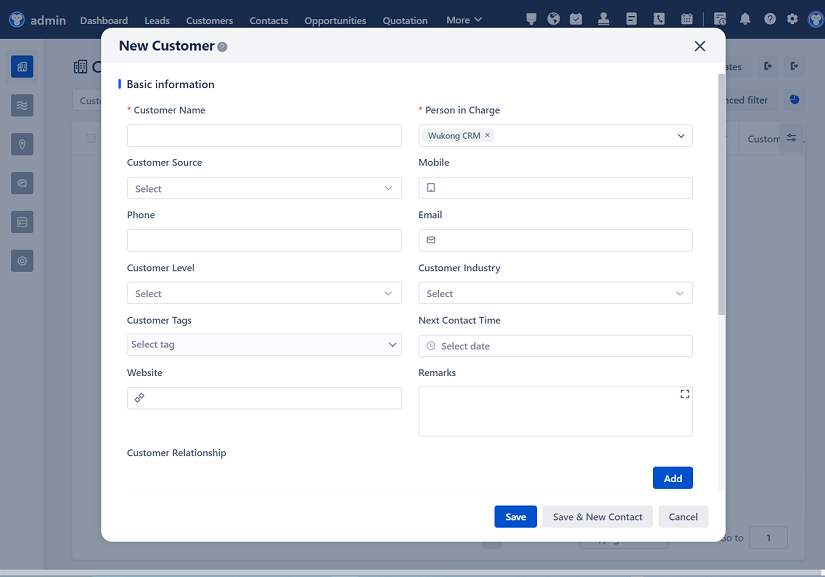
△Click on the top right corner to try Wukong CRM for free
So, you know, when we talk about CRM systems—Customer Relationship Management systems—it’s kind of funny how people often think it’s just one big thing, like a single tool that magically makes customers happy. But honestly, that’s not really how it works. I mean, sure, CRM helps businesses manage their interactions with customers, but it’s way more nuanced than that. There are actually different types of CRM systems, and each one plays a unique role. I’ve been digging into this lately, and I think it’s super helpful to break them down into three main categories: operational, analytical, and collaborative. Once you understand the differences, it all starts to make a lot more sense.

Free use of CRM system: Free CRM
Let me start with operational CRM because, honestly, that’s probably the one most people are familiar with. This is the kind of CRM that’s all about streamlining the day-to-day stuff. You know, like sales automation, marketing automation, and service automation. Think about it—when a sales rep logs a call, updates a lead status, or schedules a follow-up, they’re using operational CRM. It’s basically the engine that keeps the customer-facing processes running smoothly. Without it, everything would be chaotic—like trying to run a restaurant without a kitchen order system. It just wouldn’t work.
And marketing? Oh man, operational CRM is a game-changer there too. Imagine you’re launching a new product and want to send targeted emails to specific customer segments. Instead of manually sorting through spreadsheets (which, by the way, is a nightmare), the CRM automatically pulls the right people based on criteria like past purchases or engagement levels. It saves so much time and reduces errors. Plus, it tracks campaign performance in real time, so you can tweak things on the fly. It’s like having a co-pilot for your marketing efforts.
Then there’s customer service. You’ve probably experienced this as a customer—maybe you called a company, and the agent already knew your history. That’s operational CRM at work. It gives support teams a complete view of the customer, so they don’t have to ask you the same questions over and over. It’s not just about efficiency; it actually improves the customer experience. People hate repeating themselves, right? So this kind of system helps build trust and satisfaction.
But here’s the thing—operational CRM is great for doing things, but it doesn’t really tell you why things are happening. That’s where analytical CRM comes in. I used to think analytics was just for data geeks, but now I see how powerful it is. Analytical CRM is all about making sense of the data that operational CRM collects. It dives deep into customer behavior, preferences, and trends. It’s like the brain behind the operation.

For example, let’s say your sales team notices a drop in conversions. Operational CRM shows you the numbers, but analytical CRM helps you figure out why. Maybe it turns out that customers from a certain region aren’t responding to your messaging, or perhaps there’s a pattern in when people abandon their shopping carts. With analytical tools, you can segment customers, predict future behavior, and even calculate customer lifetime value. It’s not just about reporting—it’s about insight.
And businesses are using this in some really smart ways. Retailers use it to personalize recommendations. Banks use it to detect fraud patterns. Even airlines use it to optimize pricing and loyalty programs. It’s fascinating how much you can learn from data when you actually take the time to analyze it. The key is that analytical CRM doesn’t just describe what happened—it helps you anticipate what might happen next.
Now, here’s something I didn’t fully appreciate at first: analytical CRM doesn’t usually interact directly with customers. It’s more of a backend system. Managers and analysts use it to make decisions, design strategies, and improve processes. So while operational CRM is like the hands, analytical CRM is like the eyes and the mind—helping you see and understand the bigger picture.

But even with great operations and smart analytics, communication gaps can still happen—especially across departments. That’s where collaborative CRM comes in. Honestly, I think this one is underrated. Collaborative CRM is all about breaking down silos. You know how frustrating it is when sales, marketing, and service teams aren’t on the same page? One team promises something, another doesn’t deliver, and the customer gets caught in the middle. Collaborative CRM fixes that.
It does this by creating a shared platform where all customer interactions are recorded and accessible. So if marketing runs a campaign, sales can see who responded. If a customer calls support, the agent can see recent sales calls or marketing emails. It’s like giving everyone a shared notebook. And it’s not just internal—some collaborative CRM systems even let customers interact directly, like through self-service portals or chatbots.
I remember working with a company that had terrible handoffs between departments. Leads would fall through the cracks, and customers would complain about inconsistent information. Once they implemented a collaborative CRM, things improved dramatically. Response times got faster, customer satisfaction went up, and internal frustration dropped. It was like they finally started speaking the same language.
Another cool thing about collaborative CRM is how it supports multiple communication channels. Customers today don’t just call or email—they use social media, live chat, messaging apps, you name it. Collaborative CRM integrates all these touchpoints so nothing gets lost. Whether a customer tweets a complaint or submits a support ticket, it shows up in the system. That way, no matter who responds, they have the full context.
So, putting it all together—operational, analytical, and collaborative CRM—they’re not competitors. They’re teammates. Each one does something different, but they work best when they’re connected. Think of it like a sports team: operational CRM is the player making the moves, analytical CRM is the coach analyzing the game, and collaborative CRM is the communication system keeping everyone in sync.
And in today’s world, you really need all three. Customers expect fast, personalized, and consistent experiences. If your sales team doesn’t know what marketing promised, or if your support agent can’t see a customer’s history, you’re going to lose trust. But when these systems work together, magic happens. You close more deals, retain more customers, and build stronger relationships.
I’ve also noticed that companies often start with operational CRM because it’s the most visible and practical. Then, as they grow, they add analytical CRM to make smarter decisions. And eventually, they adopt collaborative CRM to improve coordination. It’s a natural progression. But ideally, you want to think about all three from the beginning, even if you roll them out gradually.
Another thing—technology has made it easier than ever to integrate these systems. Cloud-based CRM platforms like Salesforce, HubSpot, or Microsoft Dynamics offer features across all three types. You don’t necessarily need three separate tools. Many modern CRMs are designed to handle operations, analytics, and collaboration in one place. That said, some companies still use specialized tools for deeper analytics or advanced collaboration, depending on their needs.
And let’s not forget the human side. No matter how advanced the CRM is, it only works if people actually use it. I’ve seen companies spend a fortune on a fancy system, but if employees don’t input data or ignore alerts, it’s useless. So training, culture, and leadership buy-in are just as important as the technology itself. A CRM is only as good as the people behind it.
Also, privacy and data security are huge concerns. With all this customer data flowing through CRM systems, companies have to be super careful. Regulations like GDPR and CCPA mean you can’t just collect and use data however you want. So any CRM strategy has to include strong data governance. It’s not just about compliance—it’s about earning customer trust.
Looking ahead, I think AI and machine learning are going to play a bigger role in all three types of CRM. Imagine an operational CRM that suggests the best time to call a lead, or an analytical CRM that automatically detects churn risks, or a collaborative CRM that routes customer inquiries to the right agent based on expertise. We’re already seeing glimpses of this, and it’s only going to get smarter.
At the end of the day, CRM isn’t just about software. It’s about putting the customer at the center of everything you do. Whether it’s streamlining processes, gaining insights, or improving teamwork, these systems exist to help businesses build better relationships. And when you do that right, everything else—sales, loyalty, growth—tends to follow.
So yeah, that’s my take on the three types of CRM systems. They each have their own strengths, but together, they create a powerful foundation for customer success. It’s not about choosing one over the others—it’s about understanding how they fit together and using them in a way that makes sense for your business.
FAQs (Frequently Asked Questions):
Q: Can one CRM system do all three—operational, analytical, and collaborative?
A: Absolutely! Many modern CRM platforms, especially cloud-based ones, integrate features from all three types. For example, Salesforce or HubSpot can handle sales automation (operational), provide dashboards and reports (analytical), and enable team collaboration across departments (collaborative).
Q: Which type of CRM should a small business start with?
A: Most small businesses begin with operational CRM because it directly supports sales, marketing, and service tasks. It’s practical and delivers quick wins. As the business grows and collects more data, adding analytical and collaborative features makes sense.
Q: Is analytical CRM only for big companies with data teams?
A: Not anymore. While large companies might use advanced analytics tools, many CRM systems now include built-in analytics that are user-friendly. Small and mid-sized businesses can access valuable insights without needing a data scientist.
Q: How does collaborative CRM improve customer experience?
A: It ensures that every team member has access to the same customer information. So whether you’re talking to sales, marketing, or support, the customer doesn’t have to repeat their story. This leads to faster resolutions and a more consistent, personalized experience.
Q: Do I need to implement all three types at once?
A: Not necessarily. It’s often better to start with operational CRM, then gradually add analytical and collaborative capabilities as your needs grow. The key is to plan for integration so the systems can work together smoothly later on.
Q: Can CRM systems help with customer retention?
A: Definitely. Analytical CRM helps identify at-risk customers, operational CRM enables timely follow-ups, and collaborative CRM ensures consistent communication. Together, they make it easier to keep customers happy and loyal.
Related links:
Free trial of CRM
Understand CRM software
△Click on the top right corner to try Wukong CRM for free