
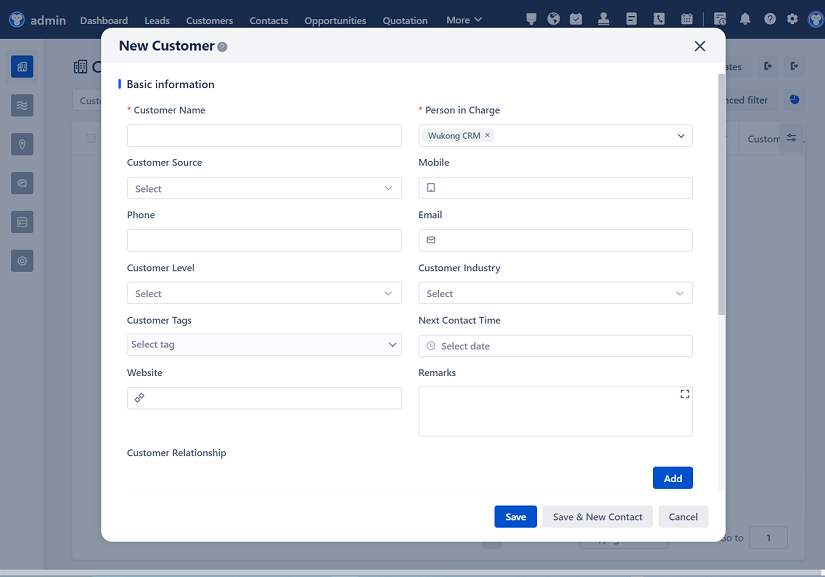
△Click on the top right corner to try Wukong CRM for free
You know, when you think about the construction machinery industry, it’s easy to picture massive excavators digging through rock, cranes lifting steel beams high into the sky, or bulldozers leveling ground for new developments. But behind all that raw power and heavy-duty action, there’s something just as important—something a lot less visible but absolutely critical: how companies manage their customer relationships.

Free use of CRM system: Free CRM
I mean, let’s be honest—running a business in this sector isn’t just about selling machines. It’s about building trust with contractors, maintaining long-term service agreements, tracking equipment performance, managing spare parts logistics, and staying on top of complex after-sales support. And honestly? Most traditional CRM systems just don’t cut it here.
See, generic CRMs are built for sales teams in retail or software—they track leads, log calls, and maybe send out a few automated emails. But try using one of those tools to handle a multi-million-dollar crane sale with customized financing, extended warranties, scheduled maintenance, and regional service teams spread across three countries. Yeah, good luck with that.
That’s why more and more companies in the construction machinery space are turning to specialized CRM solutions—systems designed specifically for the unique challenges they face every single day.
Let me break it down for you. Imagine you’re a regional manager at a major machinery distributor. You’ve got customers who rely on your equipment to keep their projects on schedule. One downtime incident can cost them tens of thousands in delays. So when a client calls about a malfunctioning hydraulic system, you can’t afford to waste time searching through scattered spreadsheets or outdated email threads.
With a specialized CRM, though, everything is right there—service history, technician assignments, parts inventory, even past communication logs. You pull up the machine’s serial number, and boom—you see its entire lifecycle: purchase date, last maintenance check, warranty status, and upcoming service alerts. That kind of visibility? It’s not just convenient—it’s a game-changer.
And it’s not just about fixing problems faster. These systems help prevent them altogether. Think predictive maintenance. By integrating IoT data from sensors embedded in the machinery, the CRM can flag potential issues before they turn into breakdowns. “Hey, this engine’s oil pressure has been trending low for the past two weeks—schedule a check-up.” Now that’s proactive service.
But here’s something people don’t always talk about: the human side of it. Sales reps in this industry aren’t just pushing products—they’re trusted advisors. They need deep knowledge of equipment specs, financing options, and local regulations. A good CRM doesn’t replace that relationship; it enhances it. It gives reps instant access to customer preferences, past purchases, and even notes from field engineers. So when John from Midwest Excavation calls asking about upgrading his fleet, the rep already knows he prefers Tier 4 engines and leases rather than buys.
And speaking of leasing—financing is huge in this industry. Machines are expensive, and most customers aren’t paying cash upfront. Specialized CRMs often come with integrated financial modules that help structure lease terms, calculate residual values, and coordinate with third-party lenders. No more back-and-forth over PDFs and Excel files. Everything flows smoothly from quote to contract to delivery.
Now, let’s talk about service networks. Unlike consumer goods, construction machinery requires trained technicians, specialized tools, and certified repair centers. Coordinating that across regions? It’s a nightmare without the right tools. But with a tailored CRM, dispatchers can assign jobs based on technician expertise, proximity, and availability. The system even tracks travel time, parts usage, and labor costs—giving managers real-time insight into operational efficiency.
Oh, and don’t forget spare parts. I’ve heard stories—customers waiting days because a distributor didn’t have a $200 seal in stock. Meanwhile, another branch 80 miles away had ten sitting on the shelf. A smart CRM with centralized inventory management prevents that kind of waste. It syncs stock levels across warehouses, predicts demand based on service schedules, and even automates reordering when thresholds are hit.
But it’s not just internal efficiency. Customers want transparency. They don’t want to call five times to find out when their machine will be fixed. Modern specialized CRMs include customer portals where clients can log in, see repair status, view invoices, download manuals, and even book service appointments—just like checking a flight status online. It builds trust and reduces support calls. Win-win.
And here’s a point worth emphasizing: data. In an industry where decisions can involve millions of dollars, having accurate, timely data is non-negotiable. Generic CRMs give you basic reports—“sales by region,” “leads converted.” But specialized platforms go deeper. They analyze machine utilization rates, forecast regional demand based on infrastructure projects, track technician productivity, and measure customer lifetime value. That kind of insight helps companies plan smarter—whether it’s expanding into a new market or adjusting pricing strategies.
Integration is another big deal. These CRMs don’t live in isolation. They connect with ERP systems for finance and inventory, with telematics platforms for machine data, and with HR tools for workforce management. When everything talks to each other, the whole organization runs smoother. No more manual data entry, no more version control nightmares.
Look, I get it—some companies still rely on legacy systems or homegrown spreadsheets. And sure, those might work… until they don’t. Until a key employee leaves and takes all the tribal knowledge with them. Or until a sudden spike in orders exposes gaps in tracking and fulfillment. Investing in a specialized CRM isn’t just about technology—it’s about future-proofing your business.
And the ROI? It’s real. Companies report shorter sales cycles, higher customer retention, fewer service delays, and better cross-selling opportunities. One manufacturer told me they reduced their average service response time by 40% after implementing a dedicated CRM. Another said their upsell rate on extended warranties jumped by 25% because the system automatically reminded reps during renewal periods.
Of course, choosing the right solution matters. Not all “industry-specific” CRMs are created equal. Some are just rebranded generic platforms with a few extra fields. Real specialized systems are built with input from people who actually work in the field—the sales managers, service coordinators, and field engineers. They understand the workflows, the pain points, the jargon. That’s what makes the difference.
Implementation is another story. It’s not just about installing software. It’s about change management. Getting teams on board, training them properly, aligning processes. But when done right? The payoff is huge. Employees spend less time on admin and more time serving customers. Managers gain clarity instead of chaos. And customers feel valued, not like just another ticket number.
And let’s not overlook mobile access. Field technicians aren’t sitting at desks. They’re on job sites, in muddy yards, under the hood of a loader. A good CRM has a mobile app that lets them update job statuses, upload photos, scan QR codes on equipment, and request parts—all from their phone or tablet. That kind of real-time connectivity closes the loop between office and field.
Security is also top of mind. These systems handle sensitive data—customer contracts, pricing models, service records. So robust user permissions, encryption, and audit trails aren’t optional. The best platforms treat security as a core feature, not an afterthought.
Another thing I’ve noticed: scalability. Whether you’re a small regional dealer or a global OEM, your CRM should grow with you. Cloud-based solutions make that easier—adding new users, opening new branches, supporting multiple languages and currencies. And updates happen seamlessly in the background, so you’re always running the latest version.
At the end of the day, it’s about relationships. The construction machinery industry runs on long-term partnerships. Equipment lasts years, sometimes decades. Customers expect consistent support, fair pricing, and reliability. A specialized CRM helps deliver that—not through magic, but through better organization, smarter insights, and seamless communication.
So if you’re still wrestling with disconnected systems, manual follow-ups, and frustrated customers, maybe it’s time to look at what’s possible. Technology has evolved. The tools exist. And the companies that embrace them? They’re not just surviving—they’re leading.
FAQs (Frequently Asked Questions):
Q: What exactly makes a CRM "specialized" for construction machinery?
A: Great question. A specialized CRM goes beyond basic contact management. It includes features like equipment lifecycle tracking, service scheduling, parts inventory integration, IoT data support, and industry-specific reporting—things regular CRMs just don’t handle well.

Q: Can a specialized CRM work for small dealerships, or is it only for big manufacturers?
Honestly, it depends on the platform, but many are scalable. Smaller dealers benefit just as much—maybe even more—because they often lack large support teams. Automation and visibility help them punch above their weight.
Q: How long does it usually take to implement one of these systems?
It varies, but typically 3 to 6 months. It includes setup, data migration, team training, and testing. The key is proper planning and vendor support. Rushing it leads to problems down the road.
Q: Do these CRMs integrate with accounting software like QuickBooks or SAP?
Yes, most do. Integration with ERP and accounting systems is standard. That way, sales orders flow into finance, service invoices get processed automatically, and inventory updates in real time.
Q: Is cloud-based better than on-premise for this industry?
In most cases, yes. Cloud offers flexibility, remote access, automatic updates, and lower upfront costs. Plus, field teams can access the system from anywhere—which is crucial in this line of work.

Q: What about data privacy and compliance?
Valid concern. Reputable CRM providers comply with standards like GDPR and offer strong data encryption, role-based access, and audit logs. Always ask about their security policies before signing anything.
Q: Can the CRM help with marketing and lead generation too?
Absolutely. While it’s built for operations, many include marketing automation—like targeted email campaigns for service renewals, trade-in offers, or new product launches based on customer equipment age.

Q: Are there mobile apps included?
Definitely. Mobile access is essential. Technicians use them to log repairs, capture signatures, and check parts availability on-site. Sales reps use them to pull up quotes and customer history during site visits.
Q: How much does a specialized CRM cost?
Pricing varies—some charge per user per month, others offer enterprise licenses. Expect anywhere from
Q: What’s the biggest mistake companies make when adopting a new CRM?
Hands down, underestimating change management. It’s not just about the software—it’s about getting people to use it. Training, clear communication, and leadership buy-in are critical. Without those, even the best system will fail.
Related links:
Free trial of CRM
Understand CRM software
△Click on the top right corner to try Wukong CRM for free