
△Click on the top right corner to try Wukong CRM for free
So, let me tell you something—customer relationship management, or CRM for short, isn’t just some fancy tech buzzword that companies throw around to sound smart. Honestly, it’s way more practical than that. I mean, think about it: every business, no matter how big or small, relies on customers, right? And if you want those customers to stick around, you’ve got to treat them well. That’s where CRM comes in.
Now, I know what you might be thinking—“Wait, isn’t CRM just a software thing?” Well, kind of, but not entirely. Sure, there are CRM systems—those digital tools that help businesses keep track of customer info, sales, and support tickets—but CRM itself is actually a whole strategy. It’s about building better relationships with customers, understanding their needs, and making sure they feel valued. It’s not just about collecting data; it’s about using that data to make smarter decisions.
Free use of CRM system: Free CRM
Let me break it down for you. At its core, CRM is all about putting the customer first. That sounds simple, but it’s actually kind of revolutionary when you think about how some companies used to operate. Back in the day, businesses would push products and hope people bought them. They didn’t really care about the customer’s experience after the sale. But now? That approach just doesn’t cut it anymore.
People today expect more. They want personalized experiences. They want companies to remember their preferences. They want quick responses when they have a problem. And honestly, who can blame them? If I call a company and have to repeat my issue three times just to get help, I’m probably going to take my business elsewhere. So, CRM helps companies avoid that kind of frustration by keeping everything organized.
One of the biggest things CRM does is centralize customer information. Imagine you’re a sales rep, and you’re talking to a customer who’s been emailing support, browsing the website, and chatting with a live agent. Without a CRM system, you’d have no idea what’s been going on. But with CRM, all that info is in one place. You can see their purchase history, past support tickets, even what pages they’ve visited on your site. That way, when you talk to them, you’re not starting from scratch—you’re continuing a conversation.
And that makes a huge difference. Customers notice when you actually listen to them. It builds trust. It makes them feel like more than just a number. I remember calling a company once, and the rep said, “Oh, I see you reached out last week about that billing issue—did we get that sorted for you?” That small moment made me feel seen. I wasn’t just another call in a queue. I was a person with a history, and they cared enough to remember.
But CRM isn’t just about making customers feel good—though that’s definitely important. It’s also about helping businesses run more smoothly. Think about sales teams. Without CRM, they might be using spreadsheets or sticky notes to track leads. That’s messy, and it’s easy to lose track of someone important. But with a CRM system, every lead gets logged, followed up on, and moved through the sales pipeline automatically. It’s like having a personal assistant for your sales process.

Marketing teams benefit too. Instead of blasting the same email to everyone on their list, they can use CRM data to segment their audience. For example, they might send one offer to customers who bought a product last month and a different one to people who’ve never made a purchase. That kind of personalization leads to better engagement. People are more likely to open an email that feels relevant to them.
And then there’s customer service. This is where CRM really shines. When a customer calls with a problem, the support agent can pull up their entire history in seconds. No more asking, “Can you repeat your issue?” No more transferring you to three different departments. The agent already knows what’s going on and can jump right into solving the problem. That saves time—for both the customer and the company.
Now, I should mention that CRM isn’t a magic fix. Just buying a CRM system doesn’t guarantee success. You’ve got to use it right. That means training your team, setting clear goals, and making sure everyone actually enters data consistently. If people don’t update the system, it becomes useless. It’s like having a GPS but never turning it on—you’re still going to get lost.
Another thing people often overlook is data quality. If your CRM is full of outdated or incorrect info, it’s not helping anyone. In fact, it might make things worse. Imagine sending a birthday discount to someone who hasn’t been a customer in three years. That’s not thoughtful—it’s awkward. So, regular data cleanup is essential. It’s not the most exciting part of CRM, but it’s necessary.
Let’s talk about integration for a second. A good CRM doesn’t live in a silo. It connects with other tools—like email platforms, social media, e-commerce sites, and even accounting software. That way, everything flows smoothly. For example, when a customer makes a purchase online, that info automatically updates in the CRM. No manual entry needed. That kind of automation saves time and reduces errors.
And here’s something cool—modern CRM systems are starting to use artificial intelligence. Yeah, AI. It’s not just for sci-fi movies anymore. Some CRMs can predict which leads are most likely to convert, suggest the best time to follow up, or even draft email responses. It’s not replacing humans—it’s helping them work smarter. Like having a co-pilot instead of flying solo.
But let’s not forget the human side of CRM. Technology is great, but relationships are built on real connections. A CRM system can tell you that a customer bought a blue sweater last winter, but it’s up to the person on the phone to say, “Hey, we just got in some new winter styles—want me to send you a link?” That personal touch? That’s what turns a one-time buyer into a loyal fan.

I also want to mention that CRM isn’t just for big corporations. Small businesses can benefit just as much. In fact, for a small team, having a clear view of customer interactions can be a game-changer. It helps them compete with bigger players by offering better service. And let’s be honest—small businesses often have more flexibility to build genuine relationships. CRM just helps them scale that without losing the personal touch.
Another point: CRM supports long-term growth. When you understand your customers—what they buy, when they buy, why they buy—you can make better decisions. You can develop new products they’ll actually want. You can improve your website based on real behavior. You can even predict trends before they happen. That kind of insight is priceless.
And let’s not ignore the financial side. CRM can actually boost revenue. Studies show that companies using CRM effectively see higher sales, better customer retention, and lower marketing costs. It’s not just a cost—it’s an investment. Sure, there’s an upfront price for the software and training, but the return can be huge.
But here’s the thing—CRM isn’t a one-size-fits-all solution. Every business is different. A B2B company might focus more on tracking long sales cycles and nurturing leads over time. A retail brand might care more about purchase history and loyalty programs. So, when choosing a CRM, it’s important to pick one that fits your specific needs. Don’t just go for the fanciest option—go for the one that works for you.
Implementation matters too. Rolling out a CRM system can be tricky. People resist change. They might be used to their old way of doing things. So, leadership needs to be involved. They need to explain why CRM matters, provide training, and show how it makes everyone’s job easier. When people see the benefits, they’re more likely to embrace it.
And hey, it’s okay to start small. You don’t have to automate everything on day one. Maybe begin with just tracking customer contacts and sales. Then, as your team gets comfortable, add in marketing automation or customer service features. It’s like learning to swim—you don’t jump into the deep end right away.
One last thing—CRM should be customer-centric, not company-centric. That means the goal isn’t just to sell more or cut costs. It’s to create value for the customer. When customers feel valued, they stay loyal. They refer friends. They forgive mistakes. They become advocates. And that’s worth more than any short-term profit.

So, to wrap this up—CRM is about more than software. It’s a mindset. It’s about treating customers like people, not transactions. It’s about using technology to build stronger, more meaningful relationships. And when done right, it can transform the way a business operates.
Now, I know this was a lot to take in. But I hope it makes sense. CRM isn’t complicated once you break it down. It’s just about caring—really caring—about your customers and using smart tools to do it better.
FAQs (Frequently Asked Questions):
Q: Is CRM only for big companies?
A: Not at all! Small and medium-sized businesses can benefit just as much. In fact, CRM can help smaller teams stay organized and compete with larger companies by offering more personalized service.
Q: Do I need technical skills to use a CRM system?
A: Most modern CRM platforms are designed to be user-friendly. You don’t need to be a tech expert. Basic computer skills are usually enough, and many providers offer training and support.
Q: Can CRM help with customer retention?
A: Absolutely. By tracking customer interactions and preferences, CRM helps you stay engaged with customers, offer relevant deals, and resolve issues quickly—all of which increase loyalty.
Q: What’s the difference between CRM and customer service software?
A: Customer service software focuses mainly on support tickets and help desks. CRM is broader—it covers sales, marketing, service, and overall relationship management in one system.
Q: How much does a CRM system cost?
A: It varies. Some CRMs are free for basic use (like HubSpot’s free version), while others charge per user per month. Prices can range from
Q: Can CRM integrate with social media?
A: Yes, many CRM systems can connect with platforms like Facebook, Twitter, and LinkedIn. This lets you track customer interactions and even manage messages from within the CRM.
Q: Is my customer data safe in a CRM?
A: Reputable CRM providers use strong security measures like encryption and access controls. But it’s important to choose a trusted vendor and follow best practices for data protection.
Q: How long does it take to set up a CRM?
A: It depends on the system and your needs. Simple setups can take a few days; more complex ones might take weeks. Proper planning and training help speed things up.

Q: Can CRM help with email marketing?
A: Definitely. Most CRMs include email marketing tools that let you create campaigns, track opens and clicks, and send personalized messages based on customer behavior.
Q: What’s the biggest mistake companies make with CRM?
A: Probably not using it consistently. If teams don’t enter data or ignore the system, it becomes outdated and useless. Success depends on adoption and discipline across the organization.
Related links:
Free trial of CRM
Understand CRM software
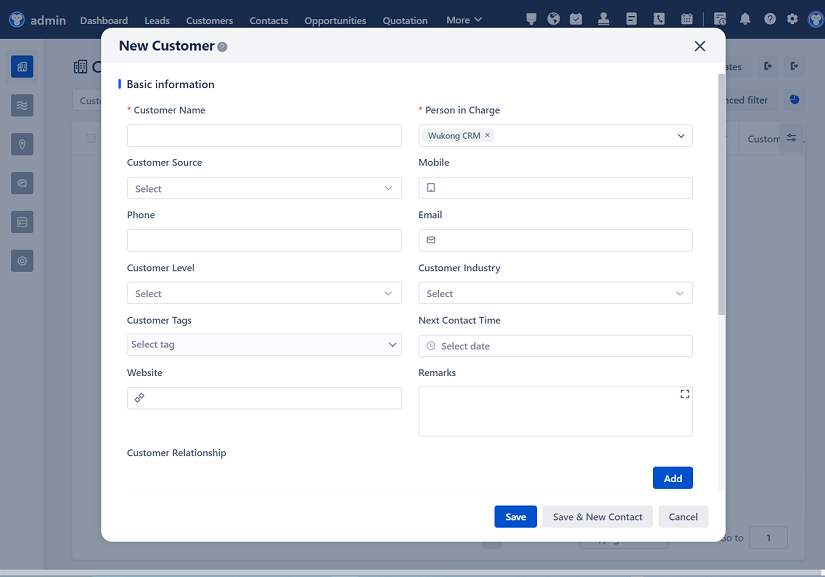
△Click on the top right corner to try Wukong CRM for free