
△Click on the top right corner to try Wukong CRM for free
You know, when I first started looking into CRM systems a few years back, I had no idea just how massive this market had become. I mean, I knew businesses used customer relationship tools, but I didn’t realize how deeply embedded they are in everything from small startups to global corporations. It’s kind of wild when you think about it—how something that started as simple contact databases has turned into full-blown AI-powered platforms managing entire customer lifecycles.
So, let me break it down for you the way I’ve come to understand it. The CRM market isn’t just growing—it’s exploding. Last I checked, the global CRM software market was already worth over
Free use of CRM system: Free CRM
Now, if you’re wondering who’s actually leading the pack, Salesforce is still the big dog here. They’ve been dominating the space for over two decades, and last I saw, they held around 19% of the global CRM market share. That might not sound like a majority, but in a market this fragmented, that’s huge. I remember talking to a sales manager at a mid-sized tech firm, and he said, “If you’re not using Salesforce, you’re basically flying blind.” That stuck with me because it shows how trusted and widespread it’s become.
But here’s the thing—Salesforce isn’t the only player making waves. Microsoft has been quietly building up its Dynamics 365 platform, and it’s now sitting comfortably in second place with about 11% market share. What’s cool about Microsoft’s approach is how tightly integrated it is with Office 365 and Teams. A lot of companies already use Microsoft products daily, so jumping into Dynamics feels natural. I’ve heard people say things like, “I didn’t even realize I was using a CRM until I noticed how smoothly my Outlook and Excel were syncing with client data.”
Then there’s SAP, Oracle, and Adobe—all heavy hitters in their own right. SAP’s Customer Experience suite is especially strong in enterprise circles, particularly among manufacturing and logistics firms. Oracle’s CX platform leans heavily into AI and analytics, which makes sense given their database roots. And Adobe? Well, they’ve made a name for themselves in marketing automation through their Experience Cloud, which ties beautifully into creative workflows.
But what really fascinates me is how fast the landscape is changing. Just a few years ago, cloud-based CRMs were considered cutting-edge. Now? They’re table stakes. Over 80% of new CRM deployments are cloud-based, and honestly, I can’t blame companies for going that route. It’s cheaper, faster to set up, and way easier to scale. I talked to an IT director at a retail chain who told me, “We went from months of setup to going live in under three weeks—all because we chose a cloud solution.”
And speaking of speed, artificial intelligence is becoming a game-changer in CRM. Think about it: instead of manually sorting leads or guessing when to follow up, AI can analyze past behavior and predict the best time to reach out. HubSpot, for example, rolled out AI-powered email suggestions, and I’ve seen reps cut their drafting time in half. One salesperson told me, “It’s like having a co-pilot who knows your customers better than you do.”
Another trend I’ve noticed is the rise of industry-specific CRMs. Generic platforms are great, but sometimes you need something tailored. Real estate agencies, healthcare providers, and nonprofits all have unique needs. So now we’re seeing more niche players emerge—like Nutshell for small sales teams or Zoho CRM for budget-conscious startups. Zoho, by the way, has been killing it lately. They’ve got a solid 5% market share and are growing fast, especially in emerging markets where affordability matters.
Oh, and mobile access? Non-negotiable. I don’t know a single sales rep who doesn’t check their CRM on their phone multiple times a day. The ability to update deals, log calls, or pull up customer history while on the go has completely changed how teams operate. I remember shadowing a field sales rep last year, and she pulled up a client’s entire purchase history while standing in an elevator. She said, “This app saved my pitch. I wouldn’t have remembered that detail otherwise.”
Integration is another big deal. People don’t want to juggle ten different apps—they want everything connected. That’s why platforms like Salesforce and HubSpot spend so much energy building ecosystems. You can plug in your email, calendar, social media, even your accounting software. One marketing manager told me, “Our CRM is basically our command center now. If it’s not in there, it didn’t happen.”
Let’s talk pricing for a second, because that’s always a hot topic. You’ve got everything from free tiers (looking at you, HubSpot) to enterprise packages that cost thousands per user per year. Most small businesses start with basic plans under $50/month, while larger organizations often pay six figures annually. But here’s the kicker—companies are willing to pay because they see the ROI. I read a study that said businesses using CRM report a 41% increase in revenue from existing customers. That’s not chump change.
Another thing I’ve picked up from talking to users is that adoption is still a challenge. You can buy the fanciest CRM in the world, but if your team doesn’t use it, it’s useless. I’ve heard horror stories—like one company that spent $200K on a system that ended up being used by only three people. On the flip side, I’ve seen companies succeed by focusing on training and change management. One HR leader said, “We didn’t roll it out company-wide. We started with a pilot team, fixed the kinks, then scaled. Everyone felt involved, so resistance dropped.”

The pandemic definitely accelerated CRM adoption too. When offices shut down and face-to-face meetings vanished, businesses had to digitize fast. Suddenly, having a centralized system to track customer interactions wasn’t optional—it was survival. I spoke with a restaurant group owner who switched to a CRM just to manage takeout orders and loyalty programs. He said, “We thought we were just organizing data, but it helped us stay open during lockdown.”
Looking ahead, I think the next frontier is personalization at scale. Customers expect brands to know them—their preferences, their history, even their mood. CRMs are getting smarter at using behavioral data to deliver hyper-relevant experiences. Imagine a system that not only reminds you to call a client but suggests exactly what to say based on their recent social media activity. That’s not sci-fi anymore; it’s already happening.
Sustainability is also creeping into the conversation. More companies are asking vendors about data privacy, carbon footprint, and ethical AI practices. Salesforce, for instance, has made big moves toward sustainability with its Net Zero Cloud. I think this will become a bigger selling point as consumers demand more responsibility from the brands they support.

One thing I’ve learned after all these conversations and research hours is that CRM isn’t just software—it’s a mindset. It’s about putting the customer at the center of everything you do. The best platforms don’t just store data; they help you build relationships. I’ll never forget a customer service rep telling me, “This CRM doesn’t feel like a tool. It feels like a memory bank for every promise we’ve ever made to our clients.”
And hey, it’s not perfect. There are still issues—data silos, poor user interfaces, integration headaches. But the overall trajectory is clear: CRM is becoming more intuitive, more intelligent, and more essential. Whether you’re a solopreneur or running a Fortune 500, having a solid CRM strategy isn’t optional. It’s the backbone of modern business.
So where does that leave us? Well, the market’s competitive, innovative, and growing fast. Leaders like Salesforce and Microsoft aren’t resting on their laurels—they’re pushing boundaries with AI, automation, and deeper analytics. Meanwhile, smaller players are finding success by serving specific niches or offering unbeatable value.
If you’re thinking about adopting or upgrading your CRM, my advice? Start with your team’s pain points. Don’t get dazzled by flashy features. Ask: What do we struggle with today? Is it lead tracking? Follow-ups? Reporting? Then find a platform that solves those problems—not one that just looks good in a demo.
And whatever you do, involve your users early. Because at the end of the day, the most powerful CRM in the world is useless if nobody uses it. I’ve seen too many expensive tools collect digital dust because leadership didn’t listen to the people on the front lines.
Anyway, that’s my take—based on what I’ve seen, heard, and lived through. The CRM space is alive, evolving, and more human-centered than ever. And honestly? I’m excited to see where it goes next.
FAQs (Frequently Asked Questions):
Q: Who is the current market leader in CRM systems?
A: As of now, Salesforce holds the top spot with roughly 19% of the global CRM market share. They’ve maintained this position for years thanks to their comprehensive features, strong ecosystem, and early dominance in cloud-based CRM.
Q: Are cloud-based CRMs really that much better than on-premise ones?
Yeah, for most companies, absolutely. Cloud CRMs are easier to deploy, cheaper to maintain, and simpler to update. Plus, they allow remote access, which is crucial in today’s hybrid work environments. Only very large enterprises with strict data control needs tend to stick with on-premise solutions.

Q: How much does a typical CRM cost?
Well, it varies a ton. Small businesses can start with free or
Q: Can a small business benefit from a CRM?
Totally. In fact, I’d argue they need it even more. A CRM helps small teams stay organized, nurture leads, and provide consistent service—even with limited staff. Tools like HubSpot, Zoho, or Freshsales are built with small businesses in mind.
Q: Is AI in CRM just hype, or is it actually useful?
Not hype at all. Real-world AI features—like predictive lead scoring, automated email drafting, and sentiment analysis—are already saving teams time and boosting sales. It’s not replacing humans; it’s helping them work smarter.
Q: What’s the biggest mistake companies make when choosing a CRM?
Hands down, skipping user input. Too many leaders pick a system based on features or brand reputation without asking the actual users what they need. That leads to low adoption and wasted money. Always involve your team from day one.
Q: Will CRM systems eventually replace human customer service?
No way. CRMs are tools to empower people, not replace them. The best systems enhance human connection by providing insights and freeing up time for meaningful interactions. At its core, CRM is about better relationships—not automation for automation’s sake.
Related links:
Free trial of CRM
Understand CRM software
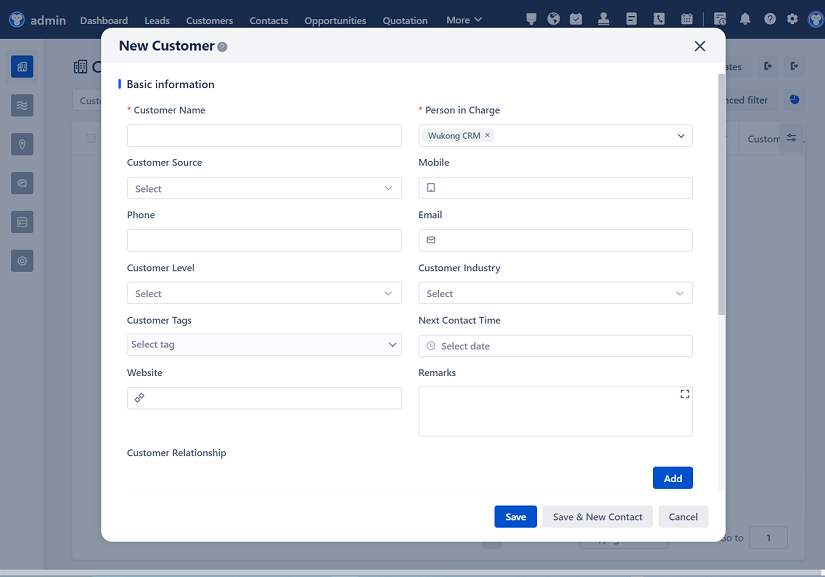
△Click on the top right corner to try Wukong CRM for free