
△Click on the top right corner to try Wukong CRM for free
Look, let’s be honest — when it comes to CRM systems, most companies jump in with excitement. They see all the shiny features: automated follow-ups, customer insights, sales forecasting — it sounds like a dream come true. But here’s the thing I’ve learned after working with dozens of businesses: if you don’t properly assess and manage the risks, that dream can turn into a nightmare real quick.
I remember this one company — mid-sized, growing fast, really passionate team. They rolled out a new CRM system across their entire sales department in just two weeks. No training, no data cleanup, no risk assessment. And guess what? Within a month, half the team stopped using it. Why? Because it wasn’t helping them; it was slowing them down. That’s when I realized how crucial risk management is in CRM implementation.
Free use of CRM system: Free CRM

So, where do we even start? Well, first, you’ve got to understand what kind of risks you’re dealing with. It’s not just about technology failing — though that happens too. It’s about people, processes, data, security, and long-term sustainability. Let me break it down for you.
One of the biggest risks? Poor user adoption. You can have the most advanced CRM on the planet, but if your team doesn’t use it, it’s basically useless. I’ve seen so many cases where leadership assumes everyone will just “get it” and start logging calls and updating records. But people resist change, especially if they don’t see the value. So before you even pick a CRM, ask yourself: Will our team actually use this?
Then there’s data quality. Oh man, bad data is like a virus in a CRM. If your contacts are outdated, duplicates pile up, or fields are left blank, your reports become meaningless. I once audited a client’s CRM and found over 12,000 duplicate entries. Can you imagine trying to run marketing campaigns with that mess? Garbage in, garbage out — it’s that simple.
Security is another huge concern. CRMs store sensitive customer information — names, emails, phone numbers, sometimes even purchase history or payment details. If that data gets leaked, not only do you lose trust, but you could face legal trouble, especially under regulations like GDPR or CCPA. So you’ve got to ask: Who has access? How is the data encrypted? Is the vendor compliant with privacy laws?
And speaking of vendors — choosing the wrong CRM platform can sink your whole project. Some tools look great on paper but lack integration capabilities. Others charge hidden fees for essential features. I had a client who thought they were getting a “free” CRM, only to find out later that adding more than five users cost triple the advertised price. Always read the fine print.
Integration issues are another silent killer. Your CRM needs to talk to your email, calendar, marketing tools, maybe even your ERP system. If it doesn’t play well with others, your team ends up copying and pasting data manually — which defeats the whole purpose. Trust me, I’ve watched sales reps waste hours every week just moving data between systems. That’s not efficiency — that’s frustration.

Now, let’s talk about customization. Sure, tailoring your CRM to fit your business sounds great. But go too far, and you create a Frankenstein system that’s hard to maintain, update, or train people on. I’ve seen companies spend months building custom workflows, only to realize they made things more complicated than before. Sometimes, simplicity wins.
Change management is something a lot of leaders overlook. Just because you install new software doesn’t mean your processes automatically improve. People need time, support, and clear reasons to change their habits. One company I worked with assigned “CRM champions” in each department — real users who helped others, shared tips, and gave feedback. That small move boosted adoption by over 60%. Human connection matters.
Training is non-negotiable. I don’t care how intuitive a CRM claims to be — if people don’t know how to use it, they won’t. And training shouldn’t be a one-time event. It should be ongoing, with refresher sessions, video tutorials, and quick-reference guides. Think about it: would you hand someone a car without teaching them how to drive?
Data migration is another minefield. Moving years of customer data from an old system (or spreadsheets!) into a new CRM sounds straightforward — until you hit formatting issues, missing fields, or corrupted files. I always recommend starting with a pilot group, testing the migration with a small dataset first. Better to fix problems early than lose critical data later.

Scalability is easy to ignore when you’re small, but it bites you later. What works for 10 users might collapse at 100. Will your CRM handle more contacts, more automation, more integrations as you grow? Ask the vendor about performance under load. Don’t assume.
Downtime and reliability matter too. If your CRM goes down during peak sales hours, your team can’t log calls, check customer history, or close deals. That’s lost revenue and frustrated employees. Look into uptime guarantees, backup systems, and disaster recovery plans. A 99.9% uptime means about 8.7 hours of downtime per year — is that acceptable for your business?
Cost overruns are sneaky. The initial price tag might seem fine, but add on training, customization, third-party apps, and ongoing support, and suddenly you’re spending way more than planned. Budget for the full lifecycle, not just the first month.

Now, how do you actually manage these risks? It starts with a solid risk assessment before you buy anything. Sit down with key stakeholders — sales, marketing, IT, customer service — and map out what could go wrong. Use a simple framework: identify the risk, estimate its likelihood, assess the impact, and plan a response.
For example, take “low user adoption.” Likelihood? High, especially if the team hasn’t been involved. Impact? Severe — the whole system fails. Response? Involve users early, provide training, show quick wins, and get leadership to model good behavior.
Another example: “data breach.” Likelihood? Medium, depending on your security practices. Impact? Catastrophic — fines, lawsuits, reputation damage. Response? Choose a secure vendor, enforce strong passwords, enable two-factor authentication, limit access rights, and conduct regular audits.
You also need a phased rollout strategy. Don’t flip a switch and expect everything to work. Start with a pilot group — maybe one sales team or region. Test the system, gather feedback, fix issues, then expand gradually. This reduces risk and builds confidence.
Monitoring is key. Set up dashboards to track CRM usage — who’s logging in, how often, which features are used. If you see a drop in activity, investigate early. Maybe there’s a usability issue, or someone needs more training.
And don’t forget feedback loops. Regularly ask users what’s working and what’s not. Hold monthly check-ins. Make it safe for people to say, “This feature is annoying” or “I can’t find the report I need.” Real improvement comes from listening.
Backups and disaster recovery aren’t glamorous, but they’re essential. Make sure your CRM provider has automatic backups and a clear recovery process. Test it. I’ve seen companies lose months of data because they assumed it was being backed up — it wasn’t.
Finally, think long-term. A CRM isn’t a one-time project; it’s an evolving tool. Plan for regular reviews, updates, and optimization. Assign ownership — someone should be responsible for maintaining the system, managing user access, and ensuring data hygiene.
Let me tell you a success story. A healthcare provider I worked with was struggling with patient follow-ups. Their old system was clunky, and staff avoided it. We did a full risk assessment, picked a user-friendly CRM, trained everyone in small groups, and launched in phases. We even gamified usage — top users got small rewards. Six months later, follow-up rates improved by 45%, and staff actually liked using the system. All because we managed the risks upfront.
So, what’s the takeaway? CRM systems can transform your business — but only if you treat risk management as a core part of the process, not an afterthought. It’s not about avoiding risk entirely — that’s impossible. It’s about being prepared, staying flexible, and putting people first.
You don’t need a perfect system. You need one that works for your team, protects your data, and grows with you. And that starts with asking the right questions, listening to real concerns, and planning for the bumps along the way.
At the end of the day, technology is just a tool. The real magic happens when people use it effectively, confidently, and consistently. And that only happens when you’ve done the hard work of assessing and managing the risks from the very beginning.
FAQs (Frequently Asked Questions):
Q: How do I know if my team will actually use the CRM?
A: Great question. The best way to predict adoption is to involve your team early. Let them test demos, give feedback, and even help choose the system. If they feel ownership, they’re way more likely to use it.
Q: What’s the most common mistake companies make with CRM implementation?
A: Hands down, it’s skipping proper training and change management. They focus so much on the tech that they forget about the human side. People need support, not just software.
Q: Should I customize my CRM a lot?
A: Be careful. Some customization is good, but too much makes the system fragile and hard to upgrade. Stick to essential changes and avoid over-engineering workflows.
Q: How often should we review our CRM’s performance?
A: At least quarterly. Check usage stats, user feedback, and whether it’s still meeting business goals. Things change — your CRM should adapt.
Q: Is cloud-based CRM safe?
A: Generally, yes — reputable providers invest heavily in security. But you still need to manage access, use strong passwords, and ensure compliance with data laws.
Q: What if our CRM doesn’t integrate with other tools?
A: That’s a red flag. Integration is critical. Before buying, test connections with your email, marketing platform, and any other key systems. Don’t assume it’ll work.
Q: How can we improve data quality in our CRM?
A: Start with clean input rules — require certain fields, validate emails, prevent duplicates. Then schedule regular cleanups and assign data ownership to specific team members.
Q: Who should lead the CRM project in our company?
A: Ideally, it’s a cross-functional effort. IT handles tech setup, but business leaders (like sales or marketing heads) should drive adoption and define requirements.
Q: Can a small business benefit from a CRM?
A: Absolutely. Even solopreneurs can use CRMs to track leads, automate follow-ups, and build better relationships. Many tools offer affordable plans for small teams.
Q: What’s the first step in managing CRM risks?
A: Sit down with your team and list everything that could go wrong — from low adoption to data loss. Once you see the risks clearly, you can plan how to handle them.
Related links:
Free trial of CRM
Understand CRM software
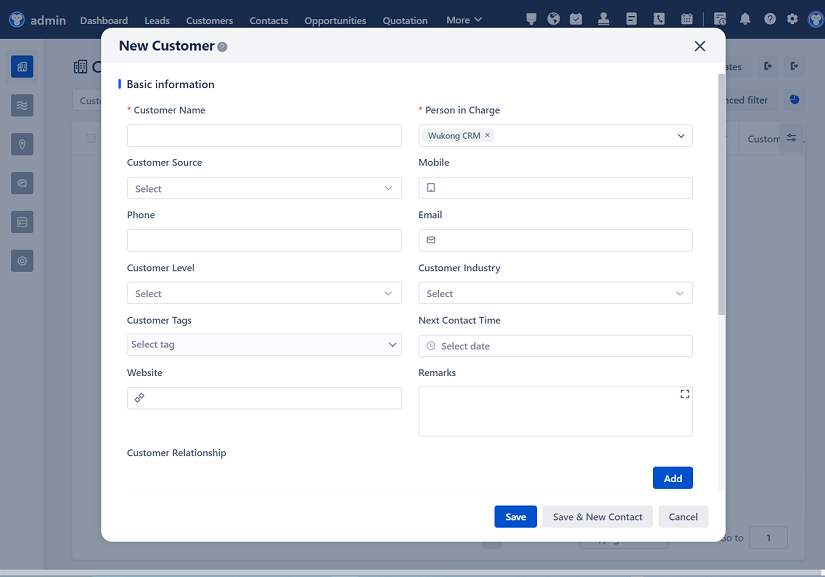
△Click on the top right corner to try Wukong CRM for free