
△Click on the top right corner to try Wukong CRM for free
You know, when I first started learning about CRM systems, I was kind of overwhelmed by all the jargon and features. But over time, I realized that one of the most powerful aspects of modern CRMs is sales automation. Honestly, it’s like having a smart assistant that helps your sales team work faster, smarter, and with way less manual effort.
Let me break it down for you—sales automation isn’t just some fancy buzzword. It’s actually a set of functional modules built into CRM platforms that take repetitive, time-consuming tasks off your team’s plate. And trust me, once you see how these tools work in real life, you’ll wonder how you ever managed without them.
Free use of CRM system: Free CRM
So, what exactly are these functional modules? Well, let’s start with lead management. This one’s huge. Think about how many leads your team gets every day—from website forms, social media, email campaigns, you name it. Without automation, someone has to manually enter each lead into the system, assign it to a rep, and track follow-ups. That’s not only slow but also super prone to errors.
But with automated lead capture and routing, the moment someone fills out a form on your site, boom—their info is instantly added to the CRM. And here’s the cool part: based on predefined rules (like location, industry, or lead score), the system automatically assigns that lead to the right salesperson. No delays, no missed opportunities.

And speaking of lead scoring, that’s another module I’ve grown to love. You know how tough it is to figure out which leads are actually ready to buy? Some people download an ebook and disappear, while others visit your pricing page three times in a week. Sales automation uses behavioral and demographic data to score leads automatically. So instead of guessing, your team can focus on the hot prospects who are genuinely interested.
Now, let’s talk about workflow automation. This one’s a game-changer. Imagine setting up a sequence where, after a lead is assigned, the system automatically sends a personalized welcome email, schedules a follow-up task for the sales rep, and even reminds them if they haven’t responded in 24 hours. All of that happens without anyone lifting a finger. It keeps things moving and makes sure nothing slips through the cracks.
I remember working with a company that used to lose leads simply because reps were too busy to follow up in time. After implementing workflow automation, their response time dropped from two days to under two hours. Their conversion rates went up by almost 30%. That’s not magic—that’s smart automation.
Another module that really stands out is email automation. Look, cold emailing is still a thing, but blasting generic messages to everyone doesn’t cut it anymore. With CRM-integrated email automation, you can create personalized sequences that trigger based on user behavior. For example, if a lead opens your first email but doesn’t reply, the system can send a second one two days later with a different subject line or offer.

And the best part? These emails can be fully customized using merge tags—so each recipient feels like you’re talking directly to them. Plus, the CRM tracks everything: who opened the email, who clicked the link, who replied. That data feeds back into lead scoring, making the whole system smarter over time.
Then there’s task and activity management. Let’s be honest—salespeople have a lot on their plates. Between calls, meetings, demos, and admin work, it’s easy to forget a follow-up or miss a deadline. But with automated task creation, the CRM generates reminders based on deal stages or customer interactions. So if a client says they’ll get back to you next week, the system automatically adds a task for Friday afternoon to check in.
I’ve seen teams go from chaotic spreadsheets and sticky notes to perfectly organized pipelines—all thanks to this feature. It’s not just about staying organized; it’s about building consistency in your sales process.
Speaking of pipelines, opportunity management is another key module. This is where deals are tracked from initial contact to close. Automation comes into play by updating deal stages automatically when certain actions happen—like when a proposal is sent or a contract is signed. It reduces manual data entry and gives managers real-time visibility into the sales funnel.
And let’s not forget forecasting. With historical data and current pipeline info, automated forecasting tools can predict revenue with surprising accuracy. Managers aren’t just guessing anymore—they’re making decisions based on solid data. That’s a big win for planning and strategy.
Now, let’s shift gears a bit and talk about real-world application scenarios. Because honestly, knowing the modules is one thing, but seeing how they solve actual business problems is where the value really hits home.
Take a mid-sized SaaS company, for example. They were struggling with lead response time. Their marketing generated hundreds of leads monthly, but by the time sales followed up, most had already chosen a competitor. After implementing automated lead routing and email sequences, their average response time dropped to 15 minutes. Guess what? Their qualified lead conversion rate doubled within three months.
Or consider a B2B services firm with a long sales cycle. Their reps were spending way too much time on administrative tasks—logging calls, updating records, scheduling follow-ups. By automating workflows and task creation, they freed up nearly 10 hours per rep each week. That’s 10 extra hours to actually sell, build relationships, and close deals.
Another scenario: a retail brand expanding into e-commerce. They wanted to personalize outreach but didn’t have the manpower to do it manually. Using CRM automation, they set up dynamic email campaigns triggered by browsing behavior. If someone viewed a product but didn’t buy, they got a tailored follow-up with a discount. Conversion rates from abandoned carts jumped by 40%.
And here’s one more—customer onboarding. A lot of companies close the sale and then… radio silence. Bad move. Automated onboarding sequences ensure new customers get welcomed, trained, and supported from day one. One tech startup used this to reduce early churn by 25%. People felt valued, got help quickly, and were more likely to stick around.
Now, I should mention that sales automation isn’t about replacing humans. It’s about empowering them. The goal isn’t to make sales robotic—it’s to remove the boring, repetitive stuff so your team can focus on what they do best: building relationships, understanding customer needs, and closing deals.
And let’s be real—automation only works if it’s set up right. You can’t just flip a switch and expect miracles. It takes planning. You need clear processes, clean data, and buy-in from your team. Otherwise, you’ll end up with automated chaos.
For instance, if your lead scoring model is based on outdated assumptions, you might be prioritizing the wrong people. Or if your email templates sound robotic, you’ll turn prospects off instead of engaging them. So yeah, automation needs ongoing tuning and human oversight.
Integration is another thing to watch. Your CRM shouldn’t live in a silo. It needs to connect with your email, calendar, marketing platform, and maybe even your billing system. When everything talks to each other, automation becomes seamless. But if systems don’t integrate well, you’ll end up with data gaps and frustrated users.
Also, don’t underestimate training. I’ve seen companies invest in a fancy CRM, roll it out, and then wonder why nobody’s using it. People resist change, especially if they don’t understand how it helps them. So take the time to train your team, show them the benefits, and gather feedback. Make it a collaborative process.
One last thing—measure results. Set clear KPIs before you start: response time, conversion rates, deal velocity, forecast accuracy. Then track them regularly. That way, you can see what’s working, what’s not, and adjust accordingly. Automation isn’t a “set it and forget it” tool. It’s a living system that evolves with your business.
So, to wrap this up—sales automation in CRM systems is not just a nice-to-have. It’s becoming essential for staying competitive. Whether you’re a small startup or a large enterprise, these functional modules can save time, improve accuracy, and boost revenue.
From lead management to workflow automation, email sequencing to forecasting, each module plays a role in making your sales process smoother and more effective. And when applied in real-world scenarios—like speeding up response times, reducing admin load, or personalizing customer journeys—the impact can be massive.
At the end of the day, it’s not about technology for technology’s sake. It’s about helping your team do their best work with less friction. And honestly, isn’t that what every business wants?
FAQs (Frequently Asked Questions):
Q: Is sales automation only for big companies with large teams?
A: Not at all! Even small businesses can benefit. In fact, smaller teams often feel the pain of manual tasks more acutely. Automation helps them punch above their weight.
Q: Will automation make my sales team lazy?
A: Good question. But no—when used right, automation frees up time so reps can focus on high-value activities like relationship-building and consultative selling. It removes grunt work, not accountability.

Q: Can automation replace salespeople entirely?
A: Absolutely not. Automation handles repetitive tasks, but human connection, empathy, and negotiation skills are still irreplaceable. Think of it as a tool, not a replacement.
Q: How long does it take to set up sales automation in a CRM?
A: It depends on complexity. Simple email sequences might take a few days. Full pipeline automation with integrations could take weeks. Start small, test, and scale.
Q: What if my data is messy? Can I still automate?
A: You can, but you probably shouldn’t—at least not yet. Clean data is crucial. Start by organizing your contacts, standardizing fields, and removing duplicates before automating.
Q: Are there risks to over-automating?
A: Yes. Too much automation can make communication feel impersonal. Always balance efficiency with authenticity. Review automated messages regularly to keep them human.
Q: Which CRM has the best sales automation features?
A: It varies. Salesforce, HubSpot, Zoho, and Pipedrive all have strong automation tools. The best choice depends on your budget, team size, and specific needs.
Q: Can automation help with customer retention, not just acquisition?
A: Definitely. Automated check-ins, renewal reminders, and onboarding sequences are great for keeping existing customers engaged and reducing churn.
Q: Do I need a developer to set up automation?
A: Not usually. Most modern CRMs have drag-and-drop workflow builders that non-tech users can handle. But for complex integrations, some technical help might be needed.

Q: How do I know if sales automation is working?
A: Track metrics like lead response time, conversion rates, sales cycle length, and rep productivity. If those improve, your automation is doing its job.
Related links:
Free trial of CRM
Understand CRM software
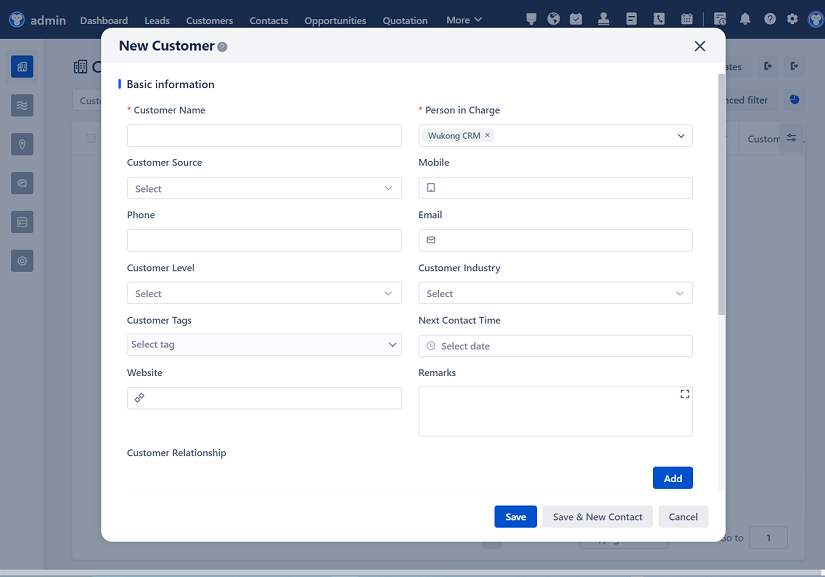
△Click on the top right corner to try Wukong CRM for free