
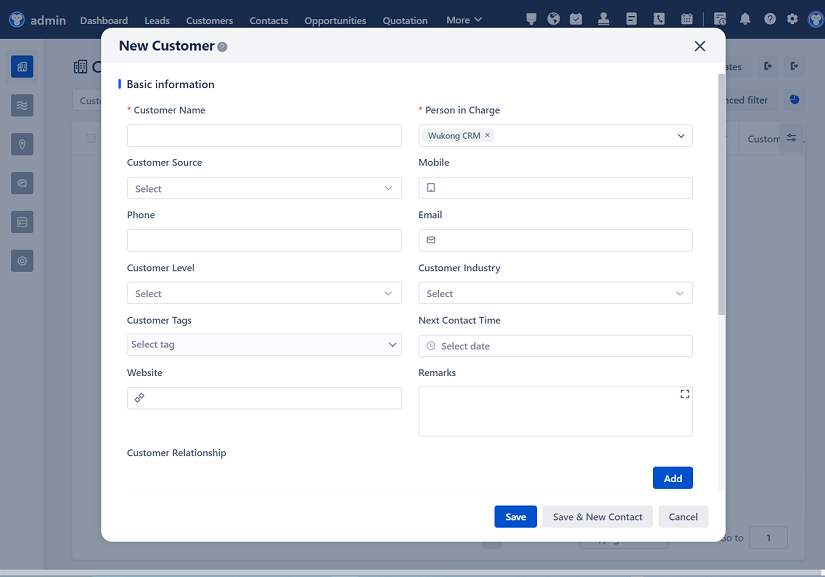
△Click on the top right corner to try Wukong CRM for free
Look, I get it — CRM systems can feel like this big, complicated beast that runs your entire business. You rely on it every single day to keep track of customers, manage sales pipelines, and even handle support tickets. But here’s the thing: just like your car needs oil changes and your phone needs updates, your CRM needs regular care too. I’ve seen so many companies set up a CRM, get excited for a few weeks, and then just… forget about it. Big mistake. That’s why I want to walk you through what daily maintenance and upgrades really look like — not in some robotic, technical manual way, but in a way that actually makes sense for real people running real businesses.
First off, let’s talk about logging in every morning. I know it sounds basic, but seriously, make it part of your routine. When you open your CRM, take a quick second to scan for any error messages or system alerts. Sometimes, the system will quietly tell you something’s off — maybe a sync failed, or a workflow didn’t trigger. If you catch it early, you can fix it before it snowballs into a bigger problem.
Free use of CRM system: Free CRM
And speaking of workflows — those little automated tasks that save you hours every week — they need checking too. I once had a client who didn’t realize their lead assignment rule had stopped working for two weeks. Two weeks! That’s leads falling through the cracks, sales reps getting frustrated, and customers feeling ignored. So, just take five minutes once a day to verify that your automations are running smoothly. Click through a few recent records and see if they followed the right path.

Now, let’s talk data. Oh man, data is everything in a CRM. But here’s the truth: data gets messy. People enter incomplete info, duplicate records pop up, and outdated contacts linger like digital ghosts. That’s why I always recommend doing a quick data hygiene check every day. Look for duplicates, fill in missing fields where you can, and archive old leads that aren’t going anywhere. It doesn’t have to be a huge cleanup — just a little bit each day keeps the system healthy.
Another thing people forget? User activity. Log in and peek at who’s using the CRM and how. Are some team members not logging calls or updating deals? That’s a red flag. A CRM is only as good as the people using it. If your sales team isn’t updating their pipelines, you’re flying blind. So, gently nudge them. Maybe send a quick message like, “Hey, I noticed your last few calls weren’t logged — everything okay?” It’s not about micromanaging; it’s about keeping the system accurate and useful.

Backups — yeah, I know, it’s boring. But trust me, you don’t want to learn the hard way. Make sure your CRM is backing up automatically every night. Most modern systems do this by default, but check anyway. Ask your IT person or the CRM support team to confirm. And every now and then, test a restore. I once worked with a company that thought their backups were working — turns out they weren’t. Lost six months of customer data. Heartbreaking.
Now, let’s shift gears a bit and talk about upgrades. I know the word “upgrade” can sound scary. Like, “Oh no, is something breaking? Do I have to retrain everyone?” But upgrades don’t have to be terrifying. In fact, they’re usually a good thing. Vendors roll out new features, fix bugs, and improve performance. The key is to stay informed.
So, sign up for your CRM provider’s newsletter or update notifications. That way, you’ll know when a new version is coming. Read the release notes — I know, they sound technical, but skim them. Look for things like “improved mobile app” or “faster search.” Those are wins. And if there’s a major change, like a new interface, give your team a heads-up. No one likes surprises.
When an upgrade is scheduled, don’t just let it happen in the background. Plan for it. Pick a time when the system isn’t super busy — maybe late evening or over the weekend. Let your team know in advance so they don’t panic when they see a slightly different layout. And after the upgrade, do a quick walkthrough. Make sure your reports still work, your integrations are connected, and your custom fields didn’t disappear. I’ve seen more than one company freak out because a button moved — it’s not the end of the world, but it helps to be prepared.
Oh, and integrations! We can’t forget those. Your CRM probably talks to your email, calendar, marketing tools, maybe even your accounting software. These connections are fragile. Every day, check that your key integrations are active. Did your email sync stop? Is your calendar not pulling in meetings? These little hiccups can mess up your whole workflow. Most CRMs have a status page or integration dashboard — glance at it daily. It takes two seconds.
Permissions are another sneaky one. As your team grows, people change roles. Someone moves from sales to marketing, or a new hire joins. If you don’t update their access, you either give them too much power or not enough. So, once a day, review any recent team changes and adjust permissions accordingly. Keep it tight — only give access to what people actually need. It’s safer and cleaner.
Now, here’s a pro tip: create a little checklist. Seriously, just a simple list of things to check every morning. “Log in, check alerts, review automations, scan for duplicates, verify integrations, peek at user activity.” Print it out, stick it on your desk, or save it in your notes. Having a routine makes maintenance feel less overwhelming.
And don’t go it alone. Assign a CRM champion on your team — someone who’s tech-savvy and actually likes this stuff. They don’t have to do all the work, but they can help spot issues, train new users, and be the go-to person when something weird happens. I’ve seen this make a huge difference in how smoothly a CRM runs.
Let’s talk about performance. If your CRM feels slow, don’t just suffer through it. Slow load times usually mean something’s off — maybe too many records in a view, or a bloated report running in the background. Check your most-used dashboards and simplify them. Hide fields you don’t need. Archive old data. A lean, clean CRM is a fast CRM.
Also, keep an eye on storage limits. Some CRMs charge extra if you go over your data cap. I’ve seen companies get hit with surprise bills because no one was monitoring file uploads or email attachments. Set up alerts for when you’re nearing your limit. Better to know early than get a nasty surprise.
Training is part of maintenance too. People forget things. Or new features get added, and no one knows how to use them. So, every week or two, share a quick tip with your team. Maybe it’s how to use the new task reminder feature, or how to filter leads by region. Keep it short and practical. A 5-minute huddle can save hours of confusion later.

And feedback — ask your team how the CRM is working for them. Are they frustrated by a certain process? Is there a feature they wish existed? I once had a sales rep complain that logging calls took too long. Turns out, we could automate it with a simple integration. Problem solved. Listening to users makes the system better for everyone.
Finally, don’t wait for a crisis to think about your CRM. Daily maintenance isn’t about fixing broken things — it’s about preventing them. It’s like brushing your teeth. You don’t wait until you have a cavity to start caring. A few minutes a day keeps everything running smoothly.
So, to wrap this up: log in daily, check alerts, clean data, monitor automations, verify integrations, watch user activity, stay on top of upgrades, and listen to your team. It’s not glamorous, but it’s what separates companies that get real value from their CRM from those that just have a fancy database collecting dust.
You’ve got this. It’s not about being perfect — it’s about being consistent. And honestly, once you get into the rhythm, it becomes second nature. Your CRM will thank you. Your team will thank you. And your customers? They’ll notice the difference too.
FAQs (Frequently Asked Questions)
Q: Do I really need to check the CRM every single day?
A: Not necessarily for hours, but yes — a quick 5–10 minute check each morning can prevent big issues later. Think of it like checking your email or voicemail. It’s part of staying on top of your business.
Q: What if I don’t have an IT person? Can I still manage CRM maintenance?
A: Absolutely. Most modern CRMs are designed for non-technical users. You don’t need to be a coder. Just follow a simple checklist and reach out to the CRM’s support team when you’re unsure.
Q: How do I know if an upgrade is safe to install?
A: Always read the release notes first. If it’s a minor update, it’s usually safe. For major upgrades, consider testing in a sandbox (a practice version of your CRM) first. And never upgrade during peak business hours.
Q: What’s the easiest way to clean up duplicate records?
A: Most CRMs have built-in deduplication tools. Run them weekly or monthly. You can also set up rules to prevent duplicates from being created in the first place — like blocking new entries if an email already exists.
Q: How often should I back up my CRM data?
A: Daily is ideal. Most cloud-based CRMs do this automatically, but confirm with your provider. Also, export a full backup manually every few months and store it securely, just in case.
Q: My team hates using the CRM. What can I do?
A: Start by asking why. Is it too slow? Too complicated? Then simplify. Remove unnecessary fields, automate repetitive tasks, and provide quick training. Make it easier to use than not using it.
Q: Can I schedule maintenance tasks to happen automatically?
A: Some things, yes — like backups and data syncs. But human checks (like reviewing workflows or user activity) still need a person’s eye. Automation helps, but oversight is key.
Q: What’s the first thing I should do if something breaks in the CRM?
A: Stay calm. First, check if it’s a widespread issue (ask your team). Then, look at system alerts or status pages. If you can’t fix it, contact your CRM’s support team with details — when it started, what you were doing, and any error messages.
Related links:
Free trial of CRM
Understand CRM software
△Click on the top right corner to try Wukong CRM for free