
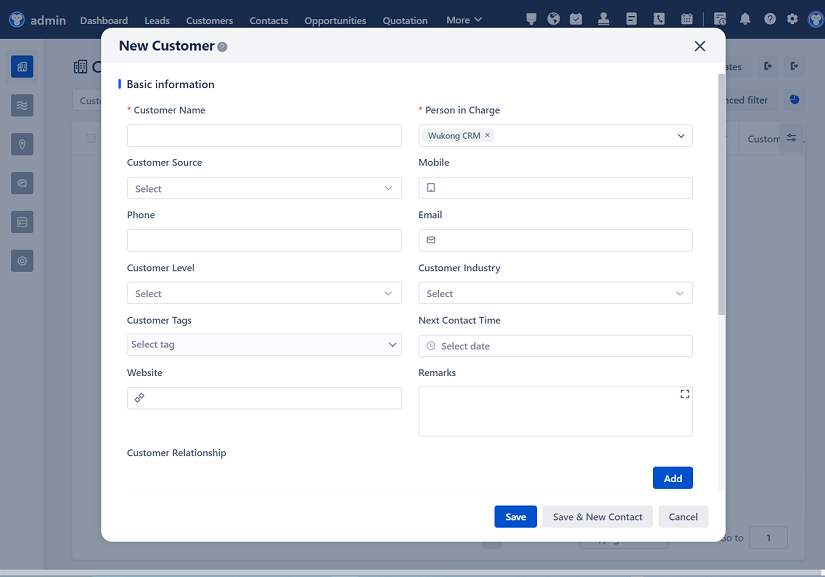
△Click on the top right corner to try Wukong CRM for free
You know, when I first started looking into banking CRM systems, I honestly didn’t think they’d be such a big deal. But the more I dug into it, the more I realized just how much they’ve changed the way banks interact with their customers. It’s not just about storing names and phone numbers anymore—these systems have evolved into something way more powerful.
I remember a few years ago, going into a bank branch felt like stepping into a time capsule. You’d wait in line, hand over your ID, and hope the teller remembered your account details. But now? It’s completely different. Banks are using CRM systems to track every interaction, every transaction, and even your preferences. It’s kind of wild when you think about it.
Free use of CRM system: Free CRM
So what exactly is a CRM system in banking? Well, it’s basically a software platform that helps banks manage their relationships with customers. Think of it like a super-organized digital notebook that remembers everything—your last loan inquiry, your preferred communication channel, even how you reacted to a recent marketing email.
And honestly, it’s not just about convenience. Banks are under so much pressure these days to stay competitive. With fintech startups popping up everywhere and customers expecting instant service, traditional banks can’t afford to be slow or impersonal. That’s where CRM comes in.
One thing I’ve noticed is how much smarter these systems have become. They’re not just collecting data—they’re analyzing it. For example, if you’ve been checking mortgage rates online, the CRM might flag you as a potential homebuyer. Then, the next time you call customer service, the agent already knows what you’re interested in. It feels personal, right?
And it’s not just about sales. CRM systems are helping banks improve customer service too. Imagine calling your bank with an issue, and instead of repeating your story three times, the agent already sees your history and jumps right into solving the problem. That kind of experience builds trust.
I’ve also seen how CRM systems are helping banks segment their customers. Instead of treating everyone the same, they can now group people based on behavior, income level, or life stage. A young professional saving for a car gets different offers than a retiree managing investments. It makes sense—why send a student loan ad to someone who’s already retired?

Another cool thing is how CRM integrates with other systems. It’s not sitting in a corner by itself. It connects with core banking platforms, mobile apps, call centers, and even social media. So whether you’re chatting with a bot on Instagram or visiting a branch, the CRM keeps everything in sync.
And speaking of mobile apps—have you noticed how personalized they’ve become? That’s CRM working behind the scenes. If you usually transfer money on Fridays, the app might suggest it automatically. Or if you’re running low on funds, it might offer a short-term loan. It’s like the bank is paying attention, which is kind of nice.
But here’s the thing—not all CRM systems are created equal. Some banks are still using outdated software that can’t keep up with modern demands. I’ve heard stories where customer data is scattered across different departments, so no one has the full picture. That leads to frustration on both sides.

That’s why many banks are investing in cloud-based CRM solutions. They’re more flexible, easier to update, and can scale as the bank grows. Plus, they often come with built-in AI and analytics tools, which is a huge plus.

AI, by the way, is a game-changer in CRM. I’ve seen systems that use machine learning to predict customer behavior. For example, if someone’s spending patterns suddenly change, the CRM might alert the bank to check in—maybe the customer is facing financial trouble. That’s not just smart; it’s responsible banking.
Chatbots are another example. They’re powered by CRM data, so they can answer questions based on your history. “Hi Sarah, I see you paid your credit card bill yesterday. Would you like to increase your limit?” That kind of interaction feels natural, not robotic.
But let’s be real—technology alone isn’t enough. A CRM system is only as good as the people using it. Bank employees need training to understand how to use the data effectively. Otherwise, it’s just a fancy database collecting digital dust.
I’ve talked to a few bank managers who said the biggest challenge wasn’t the software—it was changing the culture. Employees used to work in silos, but CRM forces collaboration. The marketing team needs to talk to customer service, and the loan officers need to share insights with the digital team. It’s a shift, but a necessary one.
Privacy is another big concern. I mean, banks are handling super sensitive data. If a CRM system gets hacked, it’s a disaster. So security has to be top priority. Encryption, multi-factor authentication, regular audits—these aren’t optional anymore.
And customers are more aware than ever. They want to know how their data is being used. That’s why transparency matters. Banks that explain what data they collect and why tend to build stronger relationships. It’s not about hiding things—it’s about earning trust.
Looking ahead, I think CRM systems will become even more predictive. Instead of just reacting to what customers do, banks will anticipate their needs. Want to buy a house? The CRM might start preparing mortgage options before you even ask.
Personalization will go even deeper too. Imagine a banking app that adjusts its interface based on your habits. If you’re visual, it shows charts. If you prefer text, it gives detailed summaries. It’s all about meeting people where they are.
Integration with open banking is another trend I’m watching. As more banks share data (with customer consent), CRM systems will have access to a richer picture of financial behavior. That could lead to better advice and more tailored products.
Sustainability is also becoming a factor. Some banks are using CRM to promote green initiatives—like offering lower rates on eco-friendly home loans. It’s a way to align with customer values while doing good.
But it’s not all smooth sailing. Implementing a CRM system can be expensive and time-consuming. Smaller banks might struggle with the cost or lack the technical expertise. That’s where partnerships with fintech companies come in—they can provide ready-made solutions.
I’ve also seen cases where banks rush into CRM without a clear strategy. They buy the software, install it, and expect magic to happen. But without clear goals and processes, it’s just a tool with no direction.
Change management is crucial. Employees need to understand why the CRM matters and how it benefits them. If they see it as just extra work, they’ll resist it. But if they realize it helps them serve customers better, they’ll embrace it.
Training is key. I’ve been in banks where staff barely knew how to log in to the CRM. That’s a waste of resources. Regular workshops, user guides, and support teams can make a huge difference.
And let’s not forget the customer side. Some people still prefer face-to-face interactions. A CRM shouldn’t replace human touch—it should enhance it. The best experiences happen when technology and empathy work together.
I’ve had conversations with older customers who were nervous about digital banking. But when a teller used the CRM to explain things clearly and patiently, they felt reassured. That human connection is irreplaceable.
Another thing I’ve noticed is how CRM helps with compliance. Banks have to follow strict regulations, and CRM systems can track consent, record communications, and generate audit trails. It’s not glamorous, but it’s essential.
Fraud detection is another area where CRM shines. By analyzing transaction patterns, the system can flag suspicious activity and alert the bank. That protects both the institution and the customer.
Looking at global trends, I see a lot of innovation in emerging markets. In places like India or Kenya, mobile-first CRM systems are helping banks reach unbanked populations. It’s not just about profits—it’s about financial inclusion.
In developed countries, the focus is more on experience and loyalty. CRM helps banks reduce churn by identifying at-risk customers and offering incentives to stay. A simple “We miss you” email with a personalized offer can make a big difference.
Partnerships are also growing. Banks are teaming up with retailers, telecoms, and even healthcare providers. CRM systems help manage these relationships and deliver bundled services. Think of a bank offering travel insurance when you book a flight through their app.
The future? I think CRM will become more proactive. Instead of waiting for customers to reach out, banks will use AI to suggest actions—like refinancing a loan when rates drop or saving more for retirement based on life changes.

Voice assistants and wearable tech might play a role too. Imagine your smartwatch reminding you to pay a bill, powered by CRM insights. It’s not sci-fi—it’s already starting to happen.
Of course, ethical concerns will grow. How much should banks know about us? Where do we draw the line? These are conversations we need to have as a society.
But overall, I’m optimistic. Banking CRM systems, when used responsibly, can make banking more helpful, more human, and more meaningful. They’re not just tools—they’re bridges between banks and the people they serve.
At the end of the day, banking is about relationships. And CRM, at its best, helps strengthen those relationships—one personalized interaction at a time.
FAQs (Frequently Asked Questions):
Q: What does CRM stand for in banking?
A: CRM stands for Customer Relationship Management. In banking, it refers to software systems that help banks manage interactions with customers, track preferences, and improve service.
Q: How does a CRM system improve customer service in banks?
A: It gives bank employees a complete view of the customer’s history, so they can resolve issues faster and offer relevant solutions without making the customer repeat information.
Q: Can CRM systems predict customer behavior?
A: Yes, many modern CRM systems use AI and data analytics to predict things like loan needs, churn risk, or interest in financial products based on past behavior.
Q: Are CRM systems safe for storing sensitive banking data?
A: Reputable CRM systems use strong encryption, access controls, and regular security audits to protect customer data. However, banks must follow strict compliance standards to ensure safety.

Q: Do small banks benefit from CRM systems too?
A: Absolutely. Even smaller banks can use cloud-based CRM solutions that are affordable and scalable. The key is choosing the right system for their size and goals.
Q: How does CRM help with marketing in banks?
A: CRM allows banks to segment customers and send personalized offers—like a student loan to a college student or a retirement plan to someone nearing 60.
Q: Can CRM systems integrate with mobile banking apps?
A: Yes, most modern CRM platforms integrate seamlessly with mobile apps, enabling features like personalized alerts, spending insights, and quick service access.
Q: Is AI necessary for a good banking CRM?
A: While not mandatory, AI enhances CRM by enabling automation, predictive analytics, and intelligent chatbots, making the system more efficient and customer-friendly.
Q: What’s the biggest challenge in implementing a CRM system?
A: Often, it’s not the technology—it’s getting employees to adopt it. Proper training, clear communication, and leadership support are critical for success.
Q: How do CRM systems support financial inclusion?
A: In emerging markets, CRM systems help banks serve unbanked populations through mobile platforms, personalized onboarding, and targeted financial education.
Related links:
Free trial of CRM
Understand CRM software
△Click on the top right corner to try Wukong CRM for free