
△Click on the top right corner to try Wukong CRM for free
So, let me tell you something I’ve been thinking about lately—CRM systems. You know, those tools that companies use to manage customer relationships? Yeah, those. I’ve been diving into how they actually work under the hood, and honestly, it’s kind of fascinating. I mean, we all know CRM software helps sales teams track leads or lets customer support log tickets, but have you ever wondered what’s really powering all that? Like, what’s going on behind the scenes that makes it all run smoothly?
Well, I’ve been doing some research, and I think I’ve got a pretty good handle on the core technology stack that makes modern CRM systems tick. And let me tell you, it’s not just one thing—it’s a whole ecosystem of technologies working together. From databases to APIs, front-end frameworks to cloud infrastructure, there’s a lot going on. So, if you’re curious about what makes a CRM system actually function, stick with me. I’ll walk you through it step by step, in plain English—well, plain-ish English, since we’re talking tech here.
Free use of CRM system: Free CRM
First off, let’s talk about the database. This is basically the heart of any CRM system. Without a solid database, you can’t store customer info, interaction history, sales pipelines, or anything else. Most modern CRM platforms use relational databases like PostgreSQL or MySQL because they’re reliable, scalable, and great at handling structured data. But here’s the thing—some newer CRMs are starting to mix in NoSQL databases like MongoDB, especially when they need to handle unstructured data, like social media interactions or chat logs. It’s kind of like having a filing cabinet for neatly organized records and a big box for everything else that doesn’t quite fit.
Now, once you’ve got your data stored, you need a way to access it. That’s where the backend comes in. The backend is usually built with languages like Python, Java, or Node.js. I’ve noticed that a lot of SaaS companies lean toward Node.js these days because it’s fast and works well with real-time features—like when a sales rep gets a notification the second a lead opens an email. But honestly, it depends on the company. Some go with Java for its stability, especially in enterprise environments, while others prefer Python for its simplicity and the rich ecosystem of data analysis tools.
And speaking of real-time features, APIs are a huge part of the CRM tech stack. REST APIs are everywhere—they let different parts of the system talk to each other and allow third-party apps to integrate smoothly. Think about how your CRM connects to your email, calendar, or marketing automation tool. That’s all happening through APIs. But lately, I’ve been seeing more and more CRMs adopt GraphQL, especially for internal services. It gives frontend developers more control over the data they pull, which means faster load times and fewer unnecessary requests. It’s kind of like ordering exactly what you want at a restaurant instead of getting a full menu dumped on your table.
Now, let’s shift gears and talk about the frontend—the part users actually see and interact with. Most modern CRM interfaces are built using JavaScript frameworks like React, Angular, or Vue.js. I personally think React is winning this race because of its component-based architecture. It makes it easier to build reusable UI elements, like a contact card or a deal tracker, and update them dynamically. Plus, with tools like Redux or Zustand, managing application state across different views becomes way more manageable. I’ve used some CRMs that feel clunky and slow, and nine times out of ten, it’s because the frontend wasn’t built with performance in mind.
But here’s something people don’t always think about: user experience. A CRM can have the most advanced tech stack in the world, but if it’s confusing or frustrating to use, nobody’s going to adopt it. That’s why UX design is so critical. Companies are investing heavily in intuitive interfaces, drag-and-drop workflows, and customizable dashboards. I’ve seen CRMs that let you rearrange your entire workspace like widgets on a phone home screen. It’s not just about looking good—it’s about making the tool adapt to how people actually work.
Now, let’s talk about deployment and infrastructure. Almost all modern CRMs are cloud-based, running on platforms like AWS, Google Cloud, or Microsoft Azure. This gives them scalability, reliability, and the ability to roll out updates without downtime. I remember using an on-premise CRM back in the day—updating it was a nightmare. You had to schedule maintenance windows, hope nothing broke, and cross your fingers during the install. Now? Updates happen silently in the background. One day you’re on version 2.3, the next you’re on 2.4, and you didn’t even notice. That’s the power of cloud-native architecture.
And within that cloud environment, containerization is a game-changer. Tools like Docker and orchestration platforms like Kubernetes help manage how different services run and communicate. So, instead of one monolithic application, you’ve got microservices—small, independent components handling specific tasks like authentication, email sending, or reporting. If one piece fails, the rest keep running. It’s like having a team where everyone has a specific job; if the accountant calls in sick, the sales team can still close deals.
Security is another big piece of the puzzle. CRMs hold sensitive customer data—names, emails, phone numbers, sometimes even payment info. So, you better believe companies are investing in encryption, multi-factor authentication, and role-based access control. I’ve seen CRMs that log every single action a user takes, just in case there’s a breach or compliance issue down the line. GDPR and CCPA have really upped the stakes here. You can’t just collect data willy-nilly anymore; you’ve got to know where it’s stored, who can access it, and how long you’re keeping it.
Oh, and let’s not forget about analytics and AI. This is where things get really interesting. Modern CRMs aren’t just passive databases—they’re smart. They use machine learning to predict which leads are most likely to convert, suggest the best time to follow up, or even auto-categorize incoming support tickets. Salesforce’s Einstein AI is a great example. It’s not magic, of course—it’s built on data models trained on millions of customer interactions. But from a user’s perspective, it feels like the system is reading your mind.
Integration capabilities are another must-have. No CRM exists in a vacuum. It has to play nice with email platforms like Gmail or Outlook, marketing tools like Mailchimp, calendar apps, telephony systems, and even ERP software. That’s why most CRMs offer pre-built connectors or marketplaces where you can install integrations with a few clicks. Behind the scenes, these are powered by middleware or iPaaS platforms like Zapier or MuleSoft. They act as translators between different systems, making sure data flows smoothly without manual entry.
Performance and scalability are also huge concerns. Imagine a global sales team all logging calls and updating deals at the same time. The system has to handle that load without slowing down. That’s where load balancing, caching (using tools like Redis), and content delivery networks (CDNs) come into play. I’ve tested CRMs that start lagging after 50 users—those are usually the ones that didn’t plan for growth. The good ones? They scale horizontally, adding more servers as demand increases, so performance stays consistent.
And let’s talk about mobile access. These days, people expect to use their CRM on the go. Whether it’s a sales rep updating a deal from a client meeting or a manager checking pipeline reports from their phone, mobile functionality is non-negotiable. Most CRMs now offer native iOS and Android apps, built using frameworks like React Native or Flutter. These let developers write once and deploy across platforms, which saves time and keeps the experience consistent.
Customization is another key factor. Every business is different, so a one-size-fits-all CRM doesn’t cut it. That’s why platforms like HubSpot and Salesforce let you create custom fields, workflows, and automation rules. Under the hood, this is made possible by flexible data models and low-code/no-code tools. It’s empowering for non-technical users, but it also adds complexity to the backend. The system has to dynamically render forms and validate data based on custom rules, which requires a robust configuration engine.

Finally, let’s not overlook the importance of continuous delivery and DevOps practices. CRM vendors are releasing updates all the time—sometimes weekly or even daily. To pull that off, they rely on CI/CD pipelines, automated testing, and monitoring tools like Datadog or New Relic. If something breaks in production, they need to know immediately and roll back fast. It’s a high-pressure environment, but it’s also what allows these platforms to innovate so quickly.
So, putting it all together, the core technology stack of a CRM system is a complex but well-orchestrated blend of databases, backend services, APIs, frontend frameworks, cloud infrastructure, security protocols, AI, and integration tools. It’s not just about storing customer data—it’s about making that data actionable, accessible, and intelligent. And the best part? This stack is always evolving. New technologies like edge computing, WebAssembly, and even blockchain might start playing a role in the future.
Honestly, I find it kind of amazing how much thought and engineering goes into something that, on the surface, might seem simple—just a digital rolodex, right? But no, it’s way more than that. It’s a dynamic, intelligent system that helps businesses build better relationships, make smarter decisions, and ultimately grow. And if you’re building or choosing a CRM, understanding this tech stack can make a huge difference in what you end up with.

FAQs (Frequently Asked Questions)
Q: Why do CRM systems use both relational and NoSQL databases?
A: Great question. Relational databases are perfect for structured data like customer names, phone numbers, and deal stages—they keep things organized and consistent. But NoSQL databases handle unstructured or semi-structured data better, like social media comments or chat logs. Using both lets CRMs be flexible without sacrificing reliability.

Q: Is React really better than other frontend frameworks for CRM systems?
Honestly, it depends. React is popular because it’s fast, modular, and has a huge community. But Angular might be better for very complex enterprise apps, and Vue.js can be simpler for smaller teams. It’s not that React is “better”—it’s just that it fits a lot of CRM use cases really well.
Q: How do CRM systems handle security with so much customer data?
They take it seriously. We’re talking end-to-end encryption, strict access controls, regular audits, and compliance with laws like GDPR. Plus, many use single sign-on (SSO) and multi-factor authentication to make sure only the right people get in.
Q: Can a CRM work without the cloud?
Technically, yes—there are on-premise CRMs. But they’re becoming rare. The cloud offers better scalability, easier updates, and remote access, which most businesses need these days. Unless you have very specific security or regulatory needs, cloud is the way to go.
Q: What role does AI really play in CRM systems?
It’s not just hype. AI helps with lead scoring, predicting churn, automating responses, and even writing email drafts. It learns from your data to make suggestions that save time and improve results. But it only works well if you have clean, consistent data to begin with.
Q: Why are APIs so important in CRM tech stacks?
Because no tool works alone. APIs let your CRM talk to your email, calendar, marketing software, and more. Without them, you’d be copying and pasting data all day. They’re the glue that holds your tech ecosystem together.
Q: How do CRMs stay fast with so many users and data?
They use caching, load balancing, and optimized databases. They also break the system into microservices so one slow part doesn’t drag everything down. And cloud infrastructure lets them add more power when needed—kind of like adding extra lanes to a highway during rush hour.
Related links:
Free trial of CRM
Understand CRM software
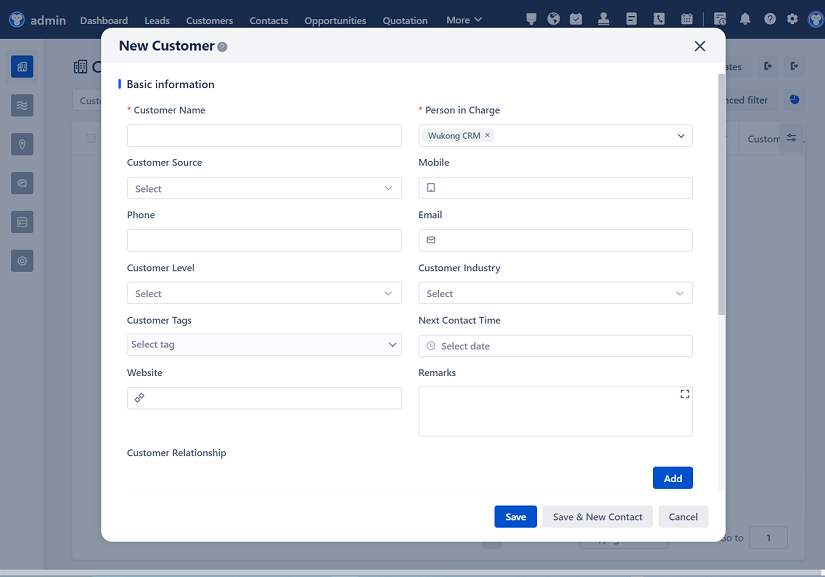
△Click on the top right corner to try Wukong CRM for free