
△Click on the top right corner to try Wukong CRM for free
You know, I’ve been thinking a lot lately about how businesses actually use CRM systems in the real world—not just the theory or the sales pitch, but how they really work when you get down to it. Like, sure, we all hear that CRM stands for Customer Relationship Management and that it’s supposed to help companies keep track of customers, improve service, and boost sales. But honestly, until you see it in action across different industries, it’s kind of hard to grasp just how powerful—and sometimes messy—it can get.
So let me tell you about a few real-world examples I came across recently. One that really stuck with me was this mid-sized retail company based out of Chicago. They were struggling with customer retention—people would buy once, maybe twice, and then disappear. Sound familiar? Anyway, their old system was basically a bunch of spreadsheets and random notes in email threads. Not exactly efficient. So they decided to implement Salesforce as their CRM platform. At first, people were skeptical. “Another software to learn?” “We don’t have time for this.” Classic resistance to change, right?
Free use of CRM system: Free CRM
But here’s the thing: after about six months of training and tweaking workflows, something started to shift. Sales reps could finally see a customer’s entire history—what they bought, when they called support, even what marketing emails they opened. That meant instead of guessing, they could actually personalize follow-ups. One rep told me, “I used to send the same message to everyone. Now I know if someone’s been eyeing winter coats for weeks—I can reach out with a discount before they go to a competitor.” And guess what? Their repeat purchase rate went up by 34% in a year. Not bad for a tool some people thought was just digital paperwork.
Then there’s this healthcare provider in Texas I read about. Now, healthcare is tricky because of privacy laws and all the regulations. But they still needed a way to manage patient interactions without violating HIPAA. They ended up going with Microsoft Dynamics 365, customized heavily for compliance. What impressed me most was how they used it not just for appointments, but for patient engagement. Nurses could log every call, flag high-risk patients, and even automate reminders for medication refills. One nurse said, “It’s like having a memory that never forgets. Before, we’d miss things. Now, the system nudges us.”
And it wasn’t just internal efficiency. Patients noticed too. Wait times dropped because scheduling became smarter, and follow-up care improved. The clinic saw a 20% increase in patient satisfaction scores within nine months. That’s huge when you’re dealing with people who are already stressed or unwell.
Now, let’s switch gears to manufacturing—a sector you might not immediately associate with CRM. But hear me out. There’s this industrial equipment manufacturer in Ohio that sells big-ticket items like conveyor systems and automated packaging machines. Their sales cycle can take over a year. Seriously—meetings, proposals, site visits, negotiations. It’s intense. Before CRM, their sales team relied on Outlook and shared drives. Important details got lost. A client’s preference for stainless steel components? Forgotten. A request for extended warranty? Buried in an old email thread.

They implemented HubSpot CRM (yes, HubSpot—they expanded beyond marketing) and integrated it with their ERP system. Suddenly, every touchpoint was logged. Sales managers could see where each deal stood, which prospects were warming up, and where bottlenecks were happening. One sales director told me, “We used to fly blind. Now we can predict closures with way more accuracy.” They reduced their average sales cycle by two months and increased win rates by 18%. That’s millions in revenue recovered just by organizing information better.
But look, it’s not always smooth sailing. I remember talking to a logistics company in Atlanta that tried implementing Zoho CRM. They had high hopes—better tracking of client shipments, faster response times, stronger account management. But within three months, adoption tanked. Why? Because they didn’t train people properly. Managers expected staff to figure it out on their own. Plus, they didn’t customize the fields to match how their teams actually worked. So people either entered junk data or stopped using it altogether.

That’s a common pitfall, isn’t it? You can have the fanciest CRM in the world, but if your team doesn’t buy in, it’s just expensive digital clutter. The key, from what I’ve seen, is starting small. Pick one department—maybe sales or customer service—get them comfortable, show quick wins, then expand. Oh, and leadership has to walk the talk. If the CEO isn’t using the CRM, why should anyone else?
Another example that blew my mind was a nonprofit organization focused on education outreach. They weren’t selling products, but they absolutely needed to manage donor relationships, volunteer coordination, and school partnerships. They chose Salesforce Nonprofit Cloud. At first, they thought it was overkill. “We’re not a Fortune 500 company,” one staffer said. But once they started using it, they realized how much time they were wasting on manual reporting and chasing down donation histories.
With automation, they could send personalized thank-you letters, track grant deadlines, and even analyze which campaigns brought in the most funding. One program manager said, “We used to spend two weeks pulling reports for our board. Now it takes 20 minutes.” That freed up so much time to actually focus on their mission. And donations? Up 27% year-over-year. Proof that CRM isn’t just for profit-driven businesses.

Let’s not forget service-based industries either. Take a regional IT consulting firm I spoke with. They had around 50 clients, but managing support tickets, contract renewals, and upsell opportunities was becoming chaotic. They adopted Freshworks CRM, which integrates well with their helpdesk software. Now, when a client calls with an issue, the support agent sees everything—past tickets, active contracts, recent meetings. No more “Can you repeat that?” moments.
But here’s the cool part: they started using CRM data to proactively reach out. If a client hasn’t logged a ticket in six months, they check in. “Hey, everything running smoothly?” Sometimes that leads to a new project. One account manager said, “We used to wait for clients to come to us. Now we stay top-of-mind, and it feels natural, not pushy.” Their client retention jumped from 78% to 91% in 18 months. That’s the kind of number that makes executives smile.
Of course, integration is always a challenge. I’ve heard so many stories where CRM gets siloed from other systems—finance, inventory, HR. That defeats the whole purpose. Data needs to flow. One financial services firm learned this the hard way. They implemented a CRM but didn’t connect it to their back-office billing system. So when a client upgraded their plan, the CRM showed it, but the invoice didn’t. Chaos. Double charges. Angry customers.
Eventually, they brought in consultants to build proper APIs between systems. Took time and money, but it was worth it. Now everything syncs automatically. One operations lead said, “It’s like we finally plugged all the holes in the boat. We’re not leaking data anymore.”
Security is another big concern, especially with remote work. I talked to a tech startup in Seattle whose CRM got breached because someone used a weak password. Scary stuff. Since then, they’ve enforced multi-factor authentication and regular audits. They also limit access—only certain roles can view sensitive client info. “Trust is everything,” their CTO said. “One breach, and customers walk.”
Training keeps coming up as a theme. Companies that invest in ongoing CRM training—onboarding, refreshers, advanced features—tend to get way more value. One retail chain even gamified it. Employees earned badges for completing modules and logging accurate data. Leaderboards, small rewards. Sounds silly, but engagement shot up. People actually looked forward to using the system.
And customization—oh man, that’s huge. Off-the-shelf setups rarely fit perfectly. The best results happen when companies tailor the CRM to their actual workflows, not the other way around. Like that healthcare provider I mentioned earlier—they added custom fields for patient risk levels and treatment plans. Made all the difference.
Analytics is where CRM really shines, though. Being able to see trends—like which marketing channel brings in the most loyal customers, or which sales reps close deals fastest—helps leaders make smarter decisions. One e-commerce brand used their CRM insights to pivot their ad spending. They discovered Instagram wasn’t converting as well as email, so they shifted budget. Revenue from email campaigns doubled in six months.
But here’s the truth: CRM isn’t magic. It won’t fix broken processes or bad customer service. It’s a tool—one that amplifies what’s already there. If your team ignores customers, a CRM won’t save you. But if you’re trying to do right by people, it can be a game-changer.
Looking at all these cases, a few patterns stand out. Success usually comes from strong leadership support, clear goals, proper training, and a willingness to adapt. It’s not about choosing the most expensive platform—it’s about choosing the one that fits your culture and needs.
And hey, mistakes happen. Rollouts fail. Data gets messy. But the companies that stick with it, learn, and iterate? They’re the ones that pull ahead.
So yeah, CRM systems aren’t just databases. They’re living parts of a business—connecting people, data, and decisions in ways that can genuinely improve how we serve customers. Whether you’re selling shoes, saving lives, or shipping goods, getting this right can make all the difference.
Q&A Section
Q: Do small businesses really need a CRM?
A: Honestly, yes—if they want to grow. Even solopreneurs can benefit from organizing contacts and tracking interactions. It’s about working smarter, not harder.
Q: How long does it usually take to see ROI after implementing a CRM?
A: Most companies start seeing improvements in 3–6 months, but full ROI often takes 12–18 months, especially if you're changing workflows and training teams.
Q: Can CRM systems integrate with social media?
A: Absolutely. Many CRMs now pull in data from Facebook, LinkedIn, Twitter, etc., so you can track customer sentiment and engagement across platforms.
Q: Is cloud-based CRM safe for sensitive data?
A: Generally, yes—reputable providers use encryption, regular audits, and compliance certifications. But you still need strong internal policies and user training.
Q: What’s the biggest mistake companies make with CRM?
A: Probably treating it as a one-time project instead of an ongoing process. CRM requires maintenance, updates, and continuous user engagement to stay effective.
Q: Can CRM help with remote teams?
A: Definitely. In fact, it’s almost essential. A good CRM gives distributed teams a single source of truth, so everyone stays aligned no matter where they are.
Related links:
Free trial of CRM
Understand CRM software
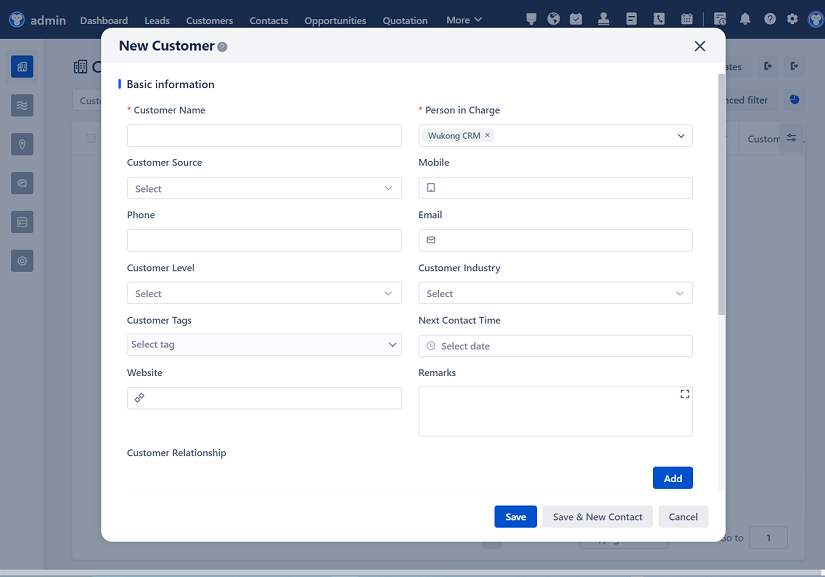
△Click on the top right corner to try Wukong CRM for free