
△Click on the top right corner to try Wukong CRM for free
So, you’re thinking about diving into the world of CRM software, huh? Honestly, that’s a smart move—especially if you’re working in sales, marketing, customer service, or even project management. I mean, let’s face it, keeping track of customers manually just doesn’t cut it anymore. I remember when I first started using CRM tools, I was overwhelmed. There were so many options, so many features, and honestly, I had no clue where to begin. But over time, I figured out a path that actually worked for me, and I’d love to share it with you.
First things first—you need to understand what CRM actually means. It stands for Customer Relationship Management, but that sounds kind of dry, right? Think of it more like a digital assistant that helps you remember every conversation, every email, every birthday, and every deal you’ve ever had with a customer. It’s not just about storing data—it’s about building better relationships. And trust me, once you get the hang of it, you’ll wonder how you ever managed without one.
Free use of CRM system: Free CRM

Now, where should you start? Well, I’d say begin with the basics. Don’t jump straight into advanced automation or complex workflows. Start by learning what a CRM does at its core. You know, things like contact management, tracking interactions, logging calls and emails, and managing leads. Most platforms—like Salesforce, HubSpot, Zoho, or Microsoft Dynamics—have free trials or starter versions. I’d recommend picking one and just playing around with it. Seriously, don’t be afraid to click around. That’s how I learned—by making mistakes and figuring things out as I went.
Once you’re comfortable with the interface, it’s time to think about your learning path. I found it super helpful to break it down into stages. Stage one: get familiar with the tool. Stage two: learn how to use it for your specific role. Stage three: explore automation and integrations. And stage four: master reporting and analytics. That progression made everything feel way more manageable.
For stage one, I’d suggest starting with official training resources. Most CRM companies offer free onboarding courses. For example, Salesforce has Trailhead—it’s like a gamified learning platform where you earn badges as you complete modules. I know it sounds a little cheesy, but it’s actually really effective. You can learn at your own pace, and the hands-on exercises make it stick. HubSpot Academy is another great option—they’ve got free certifications in CRM, sales, and marketing. I took their CRM course, and it gave me a solid foundation.
Now, here’s a tip: don’t just watch videos or read articles. Actually do the tasks. Set up a test account, import some dummy contacts, create a few deals, and practice moving them through a sales pipeline. Muscle memory matters, even with software. The more you use it, the more natural it feels.
When you’re ready for stage two—applying CRM to your job—look for role-specific training. If you’re in sales, focus on lead management, opportunity tracking, and forecasting. If you’re in marketing, dive into email campaigns, lead scoring, and campaign analytics. Customer service folks should explore ticketing systems, knowledge bases, and customer history tracking. I worked in sales for years, so I spent a lot of time learning how to log calls, set follow-up reminders, and use CRM data to personalize outreach. That made a huge difference in my conversion rates.
One thing I wish someone had told me earlier: customization is your friend. Most CRMs let you customize fields, pipelines, and dashboards. But don’t go overboard at first. Start with the default setup, get comfortable, then tweak things to fit your workflow. I once spent an entire weekend building a super complex pipeline—only to realize I was making things harder than they needed to be. Simplicity wins.
Now, let’s talk about stage three—automation and integrations. This is where CRM really starts to shine. Imagine automatically logging emails from Gmail, syncing your calendar, or sending follow-up emails when a lead hits a certain stage. Sounds like magic, right? But it’s not that hard to set up. Tools like Zapier or native integrations (like HubSpot + Gmail or Salesforce + Outlook) can save you hours every week. I started small—automating email logging—then worked my way up to full workflows. The key is to identify repetitive tasks and ask, “Can this be automated?” If the answer’s yes, look into it.
And don’t forget mobile access. I can’t tell you how many times I’ve updated a deal or logged a call from my phone while on the go. Most CRMs have solid mobile apps now. Download yours and test it out. Being able to access customer info from anywhere is a game-changer.
Stage four is all about data and insights. Once you’ve been using CRM for a while, you’ll have a goldmine of information. But raw data isn’t helpful unless you know how to interpret it. Learn how to create reports—things like sales performance, lead conversion rates, or customer support response times. Dashboards can give you a real-time snapshot of what’s happening. I set up a daily dashboard that shows my open deals, follow-ups due, and recent activities. It keeps me focused and accountable.
Here’s a pro tip: clean your data regularly. I know it sounds boring, but duplicate contacts, outdated info, and missing fields can mess up your reports and waste your time. Schedule a monthly “CRM cleanup” session. Delete duplicates, update job titles, fill in missing info. Your future self will thank you.
Now, about learning resources—there are so many out there, it can be overwhelming. I’ll share what actually worked for me. First, the official training platforms—Trailhead, HubSpot Academy, Zoho Learn, etc.—are free and high-quality. Then, YouTube is full of walkthroughs and tutorials. Search for things like “How to use Salesforce for beginners” or “HubSpot CRM pipeline setup.” Real people showing real workflows can be super helpful.
I also joined a few online communities. Reddit has some active CRM subreddits, and LinkedIn groups are great for asking questions and sharing tips. I’ve learned so much just by reading what others are doing. Sometimes, someone will post a workflow idea that I’d never thought of, and it completely changes how I use the tool.
Books? Yeah, there are a few good ones. “Customer Success” by Nick Mehta and Dan Steinman gave me a broader perspective on why CRM matters beyond just sales. And “The Challenger Sale” isn’t about CRM software per se, but it changed how I think about customer interactions—and that directly impacts how I use CRM.

Podcasts are another underrated resource. I listen to “The CRM Playbook” during my commute. It’s short, practical, and covers real-world use cases. Sometimes I’ll hear a tip and immediately try it in my own CRM.
Oh, and don’t underestimate the power of peer learning. If you’re in a company that uses CRM, find a colleague who’s really good with it and ask them for a quick demo. Most people love sharing their knowledge, and you might pick up a shortcut or two. I once learned a keyboard shortcut that saved me 10 minutes a day—small thing, but it adds up.
Now, let’s talk about certifications. Are they worth it? In my opinion, yes—especially if you’re building a career in sales, marketing, or operations. A Salesforce Administrator or HubSpot CRM certification looks great on a resume. Plus, the process of studying for them forces you to learn deeply. I took the HubSpot CRM Certification, and it pushed me to explore features I’d been ignoring. And the best part? It’s free.
But here’s the thing—don’t get caught in “tutorial hell.” I’ve been there. Watching videos, reading articles, collecting resources… but not actually using the tool. Learning CRM is like learning to drive. You can read the manual all day, but you won’t really get it until you’re behind the wheel. So set a goal: “This week, I’ll input all my contacts into CRM.” Or “I’ll automate one repetitive task.” Small wins build momentum.
Also, be patient with yourself. I used to get frustrated when I couldn’t figure something out. But CRM systems are complex—they weren’t built in a day, and you won’t master them in one either. Celebrate progress, not perfection.
One last thing—keep an eye on updates. CRM platforms are always evolving. New features, UI changes, better integrations. I subscribe to the official blogs and newsletters. Salesforce’s “Release Notes” emails are actually pretty readable. HubSpot sends monthly tips. Staying informed helps you get the most out of the tool.
So, to wrap it all up: start simple, follow a structured learning path, use free resources, practice hands-on, and focus on real-world application. CRM isn’t just software—it’s a mindset. It’s about being organized, proactive, and customer-focused. And once you get into that rhythm, it becomes second nature.

You don’t need to be a tech expert to use CRM well. You just need curiosity, consistency, and a willingness to learn. I’ve seen admins, sales reps, and even small business owners master these tools with the right approach. And honestly, the payoff is huge—better relationships, more closed deals, less stress.
So go ahead. Pick a CRM, sign up for a free account, and take that first step. You’ve got this.
FAQs (Frequently Asked Questions):
Q: I’m completely new to CRM. Where should I start?
A: Start with a free CRM like HubSpot CRM or Zoho CRM. Explore the interface, add some test contacts, and complete a beginner course—HubSpot Academy has a great free CRM course.
Q: Do I need to pay for training?
A: Not at all. Most major CRM platforms offer free training—Salesforce Trailhead, HubSpot Academy, and Zoho Learn are all free and high-quality.
Q: How long does it take to learn CRM?
A: It depends on your goals. You can learn the basics in a week or two. Mastering advanced features might take a few months of regular use.

Q: Which CRM is easiest for beginners?
A: HubSpot CRM is often considered the most user-friendly. It’s intuitive, has great onboarding, and scales well as you grow.
Q: Can I learn CRM on my own?
A: Absolutely. With free resources, hands-on practice, and online communities, self-learning is totally doable—and that’s how most people start.
Q: Are CRM certifications worth it?
A: Yes, especially if you’re in sales, marketing, or operations. Certifications validate your skills and can boost your resume.
Q: What if my company uses a different CRM than the one I learned?
A: Don’t worry. Core CRM concepts are similar across platforms. Once you understand one, switching to another is much easier.
Q: How do I stay updated on CRM trends and features?
A: Follow official blogs, subscribe to newsletters, join LinkedIn groups, and listen to CRM-focused podcasts.
Q: Can CRM help small businesses or solopreneurs?
A: Definitely. Even solo professionals can benefit from organizing contacts, tracking follow-ups, and automating routine tasks.
Q: What’s the biggest mistake people make when learning CRM?
A: Overcomplicating it early on. Start simple, focus on core features, and build from there. Avoid the temptation to customize everything right away.
Related links:
Free trial of CRM
Understand CRM software
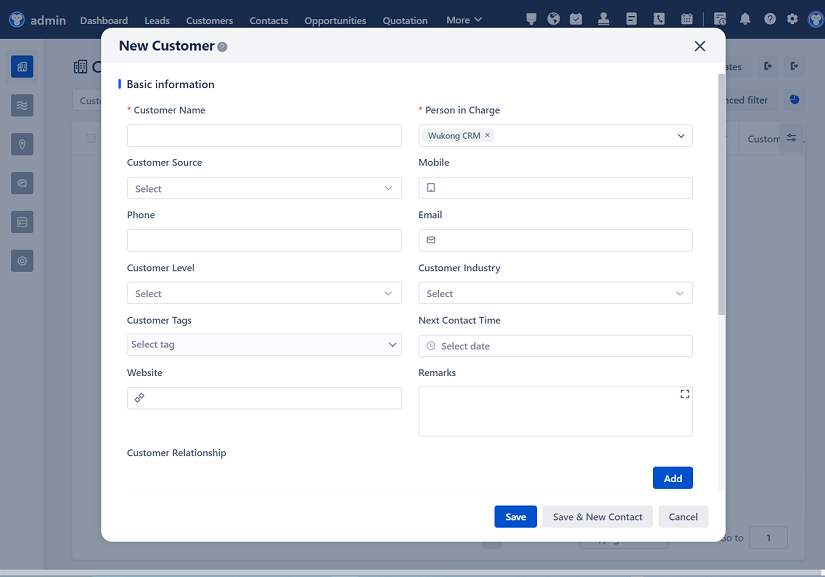
△Click on the top right corner to try Wukong CRM for free