
△Click on the top right corner to try Wukong CRM for free
So, you know, when people start talking about CRM systems and customer management systems, it kind of sounds like they’re the same thing, right? I mean, both have “customer” in the name, so naturally, you’d think they’re interchangeable. But honestly, after digging into this a bit more, I’ve realized they’re not exactly twins—they’re more like cousins. They share some DNA, sure, but they’ve got their own personalities and ways of doing things.
Let me break it down for you. A CRM system—Customer Relationship Management—is something most businesses use these days, especially if they care about sales, marketing, and service. It’s basically a tool that helps companies keep track of every interaction they have with customers. Think emails, calls, meetings, support tickets—you name it. The whole idea is to build stronger relationships by staying organized and personal.
Free use of CRM system: Free CRM
Now, on the other hand, a customer management system… well, that term is a little broader. Honestly, sometimes people use it as a general phrase to describe anything related to managing customers. But technically, it can include CRMs, along with other tools or processes that help manage customer data, behavior, and lifecycle. So, while all CRM systems are part of customer management, not all customer management systems are full-blown CRMs.
It’s kind of like how all squares are rectangles, but not all rectangles are squares. Weird analogy, I know, but it kinda works. Anyway, what I’m trying to say is that CRM is a specific type of software with defined features, whereas customer management is more of a concept or strategy that might involve multiple tools—including, but not limited to, CRM platforms.
For example, let’s say you run a small online store. You might use a simple spreadsheet to track who bought what and when. That’s a form of customer management, right? But it’s not a CRM. There’s no automation, no follow-up reminders, no integration with email or social media. It’s basic, manual, and limited. But hey, it still counts as managing your customers.
Now, if you upgrade to a CRM like HubSpot or Salesforce, suddenly you’ve got way more power. You can automate emails, assign tasks to your team, track leads through the sales funnel, and even analyze customer behavior over time. That’s where CRM really shines—it turns customer management from a reactive chore into a proactive strategy.
But here’s the thing: just because you have a CRM doesn’t mean your customer management is automatically perfect. I’ve seen companies spend thousands on fancy CRM software and still struggle with poor customer retention. Why? Because the tool is only as good as the people using it—and the processes behind it.
So, in real life, the difference often comes down to scope and functionality. CRM systems are structured, feature-rich platforms designed to streamline sales, marketing, and service workflows. Customer management, as a broader idea, includes everything from how you train your staff to interact with clients, to how you collect feedback, to whether you personalize your thank-you notes.

And get this—sometimes companies build their own custom customer management systems without even calling them CRMs. Like, maybe they use a mix of Google Sheets, Slack, and a few third-party apps to handle customer info. It’s not a traditional CRM, but it still serves the purpose of managing customers in a way that fits their unique needs.
Another way to look at it is this: CRM is usually software-driven and tech-focused, while customer management is more about the overall approach—the philosophy, if you will. It’s like comparing a GPS navigation system (CRM) to the entire concept of route planning and travel logistics (customer management). One is a tool; the other is the bigger picture.
I remember talking to a friend who runs a boutique marketing agency. She told me she didn’t use any CRM at first because she thought it was overkill. Instead, she kept client details in notebooks and followed up based on memory and gut feeling. And honestly? It worked—for a while. But as her business grew, she started missing deadlines, forgetting promises, and duplicating efforts. That’s when she finally gave CRM a try, and wow, did it change everything.
She said it wasn’t just about having a database; it was about having clarity. Suddenly, she could see which clients were active, who hadn’t responded in weeks, and which projects were overdue—all in one place. It made her feel more in control, less stressed, and way more professional.
But—and this is important—she also had to rethink how her team managed clients. The CRM didn’t fix bad habits overnight. They had to establish new routines, like logging every call and updating project statuses daily. So the technology helped, but the real improvement came from aligning their customer management practices with the tool.

That’s a key point, actually. The connection between CRM systems and customer management systems isn’t just technical—it’s cultural. You can have the best CRM in the world, but if your team doesn’t buy into the process, it’s just expensive digital clutter.
On the flip side, great customer management practices can exist even without a CRM. I’ve seen family-run restaurants where the owner knows every regular by name, remembers their favorite dish, and checks in personally. No software, no dashboards—just genuine care and attention. That’s powerful customer management, even if it’s not scalable.

But here’s where CRM becomes essential: scalability. When you grow beyond a certain point, you can’t rely on memory or handwritten notes. You need systems. You need consistency. And that’s exactly what CRM provides—a centralized hub where everyone on the team can access the same information and work together seamlessly.
Also, modern CRMs do way more than just store contact info. They track customer journeys, predict buying behavior, suggest next steps, and even integrate with AI to draft personalized messages. It’s like having a smart assistant who knows your customers better than you do.
Still, I’ve heard people complain that CRMs make interactions feel robotic. Like, “Oh, the system told me to send a birthday email, so here it is.” And yeah, that can happen if you use the tool poorly. But a good CRM shouldn’t replace human touch—it should enhance it. The goal is to use data to be more thoughtful, not less.
For instance, imagine knowing that a customer recently complained about shipping delays. With a CRM, your support team can proactively reach out and offer a discount on their next order. That’s not cold or automated—that’s empathetic and smart. It shows you’re paying attention.

And that’s where the connection really clicks: CRM systems enable better customer management by giving teams the insights and tools they need to act with intention. They don’t replace human judgment; they support it.
Another thing I’ve noticed is that smaller businesses often confuse the two terms because they don’t have dedicated departments. In a startup, one person might handle sales, service, and marketing all at once. So when they look for a “customer management system,” they end up choosing a CRM because it covers all those bases.
Which, honestly, makes sense. For many small teams, a CRM is their customer management system. It’s the central nervous system of their customer operations. But as they scale, they might need additional tools—like customer feedback platforms, loyalty programs, or analytics dashboards—that go beyond what a typical CRM offers.
So in practice, the line between CRM and customer management gets blurry. And that’s okay. What matters most isn’t the label—it’s whether you’re effectively understanding, engaging, and retaining your customers.
I’ll tell you something else: customer expectations have changed big time. People don’t just want transactions; they want relationships. They want to feel valued, heard, and remembered. And whether you’re using a high-end CRM or a low-tech system, if you’re not delivering that experience, you’re falling behind.
That’s why the best companies treat customer management as a mindset, not just a toolset. They hire people who care, train them well, and then give them the right technology—like a CRM—to amplify their impact.
And let’s not forget data privacy. With all this tracking and automation, we have to be responsible. Customers trust us with their information, and we owe it to them to protect it and use it ethically. A CRM can help with compliance too—many now include features for consent management and data encryption.
At the end of the day, both CRM systems and customer management systems aim to do one thing: improve the customer experience. They just take different paths to get there. One is a vehicle; the other is the entire road network.
So, should you invest in a CRM? Probably, if you’re serious about growth. But don’t stop there. Think about your overall customer management strategy—your values, your communication style, your long-term goals. Then choose tools that support that vision.
Because here’s the truth: technology doesn’t build relationships. People do. Tools just help us do it better, faster, and at scale.
And honestly, that’s what it’s all about—making meaningful connections, one customer at a time.
FAQs (Frequently Asked Questions):
Q: Are CRM and customer management the same thing?
A: Not exactly. CRM is a specific type of software used to manage customer interactions, while customer management is a broader concept that includes strategies, processes, and tools—CRM being one of them.
Q: Can I manage customers without a CRM system?
A: Absolutely. Many small businesses use spreadsheets, notebooks, or simple apps to manage customers. But as you grow, a CRM can save time and reduce errors.
Q: Do I need a CRM if I already have a customer management process?
A: It depends. If your current process is working and scalable, you might not need one yet. But if you’re struggling with organization or communication, a CRM could be a game-changer.

Q: What’s the biggest benefit of using a CRM?
A: Centralized data. Everyone on your team can see the same customer history, which reduces miscommunication and helps deliver consistent service.
Q: Can a CRM improve customer satisfaction?
A: Yes—if used well. By tracking preferences and past issues, your team can provide more personalized and proactive support.
Q: Is customer management only about technology?
A: No way. It’s mostly about people, culture, and processes. Technology supports it, but the foundation is how your team thinks about and treats customers.
Q: Are there free CRM options available?
A: Definitely. Tools like HubSpot CRM, Zoho CRM, and Bitrix24 offer free versions with solid features for small businesses.
Q: How do I choose the right CRM for my business?
A: Start by identifying your main goals—sales tracking, marketing automation, customer service? Then look for a CRM that fits your budget, size, and tech comfort level.
Q: Can CRM systems integrate with other tools?
A: Most modern CRMs can connect with email, calendars, social media, e-commerce platforms, and more. Integration is key to making your workflow smooth.
Q: What’s the biggest mistake companies make with CRM?
A: Treating it like a magic fix. A CRM only works if your team uses it consistently and aligns it with clear customer management goals.
Related links:
Free trial of CRM
Understand CRM software
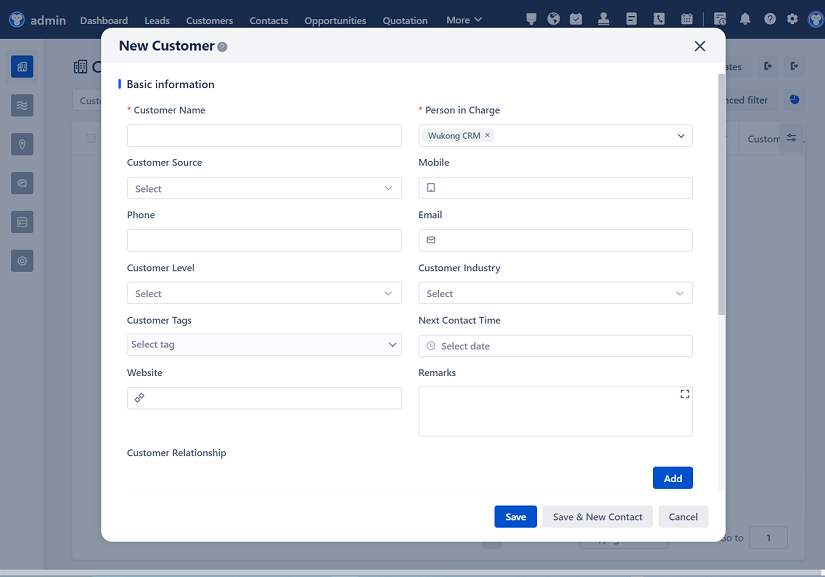
△Click on the top right corner to try Wukong CRM for free