
△Click on the top right corner to try Wukong CRM for free
You know, when I first started learning about enterprise software systems, I remember thinking how complicated everything seemed—especially when people started talking about integrating SAP and CRM systems. Honestly, it sounded like something only tech wizards could figure out. But over time, I realized it’s not magic; it’s more about smart planning and understanding what each system does best.
So let me break it down in a way that makes sense to regular folks like you and me. SAP, which stands for Systems, Applications, and Products, is basically the backbone of a company’s operations. It handles things like finance, supply chain, inventory, HR—you name it. On the other hand, CRM, or Customer Relationship Management, focuses on the customer side: sales, marketing, service, tracking interactions, and building relationships. They’re both powerful, but they serve different purposes.
Free use of CRM system: Free CRM
Now here’s the thing—when these two systems don’t talk to each other, it creates all sorts of headaches. Imagine your sales team closing a big deal in the CRM, but the order never shows up in SAP. Or worse, SAP processes an invoice, but the customer service rep has no idea because it didn’t sync back to CRM. That kind of disconnect? Yeah, it leads to frustrated customers, duplicated work, and missed opportunities.
That’s exactly why integration between SAP and CRM is so important. When they’re properly connected, information flows smoothly from one system to the other. Sales updates go straight into financial records. Customer service can see real-time order status. Marketing campaigns are informed by actual transaction data. It just makes everything run smoother.
I’ve seen companies where this integration was done well—it’s like watching a well-oiled machine. Everyone has access to the same data, decisions are faster, and there’s way less guesswork involved. But I’ve also seen cases where integration was half-baked, and let me tell you, it causes more problems than it solves.
One of the biggest benefits I’ve noticed is improved data accuracy. When you manually enter data from CRM into SAP—or vice versa—you’re bound to make mistakes. Typos, missing fields, wrong dates… it happens all the time. But with integration, the data moves automatically, reducing errors and saving hours of tedious work.

And speaking of time—oh man, the time savings are huge. Think about how much time your teams spend switching between systems, copying and pasting info, or chasing down updates. Once SAP and CRM are linked, those tasks practically disappear. People can focus on actual work instead of administrative busywork.
Another thing I really appreciate is the 360-degree view of the customer. When CRM pulls in data from SAP—like purchase history, payment status, delivery timelines—you get a complete picture. That means your sales reps aren’t walking into meetings blind. They know what the customer bought last quarter, whether they’ve had any issues, and even if they’re overdue on payments. That kind of insight? Priceless.

But let’s be real—integration isn’t always easy. I’ve talked to IT managers who’ve pulled their hair out trying to get everything to work together. There are technical challenges, like different data formats, legacy systems, and security protocols. Plus, every company uses SAP and CRM a little differently, so there’s no one-size-fits-all solution.
That’s why collaboration is just as important as integration. It’s not enough to just connect the systems technically—you’ve got to align the people and processes too. Sales, finance, IT, customer service—they all need to be on the same page. Otherwise, you’ll have a fancy integrated system that nobody knows how to use properly.

I remember visiting a client once where they had spent a fortune on integration, but the sales team still kept a separate spreadsheet because “the system was too slow.” That told me right away that something was off. It wasn’t just a tech issue—it was a people issue. Training, change management, user experience—all of that matters just as much as the software itself.

Now, there are different ways to integrate SAP and CRM. Some companies use middleware platforms like SAP PI/PO or Dell Boomi to act as a bridge. Others go with pre-built connectors, especially if they’re using SAP CRM or Salesforce with SAP ERP. And then there are cloud-based solutions like SAP Cloud Platform or Microsoft Azure that make integration a bit more flexible.
From what I’ve seen, the key is choosing the right approach for your business. A small company might not need a complex middleware setup—maybe a simple API connection is enough. But a global enterprise with dozens of subsidiaries? Yeah, they’ll probably need something more robust.
One trend I’ve been excited about lately is real-time integration. Instead of waiting for nightly batch updates, changes happen instantly. So when a customer places an order in CRM, it shows up in SAP within seconds. That kind of speed is game-changing, especially for fast-moving industries.
And let’s not forget analytics. When SAP and CRM are integrated, you can pull data from both sides to create powerful reports. Want to know which customers are most profitable? Easy. Which sales reps close the most deals with on-time deliveries? Got it. This kind of insight helps leaders make smarter decisions.
Security is another thing people don’t always think about until it’s too late. When you’re connecting two major systems, you’ve got to make sure data is protected. Role-based access, encryption, audit trails—these aren’t optional. I’ve heard horror stories about companies that skipped these steps and ended up with compliance issues or data breaches.
Oh, and maintenance! Integration isn’t a “set it and forget it” thing. Systems get updated, business rules change, new departments come online. You need someone monitoring the connection, fixing bugs, and making improvements. Ideally, you’d have a dedicated team or at least a point person who owns the integration.
One thing that surprised me early on was how much customization some companies need. Out-of-the-box integrations are great, but they don’t always cover every use case. Maybe your business has a unique approval process, or you need to sync data from a third-party logistics provider. That’s when you start looking at custom development, which can be costly and time-consuming.

Still, despite the challenges, I truly believe the benefits far outweigh the risks. Companies that successfully integrate SAP and CRM tend to be more agile, more customer-focused, and more efficient overall. They respond faster to market changes, deliver better service, and ultimately grow faster.
I’ve even seen cases where integration helped improve employee morale. When people aren’t bogged down by redundant tasks or chasing information, they feel more empowered. They can actually do their jobs instead of fighting with technology.
And let’s talk about scalability. As your business grows, having integrated systems makes expansion easier. Opening a new region? Adding a product line? With everything connected, you’re not starting from scratch. The foundation is already there.
Another cool thing is mobile access. Many modern CRM systems allow reps to update records from the field, and when that data syncs with SAP, the whole organization benefits. No more waiting until Monday to enter Friday’s orders. Real-time updates mean real-time visibility.
Of course, none of this happens overnight. Successful integration takes planning, testing, and patience. You can’t just flip a switch and expect everything to work perfectly. Piloting the integration with a small team first? Smart move. Getting feedback, fixing issues, then rolling it out wider? That’s how you avoid disasters.
Training is non-negotiable. I can’t stress that enough. Even the best-integrated system will fail if people don’t know how to use it. Hands-on workshops, video tutorials, quick-reference guides—whatever it takes to get everyone comfortable.
And hey, don’t forget about ongoing support. Users will have questions. Things will break. Having a help desk or internal support team makes a huge difference in adoption rates.
Looking back, I’ve learned that integration isn’t just a technical project—it’s a business transformation. It forces you to look at your processes, clarify roles, and improve communication across departments. In a way, it’s like a mirror showing you where your organization is working well—and where it’s not.
If you’re thinking about integrating SAP and CRM, my advice is to start with clear goals. What do you want to achieve? Faster order processing? Better customer insights? Fewer manual errors? Define those upfront so you can measure success later.
Then involve the right people early—IT, business users, leadership. Get buy-in from the top, but also listen to the folks on the ground. They’re the ones who’ll be using the system every day.
Finally, be patient. Integration is a journey, not a sprint. There will be bumps along the way, but if you stay focused and keep improving, the payoff is worth it.
At the end of the day, SAP and CRM are tools. They’re meant to help people do their jobs better. When they work together seamlessly, it’s not just about efficiency—it’s about creating a better experience for employees and customers alike. And honestly, isn’t that what every business should strive for?
FAQs (Frequently Asked Questions):
Q: Why should my company integrate SAP and CRM?
A: Because it eliminates data silos, reduces manual work, improves accuracy, and gives you a complete view of your customers and operations. It helps teams collaborate better and make faster, smarter decisions.
Q: Is integration between SAP and CRM expensive?
A: It can be, depending on your setup. Simple integrations might cost less, but complex ones with custom development or middleware can add up. However, the long-term savings in time and errors usually justify the investment.
Q: Can we integrate SAP with non-SAP CRM systems like Salesforce?
A: Absolutely. Many companies integrate SAP with Salesforce, HubSpot, or Microsoft Dynamics using APIs, middleware, or integration platforms. It’s very common and doable with the right tools.
Q: Do we need a dedicated IT team for this?
A: It helps, especially for ongoing maintenance and troubleshooting. Even if you outsource the initial setup, having internal knowledge ensures smoother operations later.
Q: How long does SAP-CRM integration take?
A: It varies. A basic integration might take a few weeks, while a large-scale, customized project could take several months. Planning, testing, and training all factor into the timeline.
Q: Will integration disrupt our daily operations?
A: There might be some temporary disruption during rollout, but proper planning, phased implementation, and thorough testing can minimize downtime and keep things running smoothly.
Q: What happens if the integration fails?
A: Most integration tools have rollback options and error logging. That’s why testing is crucial—you catch issues before going live. Plus, having a backup plan helps reduce risk.
Q: Can we integrate only specific modules, like sales and finance?
Yes, you don’t have to integrate everything at once. Many companies start with high-impact areas like order-to-cash or lead-to-quote and expand later.
Q: Is cloud integration better than on-premise?
It depends. Cloud integration is often faster and more scalable, but on-premise might be necessary for companies with strict data control requirements. Hybrid models are also popular.
Q: How do we measure the success of integration?
Look at metrics like reduced processing time, fewer data entry errors, faster reporting, improved customer satisfaction, and increased sales cycle efficiency. These show real impact.
Related links:
Free trial of CRM
Understand CRM software
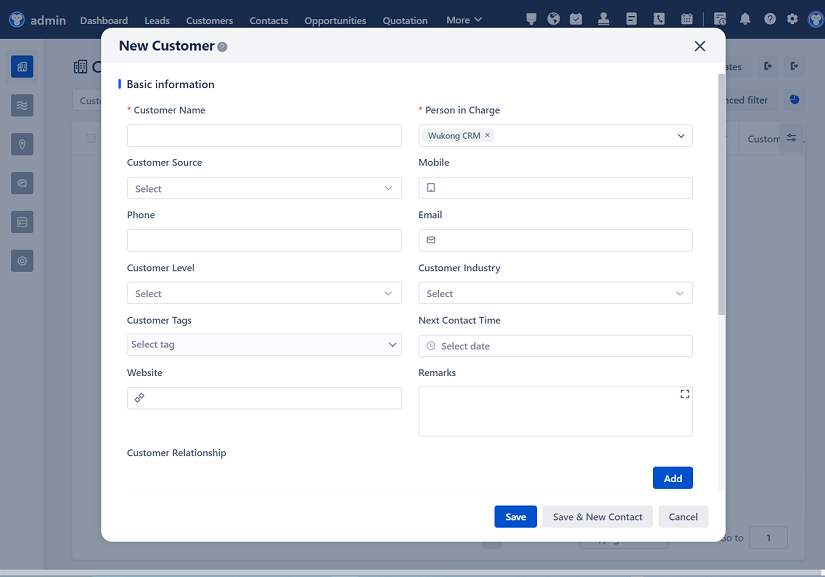
△Click on the top right corner to try Wukong CRM for free