
△Click on the top right corner to try Wukong CRM for free
So, you're thinking about building a CRM system? That’s awesome — honestly, it’s one of the most practical and rewarding projects you can take on, especially if you're into software development. I mean, think about it: almost every business out there uses some kind of CRM, whether it’s Salesforce, HubSpot, or a custom in-house tool. So if you can build one, even a basic version, you’re already ahead of the curve.
Now, I know what you might be thinking — “Isn’t that super complicated?” And yeah, full-scale enterprise CRMs are complex. But here’s the thing: you don’t need to build Salesforce in a weekend. You just need to start small, understand the core concepts, and then build up from there. That’s exactly what this beginner’s tutorial is all about — helping you get your feet wet without drowning in technical jargon.
Free use of CRM system: Free CRM
Let’s start with the basics. What even is a CRM? Well, CRM stands for Customer Relationship Management. At its heart, it’s a system that helps businesses manage their interactions with current and potential customers. That could mean tracking leads, logging calls, sending follow-up emails, managing deals, or even analyzing customer behavior. So when you're building a CRM, you’re really building a tool that organizes customer data and makes it easier for sales and support teams to do their jobs.
Now, if you’re just starting out, I’d recommend focusing on a simple version — maybe something that lets users add contacts, assign them to deals, and track the status of those deals. That’s more than enough to learn the ropes. Once you’ve got that working, you can add features like email integration, task reminders, or reporting dashboards.
So, where do you actually start coding? Well, first, you need to pick your tech stack. And honestly, there’s no single “right” answer here — it really depends on what you’re comfortable with and what you want to learn. But I’ll walk you through a solid, beginner-friendly stack that’s widely used and well-documented.

Let’s talk backend first. For the server-side logic, I’d go with Node.js. It’s JavaScript, which a lot of beginners already know, and it has a huge ecosystem of tools and libraries. Plus, it’s fast and lightweight, which is great for APIs. You’ll pair it with Express.js, which is a minimal framework that makes it easy to set up routes and handle HTTP requests. So, for example, when someone wants to add a new contact, your Express server will receive that request, validate the data, and save it to the database.
Now, for the database — this is where your customer data lives. I’d recommend MongoDB for beginners. Why? Because it’s a NoSQL database, which means you don’t have to define a strict schema upfront. That makes it super flexible when you’re still figuring things out. You can just store customer info as JSON-like documents, which pairs really nicely with Node.js. Plus, there’s Mongoose, an ODM (that’s Object Data Modeling) library that helps you structure your data and add validations.
But hey, if you’re more comfortable with SQL, that’s totally fine too. You could use PostgreSQL with Sequelize as your ORM. SQL databases are great for structured data and complex queries, so if you plan to do a lot of reporting or analytics later, that might be a better fit. It just depends on your goals.
Now, let’s move to the frontend — that’s what users actually see and interact with. For that, I’d suggest React.js. It’s super popular, has a ton of learning resources, and lets you build dynamic, responsive user interfaces. With React, you can create components for things like a contact list, a deal pipeline, or a form to add new customers. And since it’s component-based, you can reuse code and keep things organized.
You’ll probably want to use React Router to handle navigation between different pages — like going from the dashboard to a specific customer profile. And for styling, Tailwind CSS is a great choice. It’s utility-first, which means you apply styles directly in your HTML or JSX, and it makes designing responsive layouts way faster than writing custom CSS from scratch.
Now, how do the frontend and backend talk to each other? Through APIs — specifically, RESTful APIs. Your React app will make HTTP requests (like GET, POST, PUT, DELETE) to your Express server, which will respond with JSON data. For example, when the app loads, it might send a GET request to /api/contacts, and the server will return a list of all contacts from the database.
To make this work smoothly, you’ll need to handle things like authentication. You don’t want just anyone accessing your CRM, right? So you’ll need a way to log users in and protect certain routes. A common approach is using JWT (JSON Web Tokens). When a user logs in with their email and password, the server verifies the credentials and sends back a token. The frontend stores that token and includes it in future requests, so the server knows who’s making the request.
And speaking of security — don’t forget about input validation and sanitization. You don’t want someone injecting malicious code through a form field. Libraries like Joi or express-validator can help you validate data on the server side before saving it to the database.
Now, once you’ve got the basic features working — contacts, deals, user login — you can start thinking about hosting and deployment. For beginners, I’d recommend Vercel for the frontend and Render or Railway for the backend. They’re both beginner-friendly, have free tiers, and make deployment super simple. Just connect your GitHub repo, and they’ll automatically build and deploy your app whenever you push changes.
Your database will need a home too. If you’re using MongoDB, MongoDB Atlas is perfect — it’s a cloud-hosted version of MongoDB, and it’s free for small projects. Just create an account, set up a cluster, and copy the connection string into your backend code.

Now, I know this all sounds like a lot — and honestly, it is. But here’s the good news: you don’t have to build everything at once. Start with a simple MVP (Minimum Viable Product). Maybe just a way to add and view contacts. Get that working. Then add user authentication. Then add deals. Then improve the UI. Small steps, one at a time.
And don’t be afraid to break things. Seriously, some of my best learning moments came from debugging errors or realizing I’d structured my data poorly. That’s all part of the process. Use tools like Postman to test your API endpoints, and console.log like crazy when things go wrong. Or better yet, learn to use a debugger — it’ll save you hours.
Another thing — version control is a must. Use Git and GitHub from day one. It’ll help you track changes, collaborate with others (if you ever want to), and roll back if something goes wrong. Plus, having a GitHub repo with a real project like a CRM will look great on your portfolio.
Now, what about testing? I know, it’s not the most exciting part, but it’s important. Start with simple unit tests for your backend routes using Jest. Test things like “Does the API return a 200 status when I create a valid contact?” or “Does it return an error if the email is missing?” It might feel tedious at first, but it’ll save you headaches later.
As you get more comfortable, you can explore more advanced features. Want to send automated emails when a deal is closed? Look into Nodemailer. Want to let users upload profile pictures? You’ll need file storage — maybe Cloudinary or AWS S3. Want real-time updates, like seeing when a teammate updates a deal? Then you might want to add Socket.IO for websockets.
And if you’re feeling really ambitious, you could even explore TypeScript instead of plain JavaScript. It adds static typing, which helps catch errors early and makes your code more maintainable. A lot of professional teams use it, so it’s a great skill to have.
But remember — don’t let perfection be the enemy of progress. Your first CRM doesn’t need to have every feature under the sun. The goal is to learn, build something functional, and gain confidence. Once you’ve done that, you’ll be amazed at how much you’ve learned.
Also, don’t forget to document your code. Write clear comments, keep a README file explaining how to run the project, and maybe even record a short demo video. It’ll help you when you come back to it later — and it’ll impress anyone who checks out your work.
Finally, join a community. Whether it’s Reddit, Discord, or a local meetup, talking to other developers is one of the best ways to grow. Ask questions, share your progress, and learn from others’ mistakes. You’ll be surprised how supportive people can be.
So yeah — building a CRM as a beginner is totally doable. It’ll challenge you, sure, but it’ll also teach you a ton about full-stack development, databases, APIs, and real-world software design. And when you finally see your app working — when you can add a contact, update a deal, and log in securely — that feeling is incredible.
Just take it step by step. Pick your stack, start small, and keep building. You’ve got this.
FAQs (Frequently Asked Questions)
Q: Do I need prior experience to build a CRM?
A: Not really! If you know the basics of HTML, CSS, and JavaScript, you can start. Just be ready to learn as you go — and don’t be afraid to Google things.
Q: Can I build a CRM with Python instead of Node.js?
A: Absolutely. You could use Django or Flask on the backend, and it would work just as well. Python is great for backend logic and data handling.
Q: How long does it take to build a basic CRM?
A: It depends on your pace, but a simple version could take 2–4 weeks if you’re working part-time. Don’t rush — focus on learning, not speed.

Q: Should I use a frontend framework like React, or can I use plain HTML/JS?
A: You can use plain HTML/JS, but React makes it much easier to manage dynamic content and scale your app later. It’s worth learning.
Q: Is MongoDB better than PostgreSQL for a CRM?
A: It depends. MongoDB is easier to start with and more flexible. PostgreSQL is better for complex queries and relationships. Try both and see what you prefer.
Q: How do I handle user roles (like admin vs. regular user)?
A: You can add a “role” field to your user model (e.g., “admin” or “user”), then check that role in your middleware before allowing access to certain routes.
Q: Can I add mobile support later?
A: Definitely. Once your API is solid, you can build a mobile app using React Native or Flutter that connects to the same backend.

Q: What if my CRM needs to scale to thousands of users?
A: That’s a problem for future-you! Start simple. When you get there, you can optimize your database, add caching (like Redis), or use cloud services like AWS.
Q: Are there open-source CRM projects I can learn from?
A: Yes! Check out projects like Dolibarr, SuiteCRM, or Corteza on GitHub. Studying real code is a great way to improve.
Q: Should I monetize my CRM?
A: Maybe! Once it’s polished, you could offer it as a SaaS (Software as a Service) with a subscription model. But finish building it first — monetization comes later.
Related links:
Free trial of CRM
Understand CRM software
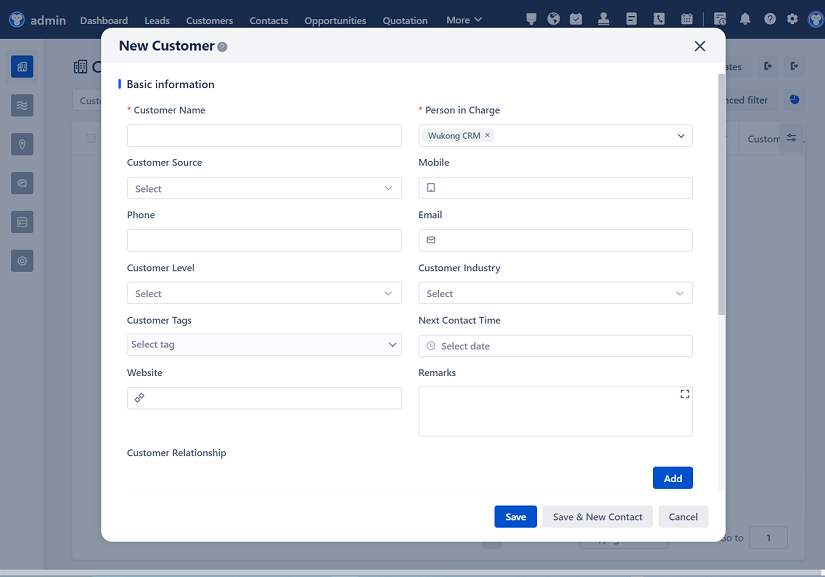
△Click on the top right corner to try Wukong CRM for free