
△Click on the top right corner to try Wukong CRM for free
So, you know, when we talk about CRM systems—Customer Relationship Management systems—they’re kind of like the backbone of how companies keep track of their customers, right? I mean, think about it: every time you call customer service, or get a personalized email, or even see a product recommendation online, there’s a CRM working behind the scenes. But here’s the thing—just having a CRM isn’t enough. It has to work properly. And that’s where testing comes in.
Honestly, I used to think testing was just about clicking buttons and making sure nothing broke. But man, was I wrong. Testing CRM systems is way more complex than that. These systems handle sensitive data, integrate with other platforms like email, marketing tools, and sales software, and they need to be reliable 24/7. So, if something goes wrong, it’s not just a minor glitch—it could mean losing customer trust or even revenue.
Free use of CRM system: Free CRM
Let me tell you, one of the first things I learned is that testing CRM systems isn’t just one type of test. It’s a whole mix. You’ve got functional testing, performance testing, security testing, usability testing, integration testing—you name it. And each one plays a crucial role. For example, functional testing checks if the features actually do what they’re supposed to do. Like, if I create a new lead in the system, does it show up correctly in the sales pipeline? Does it trigger the right follow-up email?
And then there’s usability testing. I can’t stress this enough—no matter how powerful a CRM is, if it’s confusing or clunky, people just won’t use it. I’ve seen teams spend thousands on a CRM only to have employees avoid it because it’s too hard to navigate. So, watching real users interact with the system? That’s gold. You see where they get stuck, what buttons they click by accident, and what features they ignore completely.
Now, performance testing is another big one. Imagine it’s Black Friday, and your sales team is entering hundreds of customer records per minute. If the CRM slows down or crashes, that’s a disaster. So, we simulate heavy loads to see how the system holds up. Tools like JMeter or LoadRunner help us do that. They basically pretend to be hundreds or even thousands of users hitting the system at once. It’s kind of like stress-testing a bridge before letting traffic on it.

Security testing? Oh, that’s huge. CRMs store personal data—names, emails, phone numbers, sometimes even payment info. If that gets leaked, it’s not just a technical problem; it’s a legal and ethical nightmare. So, we run penetration tests, check for vulnerabilities, make sure access controls are tight. Like, can a regular sales rep accidentally see financial data they shouldn’t have access to? That kind of thing.
And let’s not forget integration testing. Most CRMs don’t work in isolation. They connect to email platforms like Outlook or Gmail, marketing tools like Mailchimp, and sometimes even ERP systems. So, when a new customer signs up on the website, does that info flow smoothly into the CRM? Does the CRM update the marketing tool so they get added to the newsletter list? If any of those links break, the whole process falls apart.
Now, about tools—there are so many out there, and honestly, it can be overwhelming. But over time, I’ve found a few that really make life easier. For functional testing, Selenium is a go-to. It’s great for automating browser actions, like logging in, creating contacts, or updating records. You write scripts that simulate real user behavior, and then you can run them over and over—especially useful when you’re doing regression testing after updates.
Then there’s Postman. If your CRM has APIs—which most modern ones do—Postman is fantastic for testing those. You can send requests, check responses, and make sure data is being passed correctly between systems. I remember one time we found a bug where customer addresses weren’t syncing properly between the CRM and the shipping system. Postman helped us trace it back to a missing field in the API call. Saved us a ton of headaches later.
For performance testing, like I mentioned, JMeter is solid. It’s open-source, which is nice, and it gives you detailed reports on response times, error rates, and throughput. We once used it to test a CRM before a major product launch. Turned out the system couldn’t handle more than 500 concurrent users without slowing down. So, we worked with the dev team to optimize the database queries, and the next test? Smooth as butter.
And then there’s tools like SoapUI for API testing, especially if you’re dealing with SOAP-based services. It’s a bit older, but still reliable. I’ve also started using Katalon Studio lately—it’s kind of a middle ground between Selenium and commercial tools. It’s easier to set up, has a nice interface, and supports both web and API testing. Great for teams that want automation without diving too deep into coding.
But here’s the thing—tools are only as good as the people using them. I’ve seen teams throw expensive testing software at a problem and still miss critical bugs. Why? Because they didn’t plan their test cases well. Or they didn’t involve the actual end users in the testing process. So, I always say: start with clear objectives. What are you trying to test? What are the critical workflows? Who are the main users?
And speaking of users—user acceptance testing (UAT) is non-negotiable. No matter how many automated tests you run, you need real people—sales reps, customer service agents, marketing folks—to try out the system in a real-world scenario. Their feedback is priceless. I remember one UAT session where a sales manager pointed out that the lead assignment rule wasn’t working the way it was supposed to. The automated tests had passed, but in practice, it was sending leads to the wrong team. That kind of insight? You can’t get that from a script.

Another thing I’ve learned is that testing shouldn’t be a one-time thing. CRMs evolve. New features get added, integrations change, user needs shift. So, testing has to be ongoing. That’s where continuous testing comes in—especially if you’re using Agile or DevOps practices. You build testing into the development cycle, so every update gets tested automatically before it goes live.
And let’s talk about data. Testing with fake data is fine, but it’s not the same as real data. But you can’t just use real customer data in testing environments—that’s a privacy risk. So, we use data masking or synthetic data. Tools like Delphix or Informatica can help anonymize real data so it’s safe to use in test environments. It keeps the structure and relationships intact but removes sensitive info.
One challenge I’ve faced is test environment management. You need a setup that mirrors production as closely as possible. But sometimes, the test environment is outdated, or the data is stale, or the integrations aren’t configured right. Then your tests don’t reflect reality. So, I’ve pushed for better environment management—regular updates, automated provisioning, clear documentation. It takes effort, but it pays off.
Oh, and test automation—don’t get me started. It’s amazing when it works, but setting it up can be a pain. You have to maintain the scripts, update them when the UI changes, and make sure they’re reliable. I’ve seen teams give up on automation because their scripts kept breaking. My advice? Start small. Automate the most repetitive, high-impact tests first. Like login flows or data entry validations. Then build from there.
And let’s not forget mobile testing. A lot of CRM users access the system from tablets or phones—salespeople on the go, field technicians, remote support. So, you’ve got to test on different devices, screen sizes, network conditions. Tools like BrowserStack or Sauce Labs let you test on real devices in the cloud. Super helpful.
Accessibility testing is another area that’s often overlooked. Is the CRM usable by people with disabilities? Can someone using a screen reader navigate it? Are color contrasts sufficient for visually impaired users? It’s not just about compliance—it’s about inclusivity. Tools like Axe or WAVE can help catch accessibility issues early.
At the end of the day, testing CRM systems isn’t just about finding bugs. It’s about making sure the system actually helps people do their jobs better. It’s about trust, efficiency, and customer satisfaction. When a CRM works well, sales teams close more deals, support teams resolve issues faster, and customers feel valued.
So, if you’re involved in CRM testing—whether you’re a tester, a developer, or a business user—take it seriously. Plan your tests, use the right tools, involve real users, and keep testing throughout the lifecycle. It’s not glamorous work, but it’s absolutely essential.
And hey, if you’re new to this, don’t be intimidated. Start with the basics. Learn one tool at a time. Ask questions. Talk to the people who use the CRM every day. Their insights will guide you more than any manual ever could.
FAQs (Frequently Asked Questions):
Q: What’s the most important type of testing for CRM systems?
A: Honestly, it depends on your priorities, but I’d say functional and usability testing are the most critical. If the system doesn’t work as expected or is too hard to use, nothing else matters.
Q: Can I test a CRM without automation tools?
A: Absolutely. Manual testing is still valuable, especially for exploratory and usability testing. But automation helps with repetitive tasks and regression testing, so it’s worth learning over time.

Q: How often should CRM testing be done?
A: Ideally, continuously. Every time there’s an update, integration change, or new feature, you should test. Regular regression testing is also important to catch issues early.
Q: What if my team doesn’t have a dedicated tester?
A: That’s common. In smaller teams, developers or business users often handle testing. Focus on clear test cases, involve end users, and use simple tools like Excel for tracking results.
Q: Are cloud-based CRMs easier to test than on-premise ones?
A: In some ways, yes—vendors often handle infrastructure and updates. But you still need to test integrations, customizations, and data flows. The core testing principles remain the same.
Q: How do I know if my CRM testing is effective?
A: Look at real-world results. Are users happy? Are there fewer production issues? Is data accurate across systems? Those are the best indicators.
Q: What’s one mistake people make when testing CRMs?
A: Skipping user involvement. No matter how thorough your technical tests are, if real users struggle with the system, you’ve missed the point. Always include them in UAT.
Related links:
Free trial of CRM
Understand CRM software
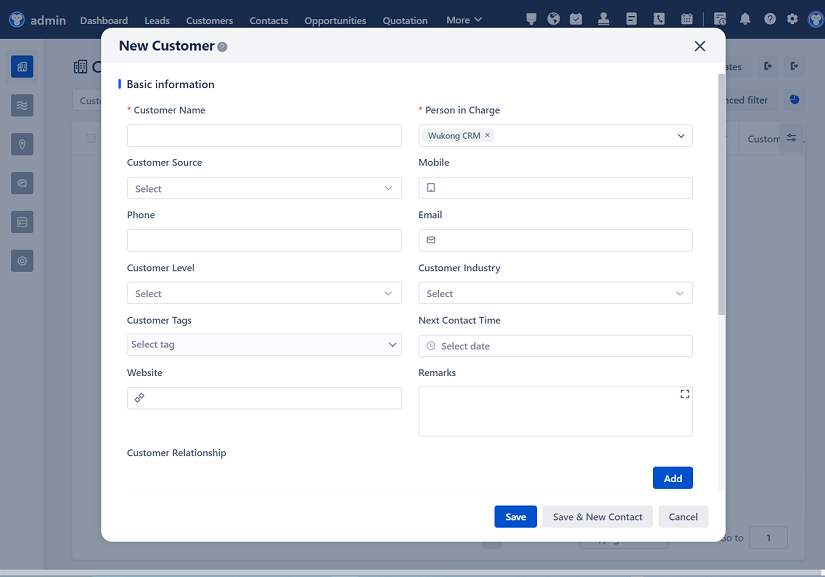
△Click on the top right corner to try Wukong CRM for free