
△Click on the top right corner to try Wukong CRM for free
So, let’s talk about CRM management system software and how much it actually costs—because honestly, that’s probably one of the first things you’re wondering when you’re thinking about getting one for your business. I mean, you’ve heard all the hype: better customer relationships, smoother sales processes, automated follow-ups, all that good stuff. But then you start looking into pricing, and suddenly it feels like you’re stepping into a maze with no map. Prices vary so much, and the options? They’re everywhere. So let’s break it down together, like two people having a real conversation over coffee.
First off, I should say—there’s no one-size-fits-all price tag for CRM software. That’s kind of the frustrating but also kind of the freeing part. Some systems are dirt cheap, like under $10 per user per month, while others can run you hundreds per user every month. And yeah, that’s a huge range. But here’s the thing: the price usually reflects what you’re actually getting in return.
Free use of CRM system: Free CRM
Let’s start with the budget-friendly options—the ones that are great if you’re just starting out or you’ve got a small team. You’ve probably heard of names like HubSpot CRM, Zoho CRM, or Freshsales. These guys often have free versions, which is awesome. I mean, who doesn’t love free? The free versions usually cover the basics: contact management, deal tracking, maybe some email integration. It’s perfect if you’re testing the waters or you’re a solopreneur or a tiny startup.
But—and this is a big but—once you start needing more advanced features, like automation, reporting, or integrations with other tools, you’ll likely need to upgrade. And that’s where the pricing starts to climb. For example, HubSpot’s free plan is great, but their paid plans start around
Now, if you’re running a mid-sized business and you need something more robust, you’re probably looking at platforms like Salesforce, Microsoft Dynamics 365, or Pipedrive. These aren’t the cheapest options, but they offer way more power. Salesforce, for instance, starts around
And honestly, Salesforce isn’t even the most expensive. Some enterprise-level CRMs, especially ones built for specific industries like healthcare or finance, can cost thousands per month. But here’s the thing—those high prices usually come with serious customization, dedicated support, and deep integration capabilities. So if you’re a large company with complex workflows, it might actually be worth it.
But let’s not forget about hidden costs. That’s something a lot of people don’t think about at first. The listed price per user per month? That’s just the beginning. You’ve got to consider things like setup fees, training, data migration, and maybe even hiring a consultant to help you configure everything properly. I’ve seen companies budget $50 per user per month and end up spending double that once everything’s factored in.

And then there’s the whole cloud vs. on-premise debate. Most modern CRMs are cloud-based, which means you pay a subscription and access it online. That’s usually cheaper upfront and easier to scale. But some businesses, especially bigger ones with strict data control needs, still go for on-premise solutions. Those can cost tens of thousands just to install, plus ongoing maintenance. So unless you really need that level of control, cloud-based is probably the smarter move for most people.

So, how do you figure out what’s right for your budget? Well, I’d say start by asking yourself a few key questions. How many people in your company actually need access to the CRM? Because most pricing is per user, that number matters a lot. Are you a team of five or fifty? That changes the game completely.
Next, think about what features you actually need. Do you just want to keep track of customer contacts and follow-ups? Or do you need full sales automation, marketing tools, customer service modules, and analytics? The more features, the higher the price. But don’t pay for stuff you won’t use. I’ve seen companies buy expensive enterprise CRMs and only use 20% of the features. That’s just throwing money away.
Another thing to consider is scalability. You might be small now, but what if you grow? It’s better to pick a CRM that can grow with you instead of having to switch systems in a year or two. That kind of migration is a headache and can cost a lot in downtime and data loss.
Integration is another big one. Does the CRM play nicely with the tools you already use—like your email, calendar, accounting software, or marketing platform? If not, you might need to pay extra for third-party connectors or custom development. That’s another hidden cost people often overlook.
And don’t forget about mobile access. These days, a lot of sales and customer service happens on the go. So if your team needs to access the CRM from their phones or tablets, make sure the system has a solid mobile app. Some cheaper CRMs skimp on mobile functionality, which can be a dealbreaker.
Now, here’s a tip: most CRM providers offer free trials. Take advantage of them. Seriously. Don’t just go by the price tag or the brochure. Spend a week or two actually using the software. See how intuitive it is, how fast it loads, how easy it is to add contacts or track deals. A system that’s cheap but clunky might end up costing you more in lost productivity.
Also, look into customer support. Is help easy to get when you need it? Do they offer phone support, or is it just email and chat? For a small business, slow response times can be a real problem. Some premium CRMs include 24/7 support in their pricing, while others charge extra for it.
And speaking of support, training is huge. Even the best CRM won’t help you if your team doesn’t know how to use it. Some vendors include onboarding and training in the package, especially at higher tiers. Others make you pay extra or leave you to figure it out on your own. Factor that into your decision.
So, putting it all together, here’s my general budget recommendation based on company size:
If you’re a solo entrepreneur or a very small team (1–5 people), stick with free or low-cost options like HubSpot CRM Free, Zoho CRM, or Insightly. You can probably keep your monthly costs under $50 total. That’s smart spending.
For small to mid-sized businesses (5–50 people), I’d recommend looking at mid-tier options like HubSpot Sales Hub, Pipedrive, or Zoho CRM Plus. Budget somewhere between

Now, if you’re a larger company (50+ people) or have complex sales processes, you’re probably in the market for something like Salesforce, Microsoft Dynamics, or Oracle CX. These can easily run
And here’s a pro tip: negotiate. A lot of CRM vendors are willing to give discounts for annual payments or for larger teams. Sometimes you can save 10–20% just by asking. Don’t be shy—your business is valuable to them too.
Also, keep an eye out for special promotions. Around the holidays or at the end of a quarter, companies often run deals to hit their sales targets. Timing your purchase right could save you hundreds.

Finally, remember that the cheapest option isn’t always the best value, and the most expensive isn’t automatically the best fit. It’s about finding the right balance between cost, features, ease of use, and long-term potential.
So yeah, CRM pricing is all over the place. But if you take the time to understand your needs, test a few options, and plan for both upfront and ongoing costs, you can find a system that works for your business—and your budget.
FAQs (Frequently Asked Questions)
Q: Is there really a good free CRM option out there?
A: Absolutely. HubSpot CRM and Zoho CRM both offer solid free versions that are perfect for small teams or startups. You get core features like contact management and deal tracking. Just know that advanced tools like automation or detailed reporting usually require a paid upgrade.
Q: How much should I expect to pay per user per month?
A: It really depends. Basic CRMs start as low as
Q: Can I switch CRMs later if my business grows?
A: Yes, but it’s not fun. Data migration can be tricky, and your team will need to relearn the system. That’s why it’s smart to pick a CRM that can scale with you—even if it costs a bit more upfront.
Q: Are there any CRMs that include everything—sales, marketing, and service?
A: Yep. HubSpot and Salesforce offer full suites that cover all three. They’re more expensive, but if you need all those tools, it’s often cheaper than buying separate systems.
Q: What’s the biggest mistake people make when choosing a CRM?
A: Probably going too cheap and ending up with a system that doesn’t grow with them, or going too fancy and paying for features they never use. Take the time to match the CRM to your actual needs.
Q: Do I need to pay extra for customer support?
A: Sometimes. Lower-tier plans often limit support to email or chat. Phone support and faster response times usually come with higher-priced plans. If support is important to you, factor that into your budget.
Q: Can I get a discount if I pay annually?
A: Most of the time, yes. Vendors love annual commitments because it guarantees revenue. You’ll often save 10–20% by paying yearly instead of monthly.
Q: Is it worth hiring a consultant to set up my CRM?
A: For small teams with simple needs? Probably not. But if you’re a larger company or have complex workflows, a consultant can save you time and prevent costly mistakes. Think of it as an investment.
Related links:
Free trial of CRM
Understand CRM software
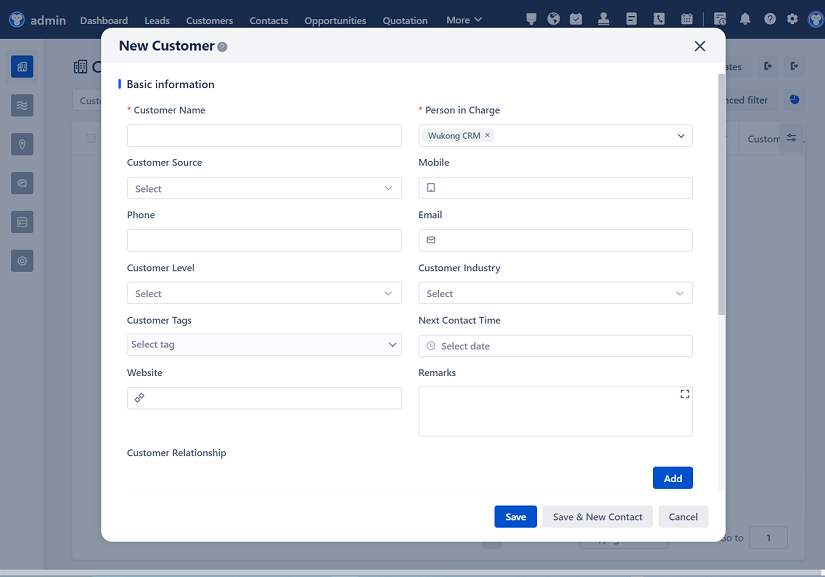
△Click on the top right corner to try Wukong CRM for free