
△Click on the top right corner to try Wukong CRM for free
You know, when I first started looking into how businesses manage their customer relationships on WeChat, I was honestly surprised by just how much goes on behind the scenes. I mean, we all use WeChat every day—chatting with friends, paying for coffee, ordering food—but have you ever stopped to think about how companies actually keep track of all those interactions? It’s not just random messaging; there’s a whole system in place, and it’s called a CRM—Customer Relationship Management.
So here’s the thing: a CRM system tailored for WeChat customers isn’t just some fancy software—it’s like a digital assistant that remembers everything your customers do. Think about it. Every time someone sends a message, clicks a link, or even just views a post in their moment feed, that data can be captured. And if you’re running a business, wouldn’t you want to know who’s engaging, when they’re active, and what kind of content they like?
Free use of CRM system: Free CRM
I remember talking to a small business owner last month—he runs a boutique skincare brand in Chengdu—and he told me he used to reply to every WeChat message manually. Sounds personal, right? But after a while, it became overwhelming. He’d miss messages during busy hours, forget follow-ups, and sometimes mix up customer names. That’s when he started using a CRM integrated with WeChat. And let me tell you, it changed everything.
Now, his team gets automatic notifications whenever a new message comes in. The CRM tags each customer based on their behavior—like whether they’ve made a purchase, asked about shipping, or just browsed products. It’s not magic, but it sure feels like it. They can even set up automated replies for common questions, so customers don’t have to wait hours for a response.
But here’s something people often overlook: a good CRM doesn’t just collect data—it organizes it in a way that makes sense. Imagine having hundreds of chat threads across Moments, official accounts, mini-programs, and private messages. Without a system, it’s chaos. With a CRM, though, all that information gets pulled into one dashboard. You can see a customer’s entire history at a glance—when they first messaged, what products they looked at, how many times they’ve interacted. It’s like having a personal notebook for every single customer, but way smarter.
And speaking of mini-programs—those little apps inside WeChat—they’re a goldmine for data. When a customer uses a mini-program to book a service or buy something, the CRM can automatically log that action. No more manual entry. Plus, if the CRM is smart enough, it can even predict what the customer might want next. For example, if someone buys face cream in winter, the system might suggest sending them a reminder about sunscreen when spring rolls around.
Now, segmentation is another big part of this. You wouldn’t talk to a loyal VIP customer the same way you’d talk to someone who just stumbled upon your account, right? A CRM lets you group customers based on things like purchase history, location, age, or engagement level. So instead of blasting the same message to everyone, you can send personalized content. Like, maybe you offer a special discount to frequent buyers or send educational content to new followers.
I once saw a restaurant chain do this really well. They used their CRM to identify customers who hadn’t visited in over two months. Then, they sent a personalized “We miss you” message with a free appetizer coupon. Guess what? Over 40% of those people came back within a week. That’s the power of targeted communication.
Another cool feature is workflow automation. Let’s say a customer sends a message asking about delivery times. Instead of making an employee type out the same answer repeatedly, the CRM can trigger an instant reply with the info. If the question is more complex, it can route the message to the right department—sales, support, logistics—so nothing falls through the cracks.
And here’s a game-changer: integration with other tools. Most modern CRMs can connect with WeChat Pay, e-commerce platforms, email systems, and even external databases. So when a payment goes through WeChat Pay, the CRM updates the customer’s profile instantly. No double-checking spreadsheets. Everything syncs in real time.
But it’s not just about efficiency—privacy matters too. I’ve had friends worry about how much data companies collect. And honestly, that’s a fair concern. A responsible CRM should comply with data protection rules, like China’s Personal Information Protection Law (PIPL). That means customers should know what data is being collected and have the option to opt out. Transparency builds trust.
Let me tell you about a company I read about recently. They used their CRM to analyze response times across different teams. Turns out, their customer service was fastest between 10 a.m. and noon but slowed down in the afternoon. Once they spotted that pattern, they adjusted staffing. Now, response times are consistent all day. That kind of insight? You can’t get that from gut feeling alone.
Then there’s analytics. A solid CRM doesn’t just store data—it helps you understand it. You can generate reports showing which campaigns got the most engagement, which products are trending, or how many leads turned into sales. These insights help businesses make smarter decisions. Like, if you see that videos get more clicks than text posts, maybe you should create more video content.
Oh, and don’t forget about customer feedback. Some CRMs let you send quick surveys through WeChat—just a simple “How was your experience?” with emoji ratings. Customers love how easy it is, and businesses get honest feedback without annoying pop-ups or long forms.
One thing I find fascinating is how CRMs handle multi-channel conversations. A customer might start chatting on WeChat, then switch to a mini-program, then call the hotline. Without a CRM, each interaction looks isolated. But with one, the system connects the dots. So when the customer calls, the agent already knows what they were asking about earlier. No repeating themselves. That’s what great service feels like.
Training staff is easier too. New employees can log into the CRM and see past conversations, standard responses, and company guidelines. It’s like onboarding with training wheels. They’re less likely to make mistakes, and customers get consistent answers.

Now, I know what you’re thinking—“Isn’t this expensive?” Well, not necessarily. There are CRM solutions for every budget. Some are built specifically for WeChat and start with basic features for small shops. As your business grows, you can upgrade to more advanced plans. The key is finding one that fits your needs without overcomplicating things.

Security is another thing people ask about. Yeah, storing customer data online sounds risky. But reputable CRM providers use encryption, regular backups, and strict access controls. Only authorized staff can view sensitive info. And honestly, that’s often safer than keeping records in paper notebooks or unsecured spreadsheets.
I also appreciate how CRMs help with loyalty programs. Say you run a coffee shop. Your CRM can track how many drinks a customer buys and automatically reward them with a free one after ten purchases. You can even surprise them with a birthday treat. Little gestures like that go a long way in building emotional connections.
And hey, it’s not just for big corporations. Even solo entrepreneurs—a fitness coach, a freelance designer—can benefit. One coach I know uses her CRM to schedule client check-ins, share workout plans, and track progress—all through WeChat. She says it saves her hours every week.
Of course, no system is perfect. Sometimes messages get delayed, or tags don’t update correctly. That’s why it’s important to review the data regularly and tweak the settings. A CRM is a tool, not a replacement for human judgment.
But overall, I really believe that using a CRM for WeChat customers makes businesses more responsive, organized, and personal. It’s not about replacing human touch—it’s about enhancing it. You still write the messages, make the offers, build the relationships. The CRM just helps you do it better, faster, and at scale.
So if you’re managing customer interactions on WeChat and still doing everything manually… well, you’re working way too hard. There’s a smarter way. And honestly, your customers will notice the difference.

FAQs (Frequently Asked Questions):
Q: Can a CRM really work with WeChat since it’s such a closed platform?
A: Yes, absolutely. Many CRM systems now offer official APIs or partnerships with WeChat’s open platform, allowing secure integration for messaging, user data, and mini-program tracking—as long as you follow WeChat’s developer guidelines.
Q: Will using a CRM make my business feel less personal?
A: Not at all. In fact, it can make interactions more personal. By understanding customer preferences and history, you can tailor your messages in a way that feels thoughtful, not robotic.
Q: How do I get started with a CRM for WeChat?
A: Start by identifying your goals—better response times, sales tracking, marketing campaigns. Then look for a CRM that supports WeChat integration, offers good customer support, and fits your budget. Many offer free trials.
Q: Is it legal to store customer chat data in a CRM?
A: Yes, but only if you follow data privacy laws like PIPL. Always inform customers that their data may be stored, allow them to opt out, and ensure your CRM provider has strong security measures.

Q: Can I automate replies without sounding robotic?
A: Definitely. The best automated messages sound friendly and natural. Use casual language, emojis when appropriate, and always give users a way to reach a real person if needed.
Q: Do I need technical skills to use a WeChat CRM?
A: Not really. Most modern CRMs are designed to be user-friendly, with drag-and-drop interfaces and step-by-step setup guides. If you can use WeChat, you can probably manage a CRM.
Q: What happens if the CRM goes down?
A: Reputable providers have backup systems and uptime guarantees. Still, it’s smart to keep a secondary record of critical customer info, just in case.
Q: Can I track ROI from using a CRM on WeChat?
A: Yes. Track metrics like conversion rates, customer retention, average order value, and response times before and after implementation. You’ll likely see improvements across the board.
Related links:
Free trial of CRM
Understand CRM software
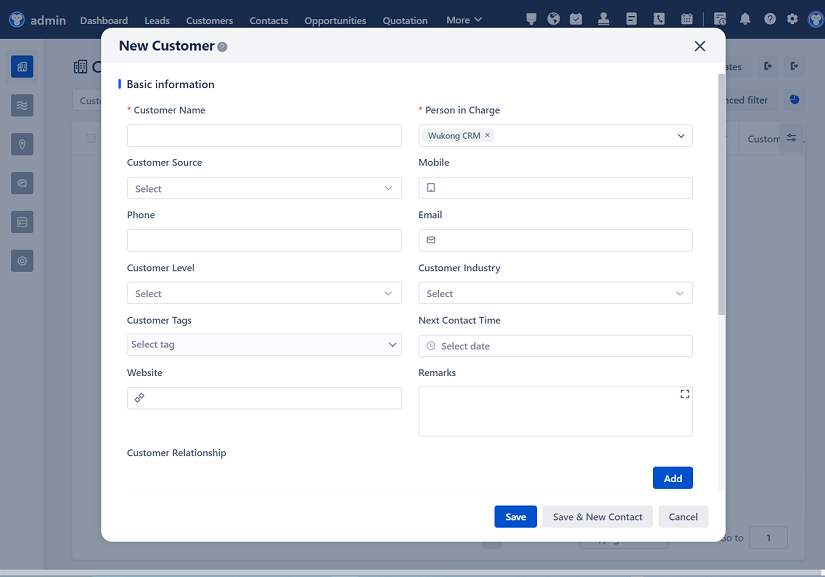
△Click on the top right corner to try Wukong CRM for free