
△Click on the top right corner to try Wukong CRM for free
So, let me tell you something — managing a CRM project isn’t just about installing software and calling it a day. I’ve been through a few of these implementations, and honestly, if you think it’s just a tech upgrade, you’re in for a surprise. It’s way more than that. It’s about people, processes, and a whole lot of planning. I remember one time we rolled out a new CRM system thinking it would magically fix all our sales tracking issues. Spoiler alert: it didn’t. Why? Because we didn’t manage the project properly from the start.
Let me walk you through what I’ve learned — the hard way, sometimes — about CRM project management and the key points you absolutely can’t ignore if you want it to actually work.
First things first: you’ve got to define your goals clearly. I can’t stress this enough. Ask yourself, “What are we trying to achieve with this CRM?” Is it better customer service? Faster sales cycles? Improved data accuracy? Whatever it is, write it down. Don’t just assume everyone on the team knows. I’ve seen teams waste months because half the people thought the goal was lead tracking, while the other half thought it was marketing automation. Total misalignment.
Once you know your goals, you need to get the right people involved. And I don’t just mean the IT guys. You need stakeholders from sales, marketing, customer support, and even finance. Why? Because CRM touches every part of the customer journey. If you leave someone out, you’ll end up with gaps in functionality or, worse, resistance when it’s time to use the system. Trust me, I’ve seen sales teams refuse to adopt a CRM because they weren’t consulted during setup. That kind of pushback is tough to fix later.
Now, here’s something people often overlook: process mapping. Before you even look at software, you need to understand how things work today. What does the sales process look like? How does customer support log and resolve tickets? Where does data live now? I once skipped this step because we were in a rush, and let’s just say it came back to bite us. We built workflows in the CRM that didn’t match reality, and users had to work around the system instead of with it. That’s a recipe for frustration.
After you map your current processes, it’s time to design the future ones. This is where you ask, “How can we do this better?” Maybe you realize that leads are getting lost because there’s no follow-up system. Or maybe customer data is scattered across five different spreadsheets. Use the CRM to fix those pain points. But don’t go overboard — keep it simple. I’ve seen companies try to automate everything on day one and end up with a bloated, confusing system that nobody wants to use.

Choosing the right CRM platform is another big decision. There are so many options out there — Salesforce, HubSpot, Zoho, Microsoft Dynamics — and each has its strengths. But here’s the thing: the most popular one isn’t always the best for you. Think about your team’s size, your budget, and your technical skills. I worked with a small nonprofit once that went with a super complex CRM because “that’s what big companies use.” They ended up spending more time managing the system than helping their clients. Not ideal.
Once you pick a platform, it’s time to plan the implementation. Break it down into phases. Don’t try to do everything at once. Start with core functionality — contact management, lead tracking, maybe basic reporting. Get that working smoothly, then add more features later. I’ve seen too many projects fail because they tried to launch with 20 custom fields, five integrations, and automated workflows on day one. It’s overwhelming. People need time to adapt.
Data migration is another area where things can go sideways. You’ve probably got customer data sitting in old systems, Excel files, or even paper records. Moving that into the new CRM sounds simple, but it’s not. First, clean up your data. Get rid of duplicates, fix formatting issues, fill in missing info where you can. I once migrated 10,000 contacts only to realize later that half the email addresses were invalid. That made email campaigns a nightmare. So yeah, data quality matters — a lot.
Customization is tempting. I get it. You want the CRM to feel “just right” for your team. But be careful. Too much customization makes the system harder to maintain and upgrade later. Stick to what’s essential. Ask yourself, “Does this field or workflow actually help us achieve our goals?” If not, skip it. I’ve seen companies spend weeks building a custom dashboard that nobody ever looked at. That’s wasted time and money.
Integration with other tools is usually necessary. Your CRM probably needs to talk to your email, calendar, marketing automation, or ERP system. Make sure those connections are solid. Test them early. I once had a sync issue between the CRM and the email platform that caused missed follow-ups. Customers noticed. That’s not the kind of attention you want.
Training is non-negotiable. No matter how intuitive the CRM is, people need to know how to use it. And I don’t mean a quick 15-minute demo. Real training — hands-on, role-specific, with time to practice. I’ve found that breaking training into small sessions works better than one long marathon. Sales reps learn differently than support agents, so tailor the content. And don’t forget ongoing support. People will have questions after go-live. Have a plan for that — a help desk, a super-user team, or regular Q&A sessions.
Go-live day is exciting, but it’s not the finish line. It’s more like the starting point. Monitor usage closely. Are people logging in? Are they entering data correctly? I once checked the system a week after launch and found that only 30% of the team had used it. That’s a red flag. Dig into why. Was the training not clear? Is the system slow? Are there missing features they need? Address those issues fast.
Change management is probably the most underrated part of CRM projects. People don’t like change. They’re comfortable with the old way, even if it’s inefficient. So you’ve got to win them over. Communicate early and often. Explain the “why” behind the CRM. Show them how it makes their jobs easier. Celebrate small wins. When one sales rep closed a deal using the new lead tracking feature, we made a big deal out of it. That kind of recognition encourages others to participate.

Post-implementation review is crucial. A few weeks after launch, sit down with the team and ask, “What’s working? What’s not?” Be honest. Maybe the reporting isn’t giving you the insights you expected. Maybe the mobile app is too slow. Use that feedback to make adjustments. A CRM isn’t a “set it and forget it” tool. It needs ongoing care and improvement.
And don’t forget about metrics. How will you know if the CRM is successful? Define KPIs upfront — things like lead conversion rate, customer response time, or data completeness. Track them before and after implementation. That way, you can show real business impact. I once used CRM data to prove that follow-up time had dropped from 48 hours to under 4. That got leadership’s attention — and more budget for future improvements.
One last thing: scalability. Think about where your company is headed. Will this CRM still work in two years when you’ve doubled your team or entered new markets? Choose a system that can grow with you. I’ve seen companies outgrow their CRM too fast and end up doing another painful migration sooner than expected.
So, to wrap it all up — a successful CRM project isn’t just about technology. It’s about people, planning, and patience. You’ve got to align your goals, involve the right stakeholders, map your processes, choose the right tool, migrate data carefully, train your team, manage change, and keep improving. Do it right, and the CRM becomes a powerful asset. Do it wrong, and it becomes an expensive lesson.

I’ve been through both, and let me tell you — the effort is worth it when you see your team actually using the system and customers getting better service because of it. That’s the real win.
FAQs (Frequently Asked Questions)
Q: How long does a typical CRM implementation take?
A: Well, it really depends. A small team with simple needs might get up and running in 4–6 weeks. But for larger organizations with complex processes, it could take 6 months or more. The key is not to rush — doing it right matters more than doing it fast.
Q: Who should lead the CRM project?
A: Ideally, you want someone who understands both the business side and the technical side. Sometimes it’s a project manager, sometimes a sales ops lead, or even a dedicated CRM administrator. The important thing is that they have authority to make decisions and get buy-in from different departments.
Q: What if our team resists using the new CRM?
A: That’s super common. The best way to handle it is to involve users early, listen to their concerns, and show them how the CRM helps them — not just the company. Training and ongoing support also go a long way in reducing resistance.
Q: Should we customize the CRM a lot?
A: I’d say keep it simple at first. Only customize what’s absolutely necessary. Too many custom fields or workflows can make the system clunky and harder to upgrade later. You can always add more features once people are comfortable with the basics.
Q: How do we measure the success of the CRM?
A: Pick a few key metrics before you start — like sales cycle length, customer satisfaction, or data accuracy. Track them over time. If those improve, your CRM is working. If not, dig into why and make adjustments.
Q: Can we integrate the CRM with our existing tools?
A: Most modern CRMs offer integrations with email, calendars, marketing tools, and more. But test them early. Don’t assume everything will work perfectly out of the box. Some integrations need extra setup or third-party connectors.
Q: What happens if the data migration goes wrong?
A: That’s why you test, test, and test again. Always do a trial migration with a small dataset first. Fix any issues before moving all your data. And keep backups — just in case. Better safe than sorry.
Q: Is cloud-based CRM better than on-premise?
A: For most companies today, cloud-based is easier and more cost-effective. It’s faster to set up, easier to update, and accessible from anywhere. On-premise gives you more control but requires more IT resources. Think about what makes sense for your team.
Related links:
Free trial of CRM
Understand CRM software
AI CRM Systems
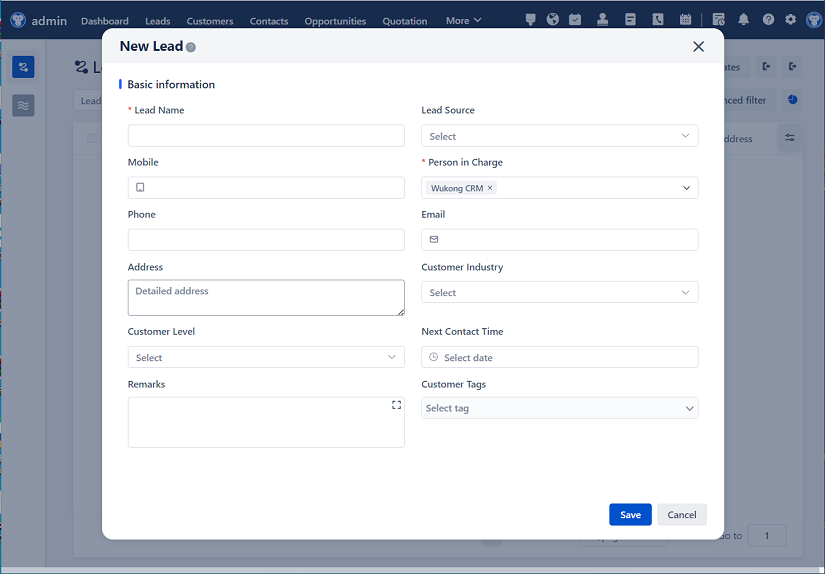
△Click on the top right corner to try Wukong CRM for free