
△Click on the top right corner to try Wukong CRM for free
Let me tell you something — if you're running a business these days, you’ve probably heard about CRM systems. I mean, honestly, how could you not? They’re everywhere. Sales teams swear by them, marketing folks can’t live without them, and customer support reps? Well, they’d probably lose their minds without one. But here’s the thing: not all CRMs are created equal. I’ve spent months diving into the real-world experiences of companies using the big names out there — Salesforce, HubSpot, Zoho, Microsoft Dynamics, and Pipedrive — and let me just say, the feedback is… mixed.

So, where do we start? Probably with Salesforce. Everyone knows Salesforce, right? It’s like the Apple of CRMs — flashy, powerful, and kind of expensive. People love it because it does everything. Seriously, you name it — lead tracking, automation, analytics, AI tools — Salesforce has it. But here’s the catch: it’s complicated. Like, really complicated. One sales manager told me, “I spent two weeks just trying to figure out how to customize a dashboard.” And that’s not uncommon. A lot of users say the learning curve is steep, especially for small teams without dedicated IT staff.
But when it works? Oh man, it works well. Big enterprises love it because it scales beautifully. You can plug in all sorts of third-party apps, build custom workflows, and integrate it with almost anything. The AI features, Einstein Analytics, actually give some pretty smart suggestions. One user said, “It predicted which leads were most likely to convert — and it was right 80% of the time.” That’s impressive. Still, for smaller businesses, it might be overkill. I’ve heard more than once, “We’re paying for features we’ll never use.”
Now, let’s talk about HubSpot. This one’s different. It feels friendlier, more approachable. If Salesforce is the corporate powerhouse, HubSpot is the helpful neighbor who brings cookies. It’s super intuitive — I tried setting up a test account, and within an hour, I had contacts imported, emails scheduled, and a basic workflow running. No tech degree required.
A lot of small to mid-sized businesses rave about it. Marketing teams especially love the built-in tools for email campaigns, social media scheduling, and content management. One marketer told me, “It cut our campaign setup time in half.” Plus, the free version? Yeah, it’s actually useful. Not just a tease — you can manage a decent number of contacts and run real campaigns.
But — and this is a big but — as your company grows, you hit limits fast. Automation gets clunky, reporting isn’t as deep, and integrations sometimes feel like afterthoughts. And upgrading? Costs add up quicker than you think. One user said, “We started on the free plan, then moved to Starter, then Pro… next thing I know, we’re spending $1,200 a month.” So yeah, great for startups, maybe less so for scaling companies.
Then there’s Zoho CRM. Honestly? This one surprised me. I didn’t expect much — I mean, Zoho doesn’t have the brand power of Salesforce or HubSpot — but a ton of users say it delivers solid value for the price. It’s affordable, flexible, and packed with features. One small business owner said, “For under $20 per user, I get AI insights, telephony integration, and custom modules. Where else can you get that?”
The interface is clean, though not quite as polished as HubSpot. Some people find it a little dated, but functionality-wise, it holds up. The AI assistant, Zia, actually helps prioritize leads and suggests follow-ups. One sales rep told me, “Zia reminded me to call a client I hadn’t touched in three weeks — turned out they were ready to buy.” That’s the kind of thing that pays for the whole system.

But — and this comes up a lot — customer support is hit or miss. Some users say they got quick, helpful responses. Others waited days for a reply. And while Zoho offers tons of tools, integrating them smoothly takes effort. One guy said, “I love Zoho Books and Zoho Campaigns, but getting them to talk to the CRM took way too long.” So it’s powerful, but you might need someone tech-savvy on your team.
Microsoft Dynamics 365 is another beast entirely. If your company already uses Microsoft products — Outlook, Teams, Excel — this one fits like a glove. One IT director told me, “Our sales team lives in Outlook. With Dynamics, they don’t even have to leave their inbox to update deals.” That’s huge for adoption. No one likes switching between five different apps.
It’s also highly customizable. You can tweak it to match your exact sales process, which enterprise clients appreciate. The AI features are solid, and the reporting tools are detailed without being overwhelming. One user said, “I can pull a report showing deal velocity by region in under a minute.” That kind of insight is gold.
But — surprise, surprise — it’s not cheap. Licensing gets complex, and implementation often requires consultants. One company spent six months and tens of thousands just to go live. And if you’re not already in the Microsoft ecosystem? It might not make sense. The learning curve is steeper than HubSpot, and some users say the interface feels clunky compared to modern CRMs.
Then there’s Pipedrive. Now, this one’s interesting. It’s built specifically for sales teams — not marketing, not support, just sales. And it shows. The whole interface is pipeline-focused. You literally see your deals moving through stages like a visual flowchart. One sales manager said, “My team closes 30% more deals now because we can spot bottlenecks instantly.”
It’s simple, fast, and affordable. Great for small sales teams that want clarity without clutter. The mobile app is excellent — reps can update deals from the field in seconds. Integrations with Gmail, Slack, and Zoom work smoothly. One user said, “I log calls and notes right after a meeting. No more forgetting details.”
But again, limitations. It’s not a full-suite CRM. If you need marketing automation or advanced customer service tools, you’ll need other software. And customization? Limited. You can’t build complex workflows like in Salesforce. So it’s perfect for focused sales teams, but not for companies wanting an all-in-one platform.
So what’s the verdict? Honestly, it depends on your needs. There’s no single “best” CRM. I’ve seen tiny startups thrive on HubSpot, while others drown in Salesforce’s complexity. I’ve seen mid-sized companies save thousands with Zoho, while enterprises rely on Dynamics for deep integration.
One thing keeps coming up: ease of use matters. No matter how powerful a CRM is, if your team won’t use it, it’s useless. I spoke to a company that spent $50,000 on a CRM only to find their salespeople were still tracking leads in spreadsheets. “They said it was too slow,” the CEO told me. Ouch.
Another big factor? Support and training. Systems like Salesforce and Dynamics offer incredible capabilities, but without proper onboarding, users get frustrated. Companies that invested in training saw way better results. One user said, “Once we brought in a consultant for two days, everything clicked.”
Integration is another make-or-break point. Your CRM shouldn’t live in a silo. It needs to connect with your email, calendar, phone system, and other tools. The smoother the sync, the more accurate your data, and the more trust your team has in the system.
And let’s not forget mobile access. Salespeople are on the move. If they can’t update a deal from their phone quickly, they won’t. Pipedrive and HubSpot shine here. Salesforce? Their mobile app has improved, but it’s still not as smooth.
Pricing transparency is another headache. A lot of users complain about hidden costs — extra fees for storage, more contacts, or premium support. Zoho and HubSpot are clearer upfront, but even they have upsells. Always read the fine print.
Finally, consider scalability. Will this CRM grow with you? A startup might love a simple tool now, but what happens when you double in size? Can the system handle more users, more data, more complexity? That’s where Salesforce and Dynamics have an edge — they’re built for growth.
So, what should you do? Start small. Try a free version. Get feedback from your team. See what feels natural. Don’t fall for the “more features = better” trap. Sometimes simplicity wins.

And whatever you choose, commit to using it. Train your people. Clean your data. Make it part of your daily routine. Because at the end of the day, a CRM is only as good as the habits around it.
FAQs (Frequently Asked Questions)
Q: Which CRM is best for small businesses?
A: For small businesses, I’d lean toward HubSpot or Pipedire. HubSpot is great if you want marketing tools too, while Pipedrive is ideal if you’re purely focused on sales.
Q: Is Salesforce worth the cost?
A: Only if you need its depth and scale. For large teams with complex processes, yes. For a 5-person startup? Probably overkill.

Q: Can Zoho replace Salesforce?
A: For many mid-sized companies, absolutely. It offers similar features at a fraction of the cost. But if you need heavy customization or enterprise-grade support, Salesforce still wins.
Q: How important is mobile access?
A: Extremely. If your team is remote or travels often, a strong mobile app is non-negotiable. Check reviews specifically about mobile performance.
Q: What’s the biggest mistake companies make with CRM?
A: Skipping training and expecting instant adoption. Just buying a CRM isn’t enough — you have to teach people how to use it and show them the value.
Q: Should I integrate my CRM with email and calendar?
A: 100%. Without syncing, you’ll have duplicate work and outdated info. Look for native integrations with tools like Gmail, Outlook, or Google Calendar.
Q: Are free CRM versions worth it?
A: Yes, especially for testing. HubSpot’s free plan is surprisingly capable. Just know the limits — usually contact caps and fewer automations.
Q: How long does it take to implement a CRM?
A: It varies. Simple ones like Pipedrive? A few days. Complex ones like Salesforce or Dynamics? Several months, especially with customization and training.
Q: Can a CRM improve customer satisfaction?
A: Definitely. When your team has full visibility into customer history, they can respond faster and more personally — and that builds loyalty.
Q: What should I look for in a CRM demo?
A: Focus on ease of use, key features you need, and how it handles your current workflows. Ask about setup time, support options, and pricing clarity.
Related links:
Free trial of CRM
Understand CRM software
AI CRM Systems
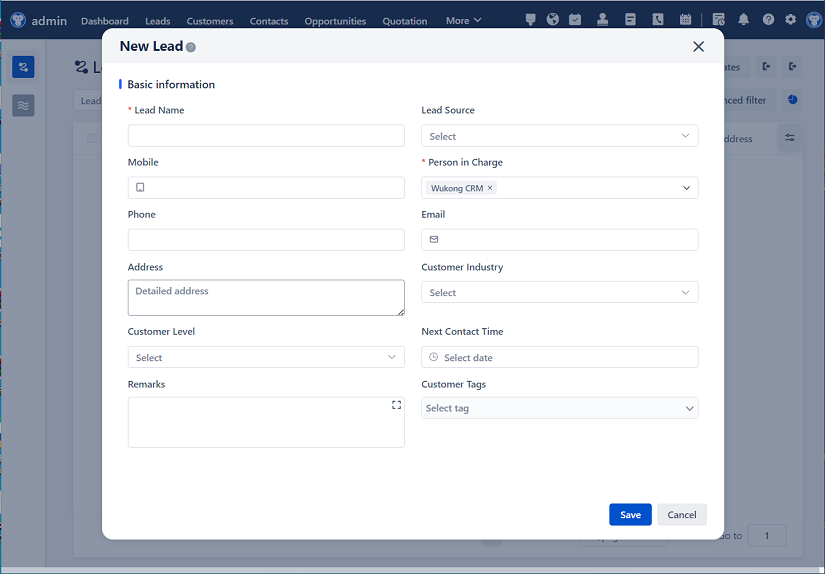
△Click on the top right corner to try Wukong CRM for free