
△Click on the top right corner to try Wukong CRM for free
So, here’s the thing—we’ve been talking about upgrading our customer relationship management system for a while now, and honestly, it’s about time we made it happen. I mean, we’re still relying on spreadsheets and outdated software that barely keeps up with our daily operations. It’s not just inefficient; it’s starting to hurt how we serve our clients. That’s why we’re moving forward with implementing a new Enterprise CRM system. And let me tell you, this isn’t just another IT project—it’s a game-changer for how we connect with customers, manage sales pipelines, and even how teams collaborate across departments.
Now, I know change can be scary. People get comfortable with what they know, even if it’s not working that well. But trust me, once you see how this new CRM works, you’ll wonder why we didn’t do it sooner. It’s not just about having a fancy new tool; it’s about making our jobs easier, giving us better insights, and helping us deliver a more personalized experience to every customer.
Let’s start from the beginning. The first step in this rollout plan is defining our goals. What do we actually want this CRM to do for us? Well, for starters, we want a single source of truth for all customer data. Right now, sales has one version of a client’s info, support has another, and marketing might be working off something completely different. That’s a mess. With the new CRM, everyone will be looking at the same updated data in real time. No more confusion, no more missed follow-ups.

We also want better reporting and analytics. Managers should be able to pull up dashboards and instantly see how their teams are performing. Are we hitting our sales targets? Which campaigns are driving the most engagement? How quickly are support tickets getting resolved? The CRM will give us answers to all of that—and more—without having to dig through five different systems.
Another big goal is automation. Think about all the repetitive tasks we do every day: sending follow-up emails, logging calls, updating statuses. The new CRM can handle a lot of that automatically. That means less busywork and more time for actual relationship-building with clients. And honestly, who wouldn’t want that?
Okay, so we’ve got our goals. Now, how do we actually get this thing up and running? Well, we’re not just going to flip a switch and expect everything to work perfectly. That never ends well. Instead, we’re taking a phased approach. We’re calling it the “Rollout Roadmap,” and it’s broken down into four main stages: Planning, Configuration & Customization, Testing & Training, and Go-Live & Support.
Let’s talk about the Planning phase first. This is where we lay the foundation. We’ve already formed a cross-functional team—people from sales, marketing, customer support, IT, and finance. Why? Because this system affects everyone. We need input from all sides to make sure it meets everyone’s needs. We’ve also brought in the vendor’s implementation consultants. They’ve done this dozens of times before, so their experience is super valuable.
During planning, we’re mapping out all our current business processes. Like, how does a lead become an opportunity? What steps does support take when a ticket comes in? We’re documenting all of that so we can decide what to keep, what to improve, and what to automate in the new system. It’s kind of like cleaning out your closet—you go through everything and decide what’s worth keeping.
Next up is Configuration & Customization. This is where the CRM starts to take shape. We’re setting up user roles and permissions—because not everyone needs to see everything. Sales managers might need full access, but a new rep might only see their own accounts. We’re also customizing fields, workflows, and dashboards to match how we actually work. For example, we’re adding a field for “Preferred Communication Method” because some clients hate emails and only want calls. Little things like that make a big difference.

We’re also integrating the CRM with other tools we use every day—like our email platform, calendar, and marketing automation software. That way, when someone sends an email, it automatically logs in the CRM. Or when a meeting is scheduled, it shows up in the client’s timeline. It’s all about reducing manual entry and keeping everything connected.
Now, here’s where things get real: Testing & Training. Before anyone starts using the system, we need to make sure it actually works. So we’re running through a series of tests—functional testing to check if features work as expected, integration testing to make sure data flows correctly between systems, and user acceptance testing (UAT) where real team members try it out and give feedback.
And speaking of team members—training is huge. We’re not just sending out a manual and saying “good luck.” We’re running hands-on workshops, creating video tutorials, and setting up a help center with FAQs and step-by-step guides. We’re even doing role-based training. Sales reps will learn how to manage leads and track deals, while support staff will focus on case management and knowledge base usage. The goal is to make everyone feel confident using the system from day one.
Oh, and we’re not forgetting about change management. Let’s be real—some people are going to resist this. Maybe they’re worried about the learning curve, or they think it’s just more work. That’s why we’re being proactive. We’re holding town halls, sending regular updates, and appointing “CRM Champions” in each department—people who are excited about the system and can help others get on board. We want this to feel like a team effort, not something being forced on people.
Alright, so after all that prep, we hit the Go-Live phase. This is when the system officially launches. But we’re not doing a big bang rollout—turning off the old system and flipping on the new one for everyone at once. Too risky. Instead, we’re starting with a pilot group. A small team from sales and support will go live first. They’ll use the system in real-world scenarios for a few weeks while we monitor performance, fix any bugs, and gather feedback.
Once the pilot is successful, we’ll roll out in waves—maybe by region, department, or business unit. Each wave gets trained, tested, and supported before going live. This way, if something goes wrong, it’s contained, and we can fix it before moving on. It’s slower, sure, but way safer.
And after go-live? That’s not the end—it’s just the beginning. We’re setting up a dedicated support team to handle questions and issues. We’re also monitoring system usage and performance closely. Are people logging in regularly? Are they using the features we built for them? If not, we’ll find out why and make adjustments.

We’re also planning regular check-ins—monthly at first, then quarterly—to review how the CRM is performing against our goals. Are we seeing better sales conversion rates? Faster response times? Higher customer satisfaction? These are the metrics that matter. And if something isn’t working, we’ll tweak it. This isn’t a “set it and forget it” project. It’s an ongoing journey.
Now, I know what some of you might be thinking: “This sounds great, but what about the cost?” Fair question. Yes, there’s an upfront investment—in the software, implementation services, training, and internal resources. But when you look at the long-term benefits—increased efficiency, better customer retention, higher sales—it pays for itself. Plus, we’re avoiding the hidden costs of lost opportunities and miscommunication that come with our current system.
Another concern might be data migration. We’ve got years of customer data sitting in different places. Moving it all into the new CRM sounds scary, but we’ve got a solid plan. We’re cleaning up the data first—removing duplicates, filling in missing info, standardizing formats. Then we’re using secure, automated tools to migrate it in batches. And we’re validating everything afterward to make sure nothing got lost or corrupted.
And what about downtime? We’re scheduling the go-live during a low-activity period to minimize disruption. Most of the work happens in the background, so day-to-day operations won’t grind to a halt. And we’ll have backup plans in place, just in case.
Look, I’m not going to pretend this will be easy. There will be challenges. There might be a few hiccups along the way. But I truly believe this is the right move for our company. A modern CRM isn’t just a tool—it’s a foundation for growth. It helps us understand our customers better, work smarter, and build stronger relationships.
And at the end of the day, that’s what this is all about—our customers. They deserve the best experience we can give them. And with this new CRM, we’ll be able to deliver it—consistently, efficiently, and personally.
So, let’s embrace this change together. Let’s learn the system, use it well, and hold each other accountable. Because when we do, we’re not just improving our processes—we’re building a better future for our company and the people we serve.
FAQs (Frequently Asked Questions):
Q: How long will the entire rollout take?
A: The full rollout is expected to take about 6 to 9 months, depending on the size of each wave and feedback from the pilot group.
Q: Will my daily work be disrupted during the transition?
A: We’re minimizing disruption by using a phased approach and scheduling key activities during low-traffic periods. You’ll be trained and supported every step of the way.
Q: Can I still access the old system after the new CRM goes live?
A: The old system will be available in read-only mode for a limited time (about 3 months) to allow for reference, but all new entries must go into the CRM.

Q: Who do I contact if I have a problem with the CRM after go-live?
A: You can reach the internal support team via the helpdesk portal or email. CRM Champions in your department can also assist with common issues.
Q: Will my data be secure in the new system?
A: Absolutely. The CRM uses enterprise-grade security, including encryption, role-based access, and regular audits to protect customer and company data.
Q: Can the CRM be accessed on mobile devices?
A: Yes, there’s a mobile app available for iOS and Android, so you can update records, check tasks, and view customer info on the go.
Q: What if I don’t like how a feature works?
A: Feedback is welcome! We’ll collect input during and after rollout and make adjustments in future updates to better fit team needs.
Related links:
Free trial of CRM
Understand CRM software
AI CRM Systems
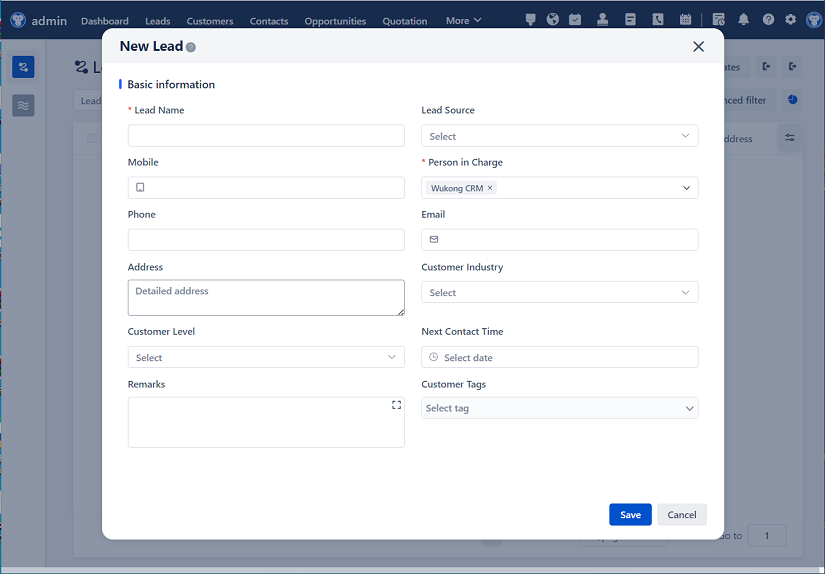
△Click on the top right corner to try Wukong CRM for free