
△Click on the top right corner to try Wukong CRM for free
You know, I’ve been thinking a lot lately about how tough it is to run a telesales team. It’s not just about making calls all day — although that’s definitely part of it — it’s more about managing relationships, tracking progress, and keeping your team motivated. Honestly, without the right tools, it can feel like you’re trying to juggle flaming torches blindfolded.
I remember when my company first started doing telesales. We were using spreadsheets, sticky notes, and a whole lot of guesswork. Sounds crazy now, right? But back then, we thought it was normal. We’d lose track of leads, forget follow-ups, and sometimes even call the same person twice by accident. Not exactly the kind of impression you want to make on potential customers.
Then someone suggested we try a CRM system specifically built for telesales. At first, I was skeptical. I mean, I’d heard of CRMs before, but most of them seemed way too complicated or designed for big sales teams with huge budgets. But this one was different — it was made for telesales reps, not just general salespeople.
Let me tell you, once we got it up and running, things started to change almost immediately. For the first time, every call was logged automatically. Every conversation had a history. No more “Wait, did we talk to this guy last week?” moments. Everything was right there in the system.
And here’s the thing — it wasn’t just about organization. The real magic happened in how it helped us be more personal with our customers. You see, when you’re making 50 calls a day, it’s easy to fall into a script and treat everyone the same. But this CRM kept notes on each person — their preferences, past objections, even little details like their birthday or what industry they work in. That meant when I called someone back, I could say, “Hey John, how was your trip to Denver?” instead of just jumping straight into the pitch. And let me tell you, people notice that.
Another thing I really appreciated was the automated dialing feature. I know some people are wary of auto-dialers, but this one was smart. It didn’t just blast through numbers — it filtered out bad leads, prioritized warm contacts, and even scheduled callbacks automatically. My team saved so much time not having to manually dial every number or chase down voicemails.
And speaking of time — have you ever tried managing a team without real-time reporting? It’s like flying blind. Before this CRM, I’d get weekly reports that were already outdated by the time I saw them. Now, I can pull up a dashboard any time and see exactly who’s hitting their targets, who needs coaching, and which campaigns are actually working. It’s not just helpful — it’s empowering.
One of the coolest features, honestly, is the call recording and transcription. At first, my team was a little nervous about being recorded, but once they realized it was for training and quality assurance — not spying — they warmed up to it. Now, we use those recordings to review tough calls, celebrate wins, and even create better scripts based on what’s actually working in real conversations.

I also love how integrated everything is. The CRM syncs with our email, calendar, and even our marketing tools. So when someone downloads a brochure from our website, their info pops right into the system with a note saying, “This person showed interest in Product X.” That means our reps can start the conversation where it left off, not from square one.
And don’t even get me started on lead scoring. That feature alone has cut our follow-up time in half. Instead of guessing which leads are hot, the system analyzes behavior — things like how many times they’ve visited our site, opened our emails, or engaged with our content — and ranks them accordingly. So my team knows exactly who to call first. It’s like having a built-in sales coach whispering in their ear.
Now, I’ll admit — setting it up wasn’t completely smooth. There was a learning curve, sure. Some of the older reps were resistant at first. One guy even said, “I’ve been doing this for 20 years without a computer telling me what to do.” Fair point. But after a few training sessions and seeing how much easier it made their jobs, even he came around.
What really sold everyone was the mobile app. Our reps aren’t always at their desks — sometimes they’re on the road, at events, or just taking calls from home. With the app, they can update records, log calls, and check their pipeline from anywhere. It’s made remote work way more efficient.
Another thing I didn’t expect? How much better team collaboration became. Before, if a rep left the company, their knowledge walked out the door with them. Now, every interaction is documented. New hires can jump in faster, and managers can step in to help without missing a beat.
And let’s talk about motivation. This CRM has built-in gamification — leaderboards, badges, performance streaks. Sounds silly, maybe, but it works. Suddenly, making 30 calls a day isn’t just a chore — it’s a challenge. One of my reps even started a friendly competition with another team. Sales went up by 18% that month. Can you believe that?
Integration with telephony was another game-changer. No more switching between apps or losing connection data. The CRM sits right inside the phone system, so every call is tracked, tagged, and tied to the right contact automatically. It’s seamless.
I also appreciate how customizable it is. We tweaked the workflow to match our exact sales process — from initial contact to closing. We added custom fields for things like budget range and decision-maker status. And because it’s cloud-based, updates happen in the background without disrupting our day.
Security was a concern at first, especially since we handle sensitive customer data. But the system uses enterprise-grade encryption, two-factor authentication, and regular backups. Plus, we can control exactly who sees what. Managers have full access, but reps only see their own leads unless permissions are granted.

Customer support has been solid too. Whenever we’ve had an issue — and yes, there were a few hiccups early on — their team responded quickly. Not just with canned answers, but real solutions. They even offered personalized onboarding sessions to make sure we got the most out of the system.
Now, after six months of using this CRM, I can confidently say it’s transformed our telesales operation. Conversion rates are up. Average deal size has increased. Team morale is higher because people aren’t drowning in admin work. And leadership finally has clear visibility into what’s really happening on the ground.
But here’s the truth — the software alone didn’t fix everything. It gave us the tools, sure, but we still had to train our team, refine our scripts, and stay consistent. The CRM amplified our efforts; it didn’t replace the human side of selling.
And that’s something I want to emphasize: this isn’t about replacing people with robots. It’s about giving real humans better tools to do their jobs well. Telesales is still about connection, empathy, and listening. The CRM just helps us do that more efficiently and at scale.
If you’re running a telesales team and still relying on spreadsheets or outdated systems, I’d seriously encourage you to look into a dedicated CRM. Not just any CRM — one built for telesales. The difference is night and day.
It doesn’t have to be expensive, either. A lot of these systems offer tiered pricing based on team size. You can start small and grow into it. And honestly, the ROI becomes obvious pretty fast when you see how much time and money you save.
Plus, think about scalability. If you ever want to expand your team or launch new campaigns, having a solid CRM foundation makes it so much easier. You’re not rebuilding the wheel every time.
So yeah, I’m a believer. Not because some salesperson convinced me, but because I’ve lived the results. My team is happier, my customers feel more valued, and my numbers speak for themselves.
If you’re on the fence — take a demo. Play around with it. See how it fits your workflow. Ask your team what they think. Because at the end of the day, the best CRM is the one your people will actually use.
And hey, if I can go from drowning in sticky notes to running a smooth, data-driven telesales machine, so can you.
FAQ (Frequently Asked Questions):
Q: What exactly is a CRM for telesales?
A: It’s a Customer Relationship Management system specifically designed to support phone-based sales teams. It includes features like auto-dialing, call logging, lead scoring, and real-time analytics tailored to high-volume calling environments.
Q: Can a small telesales team benefit from this kind of CRM?
Absolutely. In fact, smaller teams often see the biggest improvements because they gain structure and efficiency without needing a huge IT department.

Q: Is it hard to learn?
Most modern telesales CRMs are built with user-friendliness in mind. There’s usually a learning curve, but good providers offer training, tutorials, and responsive support to help you along.
Q: Will it integrate with our existing phone system?
Many do. Look for a CRM that supports VoIP integration or offers its own calling platform. Most popular systems like RingCentral, Zoom Phone, or Twilio can connect seamlessly.
Q: Can I customize the sales pipeline?
Yes, most dedicated telesales CRMs let you map your unique sales process, add custom fields, and set up automated workflows that match how your team actually sells.
Q: How does it help with compliance?
Good CRMs include features like call recording consent tracking, data encryption, and audit logs to help you stay compliant with regulations like GDPR or TCPA.
Q: Do reps need special hardware?
Not usually. Most systems work on standard computers, laptops, or smartphones. All you really need is a stable internet connection and a headset.
Q: Can it help with coaching and training?
Definitely. With call recordings, performance dashboards, and activity tracking, managers can identify strengths and areas for improvement more effectively.

Q: What if we already use a general CRM like Salesforce?
You might still benefit from a specialized telesales tool. General CRMs are powerful but often lack the speed and automation needed for high-volume calling. A dedicated system can complement or even replace parts of your current setup.
Q: How much does it cost?
Pricing varies, but many start around
Related links:
Free trial of CRM
Understand CRM software
AI CRM Systems
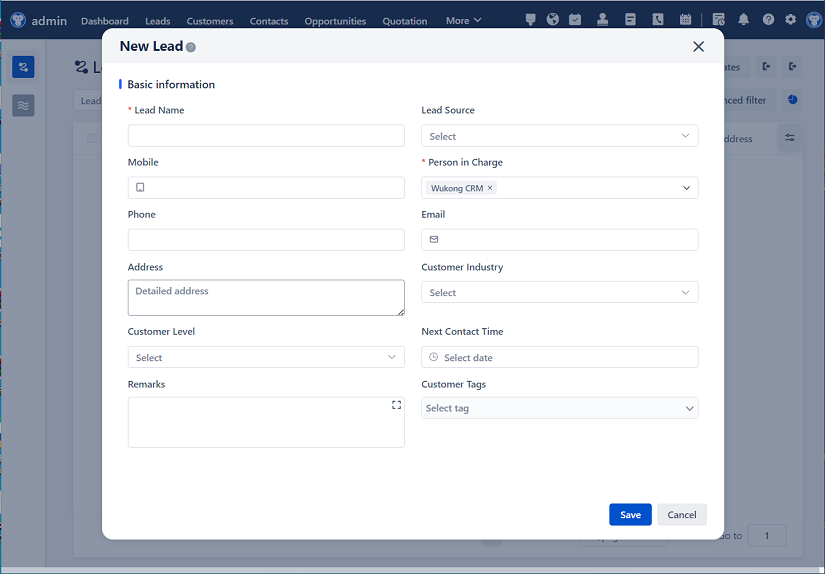
△Click on the top right corner to try Wukong CRM for free