
△Click on the top right corner to try Wukong CRM for free
So, let me tell you something I’ve been thinking about lately—customer relationship management, or CRM for short. Yeah, I know it sounds kind of corporate and dry, but honestly, it’s way more interesting than it sounds, especially when you start comparing the old-school way with what we’re doing now. I mean, remember when CRMs were just digital Rolodexes? You’d plug in a customer’s name, phone number, maybe their birthday if you were feeling fancy, and that was pretty much it. But now? It’s like we’ve jumped from flip phones to smartphones overnight.
Let’s talk about traditional CRM first. Back in the day—and I’m talking early 2000s here—CRMs were mostly about storing data. Like, really basic stuff: contact info, purchase history, maybe some notes from sales calls. They helped companies keep things organized, sure, but they didn’t really do much beyond that. You had to manually enter everything, pull reports by hand, and forget about getting any real-time insights. It was kind of like having a filing cabinet that never talked back.
And don’t get me wrong—I’m not saying traditional CRM was useless. For its time, it was actually pretty revolutionary. Before CRMs, businesses were using spreadsheets or even paper files to track customers. So moving to a centralized system was a big step forward. But still, it was reactive. You’d look at past behavior and try to guess what might happen next. There wasn’t much intelligence behind it.

Now fast-forward to today. We’ve got what people are calling “intelligent CRM,” and honestly, it feels like we’re living in the future. These systems aren’t just storing data—they’re learning from it. They use artificial intelligence, machine learning, natural language processing—you name it. And the coolest part? They can predict things. Like, they’ll tell you which customer is most likely to churn, or which lead has the highest chance of converting. That’s not magic; that’s smart tech working behind the scenes.
I remember sitting in a meeting last year where our marketing team showed us a demo of our new intelligent CRM. One of the features automatically scored leads based on their online behavior, email engagement, and social media activity. No human had to touch it. The system just knew. And it kept getting better over time because it learned from every interaction. That blew my mind. Traditional CRM would’ve required someone to manually assign scores based on gut feeling or outdated rules.
Another thing I’ve noticed is how intelligent CRM changes the way teams work together. In the old days, sales, marketing, and customer service often operated in silos. Sales had their data, marketing had theirs, and customer service was just trying to keep up. But with intelligent CRM, everything’s connected. If a customer emails support with an issue, the sales rep gets notified instantly. If marketing runs a campaign, the system tracks who opened it, clicked through, and made a purchase—all in real time.
And let’s talk about personalization. This is where intelligent CRM really shines. You know those emails that feel like they were written just for you? Like, “Hey, since you bought hiking boots last month, here are some trail maps and moisture-wicking socks”? That’s not a coincidence. That’s intelligent CRM analyzing your behavior and serving up relevant content automatically. Traditional CRM could send bulk emails too, sure, but they were generic. “Dear Valued Customer” kind of stuff. Yawn.
But here’s the thing—not every company needs an intelligent CRM. I’ve seen small businesses spend tons of money on AI-powered platforms when all they really needed was a simple contact manager. It’s easy to get caught up in the hype. Just because something’s advanced doesn’t mean it’s right for everyone. Sometimes, a solid traditional CRM does the job just fine, especially if your processes are straightforward and your customer base isn’t huge.
Still, for larger organizations or those in competitive industries, intelligent CRM is kind of a no-brainer. Think about e-commerce, SaaS companies, or financial services. These businesses live and die by customer experience. They need to anticipate needs, reduce churn, and upsell at the right moment. And that’s exactly what intelligent CRM helps with. It’s not just about managing relationships anymore—it’s about deepening them.
Oh, and let’s not forget mobile access. With intelligent CRM, your team can pull up customer data from their phones while on the go. Sales reps can check a client’s history before walking into a meeting. Support agents can resolve issues faster because they have full context. Traditional CRM systems often required being tied to a desktop, which just doesn’t cut it in today’s world.

Integration is another big difference. Intelligent CRMs play nice with other tools—email platforms, social media, analytics software, even IoT devices. They pull data from everywhere and make sense of it. Traditional CRMs? Not so much. They were built in a time when everything was more isolated. Getting them to talk to other systems usually meant custom coding and a lot of headaches.
I’ll admit, though—intelligent CRM isn’t perfect. It can be expensive. Implementation takes time. And if your data is messy or incomplete, the AI won’t work as well. Garbage in, garbage out, right? Plus, some employees resist change. I’ve heard stories of sales teams refusing to use the new system because they liked their old spreadsheets. Change is hard, even when the new thing is clearly better.

But when it works? Wow. I saw a report from a retail company that switched to intelligent CRM and reduced customer churn by 30% in six months. Another company increased cross-selling by 45% just by using AI-driven product recommendations. Those aren’t small numbers. That’s real impact.
And let’s talk about customer expectations. People today want fast, personalized service. They don’t want to repeat themselves when they call support. They expect companies to remember their preferences. If you’re still using a traditional CRM that doesn’t sync across departments, you’re going to fall behind. Customers notice when you treat them like a number instead of a person.
One thing I find fascinating is how intelligent CRM uses sentiment analysis. It can scan customer emails, chat logs, even social media comments to figure out how someone’s feeling. Is this person frustrated? Happy? Indifferent? The system picks up on tone and language patterns. Then it alerts the right team to take action. Imagine getting a notification that says, “This customer is showing signs of frustration—consider reaching out with a discount.” That’s powerful.
Traditional CRM couldn’t do any of that. At best, it might flag a ticket as “high priority,” but it wouldn’t understand why. It wouldn’t know if the customer was angry because of a late shipment or a rude support agent. Context matters, and intelligent CRM finally gives us that.
Now, I should mention that security and privacy are bigger concerns with intelligent CRM. These systems collect a ton of data, sometimes including sensitive info. Companies have to be super careful about compliance—GDPR, CCPA, all that stuff. A data breach with an intelligent CRM could be way worse than with a traditional one because there’s just so much more information stored and processed.
But overall, I think the benefits outweigh the risks. As long as companies are responsible with data and transparent with customers, intelligent CRM can build stronger, more trusting relationships. It’s not about spying on people—it’s about serving them better.
Looking ahead, I think we’re going to see even more integration with emerging tech. Voice assistants, augmented reality, blockchain for secure identity verification—imagine a CRM that knows your customer walked into a store via geolocation and sends a personalized offer to their smartwatch. That’s not sci-fi anymore. It’s already happening in pilot programs.
And hey, even traditional CRM isn’t completely dead. Some industries, like local services or nonprofits, might not need all the bells and whistles. There’s still value in simplicity. But for most forward-thinking businesses, the future is intelligent.
So, what’s the bottom line? Traditional CRM laid the foundation. It taught us the importance of organizing customer data. But intelligent CRM? It’s taking that foundation and building a skyscraper. It’s proactive, predictive, and deeply personal. It turns data into insight, and insight into action.
If you’re still on the fence about upgrading, ask yourself: Are you reacting to customers, or anticipating their needs? Are you guessing what they might want, or do you actually know? Because that’s the real difference. One system remembers. The other one understands.
And honestly? Once you’ve experienced what intelligent CRM can do, going back feels like driving a car without power steering. Possible? Sure. But why would you?
FAQs (Frequently Asked Questions)
Q: What’s the main difference between traditional CRM and intelligent CRM?
A: Great question. Traditional CRM is mostly about storing and organizing customer data, while intelligent CRM uses AI and machine learning to analyze that data, predict behavior, and automate actions. It’s the difference between keeping a list and actually understanding the people on it.
Q: Do I need technical skills to use intelligent CRM?
Honestly? Not really. Most modern intelligent CRM platforms are designed to be user-friendly. Sure, setting up integrations or custom workflows might require some IT help, but day-to-day use? Sales reps, marketers, and support agents can pick it up quickly.
Q: Is intelligent CRM only for big companies?
Not at all. While larger businesses often benefit more due to volume and complexity, many intelligent CRM tools now offer scalable pricing. Small businesses can start with basic AI features and grow into more advanced ones as they expand.
Q: Can traditional CRM be upgraded to intelligent CRM?
Sometimes, yes. Some CRM providers offer add-ons or newer versions that include AI capabilities. But in many cases, switching to a dedicated intelligent CRM platform makes more sense for better performance and features.
Q: Isn’t AI in CRM kind of creepy? Like, are we invading customer privacy?
Valid concern. The key is transparency and consent. If customers know how their data is used and have control over it, intelligent CRM can enhance trust instead of breaking it. It’s all about ethical use.

Q: How long does it take to see results after switching to intelligent CRM?
It varies, but many companies see improvements in lead conversion or customer satisfaction within 3–6 months. The AI gets smarter over time, so the longer you use it, the better it performs.
Q: What happens if my data is inaccurate? Will the AI make bad decisions?
Exactly. AI relies on good data. If your records are outdated or incomplete, the insights will be off. That’s why data hygiene—regular cleaning and updating—is crucial before and after implementing intelligent CRM.
Q: Can intelligent CRM replace human employees?
Nope. It’s meant to assist, not replace. Think of it as a super-smart assistant that handles repetitive tasks and provides insights, freeing up humans to focus on building real relationships and solving complex problems.
Related links:
Free trial of CRM
Understand CRM software
AI CRM Systems
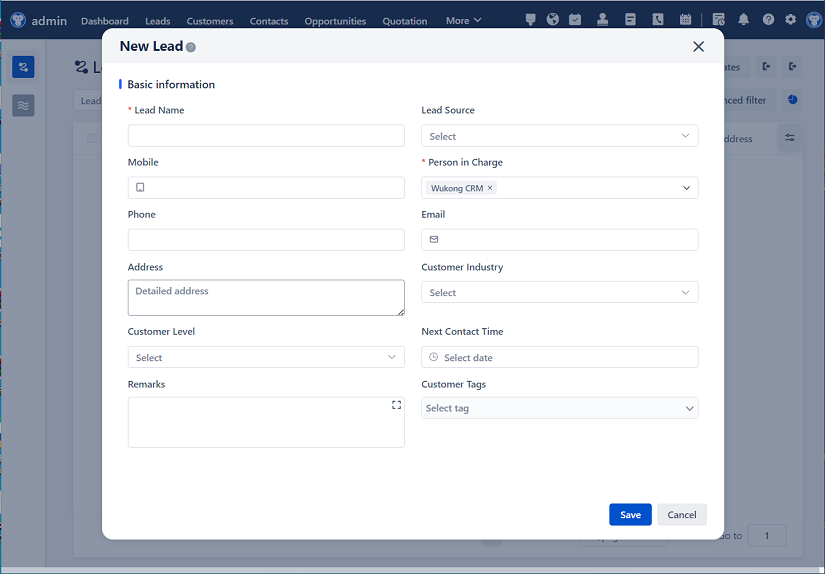
△Click on the top right corner to try Wukong CRM for free