
△Click on the top right corner to try Wukong CRM for free
So, you know, when I first started looking into modern CRM systems, I honestly didn’t realize just how complex and layered they’ve become. I mean, sure, I knew CRM stood for Customer Relationship Management, and I had a vague idea it was about keeping track of customers, but the actual technology behind it? That’s where things get really interesting.
Let me tell you—these days, a CRM isn’t just some digital rolodex or a fancy contact list. It’s more like the central nervous system of a company’s customer interactions. Think about it: every email, every support ticket, every sales call, even social media messages—they all funnel into this one platform. And that means the tech framework has to be seriously robust.
I remember sitting down with a developer friend of mine, and he started explaining how most modern CRMs are built on what they call a “microservices architecture.” At first, that sounded like total jargon to me, but once he broke it down, it made sense. Instead of having one giant monolithic software doing everything, they split it into smaller, independent services. So, there’s one service handling user authentication, another managing data storage, another running analytics, and so on.
And here’s the cool part—because these services are loosely coupled, the whole system becomes way more flexible. If one part needs an update or goes down temporarily, the rest can keep running. That’s huge for businesses that can’t afford downtime. Plus, it makes scaling easier. Need more power for your reporting module during peak season? Just scale up that specific service instead of the entire system.
Now, let’s talk about the cloud. Honestly, I don’t think I’ve seen a single serious CRM in the last five years that wasn’t cloud-based. It’s just too convenient. You don’t have to worry about servers, backups, or updates—it’s all handled by the provider. And from a business perspective, that means lower upfront costs and faster deployment.
But—and this is a big but—not all cloud setups are the same. Some companies use public clouds like AWS or Azure, others go for private clouds, and then there’s the hybrid model. Each has its pros and cons. Public clouds are usually cheaper and more scalable, but some industries, like finance or healthcare, need tighter control over their data, so they lean toward private or hybrid solutions.
Oh, and APIs! Can we talk about APIs for a second? They’re kind of the glue that holds everything together. Modern CRMs expose tons of APIs so you can connect them to other tools—like your email platform, your marketing automation software, or even your ERP system. I once helped a small business integrate their CRM with their e-commerce site, and it was amazing to see how much smoother their workflow became. Orders automatically created customer records, support tickets linked directly to purchase history—you get the picture.
But here’s something people don’t always think about: security. When you’ve got all this data flowing between systems, especially sensitive customer info, you’ve gotta make sure it’s protected. Most modern CRMs use encryption both in transit and at rest, multi-factor authentication, role-based access controls—you name it. And compliance? Yeah, that’s a whole other layer. GDPR, CCPA, HIPAA—if your CRM handles personal data, it better be compliant.
Another thing that blew my mind was how much AI and machine learning are now baked into CRM platforms. I’m not talking about sci-fi stuff; I mean practical applications. Like, predictive lead scoring—where the system analyzes past behavior and tells your sales team which prospects are most likely to convert. Or chatbots that handle basic customer inquiries 24/7 without human intervention.
And don’t even get me started on natural language processing. Some CRMs can now analyze customer emails or call transcripts to detect sentiment. So if someone sounds frustrated, the system flags it and routes it to a manager. That’s not just efficient—it’s empathetic in a weirdly technological way.
Data management is another beast altogether. These systems collect so much information—from structured data like names and phone numbers to unstructured stuff like notes, emails, and social media posts. To make sense of it all, many CRMs now use data lakes or data warehouses, often powered by technologies like Hadoop or Snowflake.

And then there’s real-time analytics. Gone are the days when you had to wait for a monthly report. Now, dashboards update live, showing you things like conversion rates, customer satisfaction scores, or pipeline health. Sales managers love this because they can spot trends and adjust strategies on the fly.
User experience? Super important. No matter how powerful the backend is, if the interface is clunky, people won’t use it. That’s why so many modern CRMs focus on intuitive design—clean layouts, drag-and-drop functionality, mobile apps that work offline. I’ve seen reps enter data from their phones while driving between client meetings. That kind of flexibility keeps adoption high.
Customization is another big deal. Every business is different, right? A startup selling SaaS isn’t going to use a CRM the same way as a car dealership. So good CRM platforms let you customize fields, workflows, automation rules—even the UI itself. Some even offer low-code or no-code tools so non-developers can build their own integrations or mini-apps.
Integration with communication tools is also key. I’ve noticed that CRMs now come with built-in email, calendar sync, video conferencing, and even telephony. Imagine making a call directly from the CRM, and afterward, the system automatically logs the call duration, transcribes the conversation, and updates the customer record. That’s not the future—that’s happening today.

Scalability, of course, matters a lot. A CRM that works for a 10-person team might choke under the load of a 10,000-employee enterprise. That’s why the underlying infrastructure has to be designed to grow. Containerization with tools like Docker and orchestration with Kubernetes help manage that complexity behind the scenes.
And let’s not forget about mobile access. People aren’t chained to their desks anymore. Field sales reps, remote support agents, executives on the go—they all need access to CRM data anytime, anywhere. Responsive web design helps, but native mobile apps often provide a better experience with features like GPS check-ins or voice-to-text note-taking.
One thing I’ve learned the hard way: data quality is everything. Garbage in, garbage out, as they say. Even the most advanced CRM will fail if the data is outdated, duplicated, or inaccurate. That’s why data cleansing, deduplication tools, and validation rules are so critical. Some systems even use AI to suggest corrections or flag inconsistencies.
Training and change management? Oh man, that’s where a lot of companies stumble. You can have the fanciest CRM in the world, but if your team doesn’t know how to use it—or worse, resists using it—it’s basically useless. That’s why successful implementations include onboarding sessions, ongoing training, and sometimes even internal champions who advocate for the system.
Cost is always a factor, too. Sure, subscription models make it easier to budget, but those monthly fees add up, especially when you start adding premium features, extra users, or third-party integrations. And don’t forget about hidden costs like customization, data migration, or consulting fees.
Still, when you look at the ROI, it often pays off. Better customer retention, shorter sales cycles, improved collaboration across departments—these aren’t just buzzwords. I’ve seen companies double their conversion rates just by using CRM insights to refine their outreach.
And let’s be real—the competition is fierce. Salesforce, HubSpot, Microsoft Dynamics, Zoho, Pipedrive… the list goes on. Each has its strengths. Salesforce dominates the enterprise space with insane customization options. HubSpot wins hearts with its user-friendly interface and killer marketing tools. Microsoft Dynamics integrates seamlessly with Office 365, which is a big plus for existing Microsoft shops.
Choosing the right one depends on your size, industry, budget, and goals. There’s no one-size-fits-all solution. I’ve advised startups to start simple with something like Zoho or Freshsales, then scale up as they grow. Bigger organizations often need the muscle of Salesforce or SAP.
Looking ahead, I think we’ll see even deeper AI integration—maybe CRMs that can predict churn before a customer even thinks about leaving. Or augmented reality interfaces for field service teams. Voice-controlled CRM commands? Why not?
The bottom line is this: modern CRM technology isn’t just about storing customer data anymore. It’s about turning that data into actionable intelligence, automating the mundane, and ultimately building stronger, more personalized relationships. And the frameworks that power these systems? They’re a blend of cloud computing, microservices, APIs, AI, and smart design—all working together to make businesses more human, ironically, through technology.
It’s kind of beautiful when you think about it.
FAQ (Frequently Anticipated Questions):
Q: Wait, so is a CRM just for sales teams?
A: Nope, not at all. While sales teams use it heavily, modern CRMs are used by marketing, customer service, finance, and even HR in some cases. It’s really a company-wide tool for managing any kind of customer interaction.
Q: Do I need a developer to set up a CRM?
A: Not necessarily. Many modern CRMs are designed for non-techies. You can often set up basic workflows, forms, and automations yourself. But for complex customizations or deep integrations, yeah, you might want a developer or consultant.
Q: What happens if the CRM goes down?
A: Good question. Reputable cloud providers usually guarantee uptime—like 99.9% or higher. They have backup systems, failovers, and disaster recovery plans. Still, it’s smart to have a contingency, like exporting key data periodically.
Q: Can I migrate my old customer data into a new CRM?
A: Absolutely. Most CRMs offer data import tools, and many support CSV uploads or direct integrations with common platforms. Just be careful—clean your data first, or you’ll bring over duplicates and errors.
Q: Are open-source CRMs worth considering?
A: They can be, especially if you have technical resources. Open-source options like SuiteCRM or Odoo give you full control and lower licensing costs. But you’ll probably spend more on hosting, maintenance, and customization.
Q: How do CRMs handle privacy laws like GDPR?
A: Top-tier CRMs build compliance features right in—like consent tracking, data anonymization, and audit logs. But it’s still your responsibility to configure them correctly and follow best practices.

Q: Is AI in CRM just hype?
A: Not really. The AI in most CRMs today is practical—things like smart email responses, lead scoring, or forecasting. It won’t replace humans, but it can save hours of manual work and improve decision-making.
Q: Can a small business really benefit from a CRM?
A: 100%. In fact, small businesses often see the biggest relative gains. A CRM helps them stay organized, personalize communication, and compete with bigger players—even with just a few users.

Related links:
Free trial of CRM
Understand CRM software
AI CRM Systems
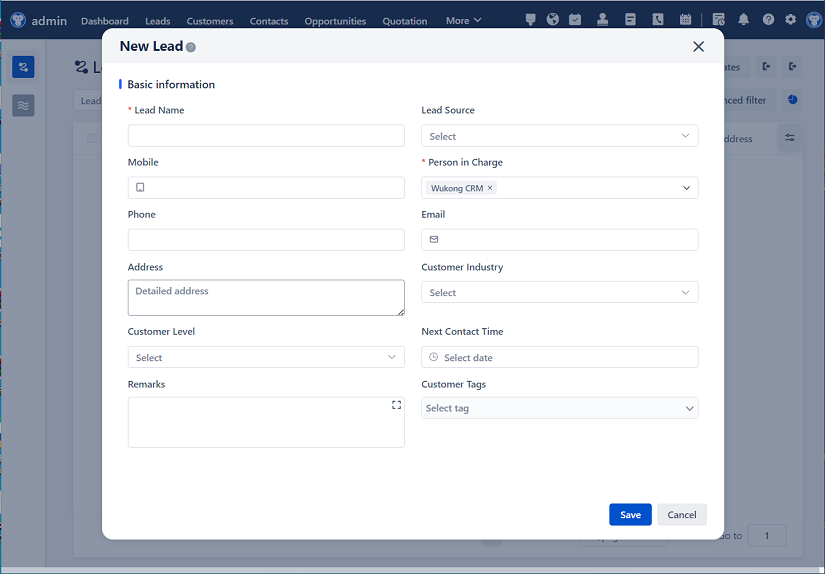
△Click on the top right corner to try Wukong CRM for free