
△Click on the top right corner to try Wukong CRM for free
You know, when we talk about CRM systems—Customer Relationship Management systems—it’s easy to just think of them as tools for tracking customer info or managing sales pipelines. But honestly, if you dig a little deeper, it becomes clear that a CRM is actually made up of several subsystems, each doing its own thing but needing to work together seamlessly. I mean, imagine trying to run a business where your sales team doesn’t know what the marketing team is doing, or where customer service has no clue about past interactions logged by support. That would be chaos, right?
So, let me walk you through how these different parts—these subsystems—are actually composed and integrated in a real-world CRM setup. It’s not magic, but it does take some smart planning and solid technical execution.
First off, let’s break down what those main subsystems usually are. From what I’ve seen in most companies, there’s typically a sales automation module, a marketing automation component, a customer service or support system, and then a data analytics engine running in the background. Oh, and don’t forget the contact management piece—that’s kind of the backbone. Each one handles a specific function, but they all need to share data and stay in sync.
Now, here’s the thing: just because you have all these pieces doesn’t mean they automatically play nice together. I’ve worked with companies that bought separate tools for email campaigns, lead tracking, and ticketing systems, only to realize months later that none of them were talking to each other. That’s when things get messy. Data gets duplicated, customers get annoyed by repeated follow-ups, and reports become unreliable.
That’s why integration is so critical. You can have the fanciest CRM on the market, but if the subsystems aren’t properly connected, it’s like having a car with a great engine but no transmission—nothing moves forward efficiently.

So how do we actually integrate these subsystems? Well, from my experience, there are a few common methods. One popular approach is using APIs—Application Programming Interfaces. Think of APIs as translators between different software systems. They allow one subsystem, say marketing automation, to send lead data directly into the sales module without any manual entry. It saves time, reduces errors, and keeps everything up to date in real time.
I remember working with a mid-sized e-commerce company where they used API integrations between their CRM and their email platform. Every time someone signed up for a newsletter, their info was instantly pushed into the CRM, tagged with “marketing lead,” and assigned to a sales rep based on region. No delays, no missed opportunities. It was smooth—and the sales team loved it.
Another method I’ve seen used quite a bit is middleware. Now, this might sound a little technical, but bear with me. Middleware is basically a software layer that sits between different subsystems and helps them communicate, especially when they weren’t originally designed to work together. For example, if your customer service tool uses a different database structure than your sales CRM, middleware can translate the data formats so both sides understand each other.
It’s kind of like having a bilingual friend at a party who helps two people from different countries chat and get along. Without that friend, the conversation might stall. With them, everything flows naturally.
Then there’s ETL—Extract, Transform, Load—which is often used when you’re dealing with large volumes of historical data or bringing in information from legacy systems. Say a company has been using an old spreadsheet-based system for years and wants to migrate to a modern CRM. You’d use ETL tools to pull the data out (extract), clean it up and reformat it (transform), and then load it into the new system. It’s not always glamorous work, but it’s essential for making sure your new CRM starts off with accurate, usable data.
One thing I always emphasize with clients is data consistency. If your marketing team tags a customer as “high-value” but that label doesn’t carry over to the service team, then when that customer calls with an issue, they might not get the priority treatment they expect. That hurts customer experience. So during integration, we make sure key fields—like customer tier, purchase history, or communication preferences—are synchronized across all subsystems.
And speaking of synchronization, timing matters too. Some integrations happen in real time—like when a support agent updates a ticket, and that change immediately shows up in the customer’s profile for the sales team to see. Other times, especially with reporting or analytics, data might sync on a scheduled basis—say, every night at 2 a.m. Both approaches have their place, depending on how urgent the information is.
Now, let’s talk about user experience for a second. Because even if the backend systems are perfectly integrated, if the front-end interface is clunky or confusing, people won’t use it. I’ve seen brilliant integrations fail simply because employees found the system too hard to navigate. So part of composing a CRM system involves designing a unified interface where users can access all the tools they need without jumping between five different apps.
A lot of modern CRMs now offer dashboards that pull in data from multiple subsystems—sales stats, open support tickets, recent marketing engagements—all on one screen. That kind of visibility is huge. It helps teams make better decisions faster and gives managers a holistic view of customer relationships.
Security is another big piece of the puzzle. When you’re connecting multiple subsystems, you’re also expanding the potential attack surface. So you’ve got to make sure that data moving between systems is encrypted, access is role-based, and audit trails are maintained. I once consulted for a company that had great integration between their CRM and billing system, but they hadn’t set proper permissions. As a result, junior staff could see sensitive financial data they shouldn’t have had access to. We fixed it quickly, but it was a wake-up call about how integration isn’t just about connectivity—it’s about control too.
Customization is another factor. Not every business uses a CRM the same way. A B2B software company might prioritize lead scoring and pipeline tracking, while a retail brand might care more about customer behavior tracking and loyalty programs. So when composing subsystems, you often need to tailor the integration logic to fit specific workflows. This usually involves configuration settings, custom fields, or even writing small scripts to automate certain actions.
For instance, I helped a client set up a rule where whenever a customer reached a certain number of support tickets within 30 days, they’d automatically be flagged as “at risk” and routed to a retention specialist. That kind of proactive intervention wouldn’t happen without thoughtful integration between service and account management modules.
Testing is absolutely crucial before going live. I can’t stress this enough. You might think everything’s working in theory, but until you test with real data and real user scenarios, you won’t catch all the edge cases. Like that time we integrated a new survey tool with the CRM, and everything seemed fine—until we realized that negative feedback wasn’t triggering alerts for the service team. A quick fix, but it could’ve damaged customer trust if left unnoticed.
Post-launch monitoring is just as important. Systems evolve, data volumes grow, and user needs change. So ongoing maintenance and performance checks are necessary to keep everything running smoothly. Most companies I work with schedule regular reviews of their CRM integrations—checking for latency, data mismatches, or broken connections.
And let’s not forget scalability. A startup might start with basic integration between two subsystems, but as they grow, they’ll add more tools—maybe a chatbot, a knowledge base, or a partner portal. The architecture needs to be flexible enough to accommodate new components without requiring a complete overhaul.
In fact, many organizations are now adopting microservices-based CRM architectures, where each subsystem operates independently but communicates via well-defined APIs. This makes it easier to update or replace individual components without disrupting the entire system. It’s like building with Lego blocks instead of carving one giant sculpture—you can swap pieces in and out as needed.

At the end of the day, composing and integrating CRM subsystems isn’t just a technical challenge—it’s a strategic one. It’s about aligning technology with business goals, improving customer experiences, and empowering teams with the right information at the right time.
From what I’ve seen, the most successful CRM implementations aren’t the ones with the most features, but the ones where the subsystems truly work together as a cohesive whole. When sales, marketing, and service are all on the same page, magic happens. Customers feel understood, employees feel supported, and the business grows more efficiently.
So if you’re thinking about building or upgrading your CRM, don’t just focus on the individual tools. Pay close attention to how they connect, how data flows, and how people will actually use the system every day. Because a CRM is only as strong as its weakest integration link.
FAQs (Frequently Asked Questions):
Q: What are the main subsystems in a typical CRM system?
A: The core subsystems usually include sales automation, marketing automation, customer service/support, contact management, and analytics/reporting. Some systems also include e-commerce integration or social media monitoring.
Q: Why is integration between CRM subsystems so important?
A: Integration ensures that data flows smoothly across departments, prevents silos, reduces duplication, improves decision-making, and delivers a consistent customer experience.
Q: Can I integrate CRM subsystems without coding?
A: Yes, many modern CRM platforms offer no-code or low-code integration tools, pre-built connectors, and drag-and-drop workflow builders that make integration accessible even without technical expertise.
Q: What’s the difference between API integration and middleware?
A: APIs allow direct communication between two systems, while middleware acts as a middleman that facilitates communication, especially when systems aren’t natively compatible.
Q: How do I ensure data consistency across integrated subsystems?
A: Use standardized data formats, enforce validation rules, synchronize key fields regularly, and implement master data management practices to maintain accuracy and uniformity.

Q: Is real-time integration always better than batch processing?
A: Not necessarily. Real-time is ideal for time-sensitive operations like customer service, but batch processing is often sufficient—and more efficient—for tasks like nightly reporting or data backups.
Q: What should I test before launching an integrated CRM system?
A: Test data flow accuracy, error handling, user permissions, performance under load, and end-to-end business processes to ensure everything works as expected in real-world scenarios.
Q: How often should CRM integrations be reviewed or updated?
A: It’s wise to review integrations quarterly or whenever major changes occur in your business processes, software stack, or data volume.

Related links:
Free trial of CRM
Understand CRM software
AI CRM Systems
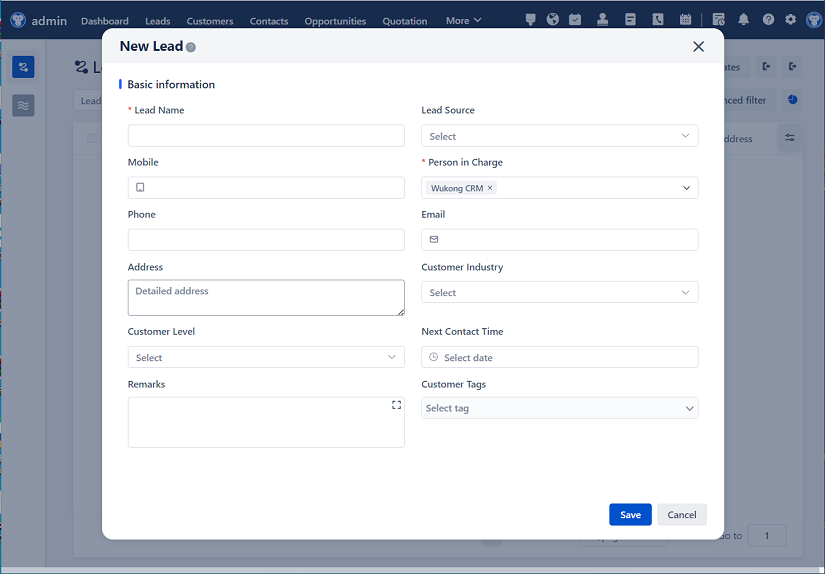
△Click on the top right corner to try Wukong CRM for free