
△Click on the top right corner to try Wukong CRM for free
So, you know, when we talk about CRM systems in general, most people think of sales teams tracking leads or customer service reps logging support tickets. But honestly, the pharmaceutical industry? That’s a whole different ballgame. I mean, it’s not like selling shoes or software—there are doctors, hospitals, regulatory bodies, and strict compliance rules all wrapped up in one big, complicated package. So naturally, the CRM systems used here have to be way more specialized.
Let me tell you, pharma companies don’t just need to manage customer relationships—they need to manage relationships with healthcare professionals (HCPs), key opinion leaders (KOLs), pharmacies, and even patients in some cases. And trust me, these aren’t your average customers. You can’t just blast them with marketing emails or run random promotions. Everything has to be compliant, ethical, and carefully tracked.
That’s where CRM systems specific to the pharmaceutical industry come into play. These aren’t off-the-shelf tools you can just download and start using. They’re built from the ground up to handle things like physician engagement, medical detailing, sample distribution, and compliance with regulations like HIPAA, GDPR, and the PhRMA code. Honestly, if you tried to use a regular CRM for this, you’d probably run into serious trouble pretty quickly.
One thing I’ve noticed is that pharma CRMs are super focused on data accuracy and audit trails. Why? Because regulators love asking questions. If someone wants to know who visited which doctor, what was discussed, and whether promotional materials were approved, the system better have a clear record. No guessing, no “I think I did that.” It’s all got to be documented, timestamped, and accessible.
And speaking of visits—remember those days when sales reps would drive around with little black books full of scribbled notes? Yeah, those days are long gone. Now, everything’s digital. Reps use mobile apps connected to the central CRM to log every interaction in real time. They can schedule meetings, pull up a doctor’s prescribing history, check which products they’ve shown interest in, and even get alerts about upcoming conferences or new clinical trial results—all from their tablet.
But here’s the thing: it’s not just about efficiency. It’s about personalization. Doctors are busy. They don’t want to be pitched the same generic spiel every time. So modern pharma CRMs use analytics to help reps tailor their conversations. For example, if a cardiologist recently attended a webinar on cholesterol management, the system might suggest bringing up a new statin drug during the next visit. It makes the interaction feel more relevant, less salesy.
And let’s not forget medical science liaisons (MSLs). These folks aren’t salespeople—they’re scientists who engage with HCPs on complex medical topics. Their CRM needs are totally different. They need access to deep scientific data, clinical trial updates, and publication histories. The system should help them track advisory board meetings, speaker programs, and research collaborations. It’s less about closing deals and more about building long-term scientific trust.
Now, compliance isn’t just a feature—it’s baked into the core of these systems. For instance, before a rep can send any promotional material, the CRM checks whether it’s been pre-approved by the legal team. It also tracks how many samples are being distributed to each physician, making sure it doesn’t exceed legal limits. Some systems even flag potential conflicts of interest, like if a doctor is receiving too much funding from multiple pharma companies.
Another cool thing I’ve seen is integration with other enterprise systems. The CRM doesn’t live in a silo. It connects with ERP systems for inventory and finance, with Veeva Vault for document management, and with learning management systems to track training completion. This means that when a new drug launches, the entire organization—from marketing to field reps—is aligned and up to speed.

Oh, and data privacy? Huge deal. Patient data is extremely sensitive, so these CRMs are designed to avoid storing any personally identifiable information (PII) unless absolutely necessary. Instead, they focus on aggregated, anonymized data that still provides valuable insights. For example, they might track how many prescriptions were written in a region without naming individual patients.
Artificial intelligence is starting to play a bigger role too. Some advanced CRMs now use AI to predict which HCPs are most likely to prescribe a new drug based on their past behavior, specialty, and patient demographics. Others use natural language processing to analyze call transcripts and identify common concerns or questions. It’s not replacing human judgment, but it definitely helps reps prepare better.
But hey, it’s not all smooth sailing. Implementing a pharma-specific CRM can be a nightmare if you’re not careful. I’ve heard stories—oh man, where do I start? Companies trying to rush deployment without proper training, ending up with low user adoption. Or worse, customizing the system so much that it becomes a maintenance monster. Change management is critical. You can have the fanciest software in the world, but if your reps don’t trust it or find it clunky, they’ll just go back to spreadsheets and sticky notes.
Training is another big piece. New hires need to understand not just how to click buttons, but why certain processes exist. Like, why can’t they just add a random doctor to the system? Because there are verification protocols to prevent fraud and ensure data integrity. These systems often integrate with global HCP databases like IQVIA or SK&A to validate identities and affiliations.
And let’s talk about omnichannel engagement. Patients and doctors today expect seamless interactions across email, phone, web portals, and in-person visits. A good pharma CRM supports this by unifying all touchpoints. So if a doctor watches a product video online, then gets visited by a rep the next week, the rep already knows about that digital interaction and can follow up intelligently.
Field force effectiveness is another major benefit. Managers can use the CRM to monitor performance metrics—how many calls per day, conversion rates, message retention. But it’s not about micromanaging. It’s about coaching. If a rep is struggling to get meetings with neurologists, the system might suggest alternative approaches or provide better content.

Post-marketing surveillance is also becoming part of the CRM picture. When adverse events are reported, the system can link them to specific interactions or campaigns, helping pharmacovigilance teams spot patterns faster. It’s not the primary tool for safety reporting, but it adds context that’s super valuable.

Cloud-based solutions are gaining popularity too. Companies love them because they’re scalable, easier to update, and allow remote access. During the pandemic, this was a lifesaver. Reps couldn’t visit offices, so virtual detailing became the norm. The CRM supported video calls, e-detailing presentations, and digital consent forms—all logged securely.
But with cloud comes security concerns. Pharma companies are prime targets for cyberattacks. So these CRMs come with serious encryption, multi-factor authentication, and continuous monitoring. Vendors like Veeva, Salesforce Health Cloud, and Microsoft Dynamics 365 for Pharma invest heavily in security certifications because they know their clients can’t afford breaches.

Speaking of vendors, Veeva Systems is kind of the big player here. They’ve built their whole reputation around life sciences. Their CRM is used by most top pharma companies. But others are catching up—Salesforce has made strong moves with tailored health cloud solutions, and smaller niche players offer specialized modules for rare diseases or patient support programs.
Cost is always a factor, though. These systems aren’t cheap. Licensing, customization, integration, training—it all adds up. But most companies see it as a necessary investment. The ROI comes from better compliance, stronger HCP relationships, faster launch readiness, and ultimately, improved market share.
One thing I really appreciate is how these systems support patient-centric initiatives. Sure, the main users are internal teams, but the end goal is better patient outcomes. Some CRMs now include modules for patient assistance programs, adherence tracking, and even telehealth coordination. It’s a shift from purely commercial focus to holistic care support.
And let’s not ignore the future. With trends like personalized medicine and real-world evidence gaining traction, CRMs will need to evolve. Imagine a system that integrates genetic data (anonymously, of course) to help reps discuss targeted therapies with oncologists. Or one that pulls in real-time prescription data to adjust engagement strategies on the fly.
Look, no system is perfect. There are still challenges—data silos between departments, resistance to change, inconsistent global rollout. But overall, pharma-specific CRMs have come a long way. They’re no longer just contact managers. They’re strategic tools that help companies navigate a complex, highly regulated environment while building meaningful, compliant relationships.
At the end of the day, it’s about doing the right thing the right way. Helping doctors make informed decisions, ensuring patients get the treatments they need, and staying on the right side of the law. And if a smart CRM can make that a little easier? Well, I’d say it’s worth every penny.
FAQs (Frequently Asked Questions):
Q: Can regular CRM systems like Salesforce or HubSpot be used in the pharmaceutical industry?
A: Technically, yes—but only with heavy customization. Standard CRMs lack the compliance features, HCP validation, and industry-specific workflows needed in pharma. Most companies prefer specialized platforms like Veeva or adapted health cloud versions.
Q: Do pharma CRMs store patient data?
A: Generally, no. They avoid storing personally identifiable patient information due to privacy laws. Instead, they focus on HCP interactions, prescribing trends (aggregated), and program participation without linking to individual patients.
Q: How do these systems help with regulatory audits?
A: They maintain detailed audit trails—showing who accessed what, when interactions occurred, and whether materials were approved. This makes it easy to generate reports for inspectors and prove compliance.
Q: Are reps required to use the CRM during every doctor visit?
A: Yes, in most companies. Logging interactions in real time is mandatory. It ensures data accuracy, supports compliance, and helps management assess field performance.
Q: Can CRM data be used to influence prescribing behavior?
A: Not directly. The goal is education and support, not coercion. Data helps tailor conversations to a doctor’s interests, but reps must follow strict ethical guidelines and cannot offer incentives for prescriptions.
Q: What happens if a rep enters incorrect information?
A: The system usually flags inconsistencies, and supervisors can review and correct entries. Audit logs keep track of changes, so there’s always a record of who changed what and when.
Q: How do CRM systems handle global operations with different regulations?
A: They’re often configured with regional settings—different workflows, approval processes, and data rules based on local laws (like GDPR in Europe vs. HIPAA in the U.S.).
Q: Is AI widely adopted in pharma CRM yet?
A: It’s growing. Some companies use AI for predictive analytics and content recommendations, but full-scale AI integration is still emerging due to complexity and regulatory caution.
Related links:
Free trial of CRM
Understand CRM software
AI CRM Systems
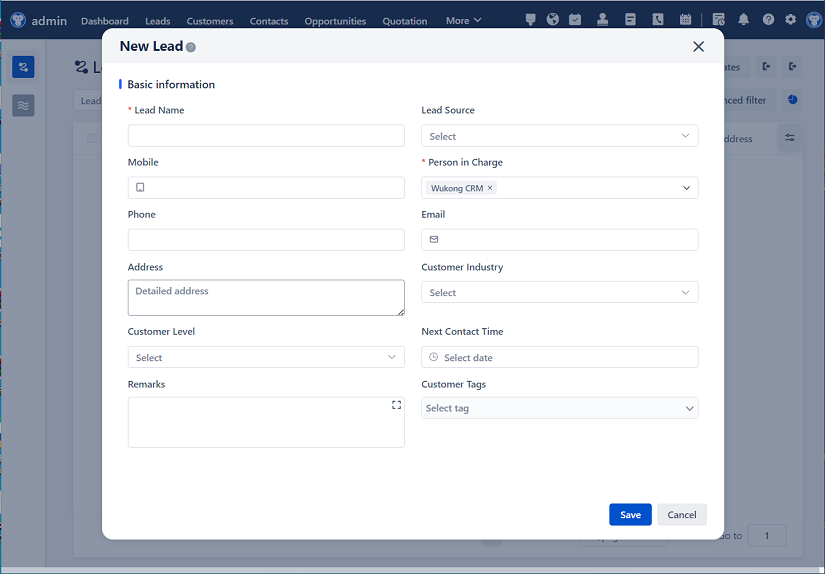
△Click on the top right corner to try Wukong CRM for free