
△Click on the top right corner to try Wukong CRM for free
So, let’s talk about CRM software—because honestly, if you’re running a business these days and not using one, you’re probably missing out on some serious organization and growth potential. I mean, think about it: how many times have you lost track of a lead, forgotten to follow up with a client, or just felt completely overwhelmed by customer data scattered across spreadsheets and sticky notes? Yeah, me too. That’s exactly why CRM tools exist—to help us keep everything in one place, stay on top of relationships, and actually grow our businesses without going crazy.
Now, here’s the thing: not all CRM systems are created equal, and more importantly, they don’t all cost the same. I’ve spent way too many hours comparing prices, reading reviews, and even testing out demos just to figure out what works best for different types of businesses. And let me tell you, it can get confusing fast. One platform might look affordable at first glance, but then you realize that the features you actually need are locked behind a much higher-tier plan. Another might seem packed with cool tools, but turns out it’s way too complicated for your team to use consistently.
So, where do you even start? Well, first off, you gotta know what kind of business you’re running. Are you a solopreneur managing a few clients? A small startup with a growing sales team? Or maybe a mid-sized company with multiple departments needing integration? Your needs—and your budget—are going to vary a lot depending on that. I’ve seen people waste thousands on enterprise-level CRMs when something simple like HubSpot’s free version would’ve done the trick.
Let’s break down some of the most popular options and what they really cost—not just the sticker price, but what you’re actually getting. Take Salesforce, for example. It’s kind of the big name in CRM, right? Everyone’s heard of it. But here’s the reality: it’s expensive. Like, really expensive. The basic Essentials plan starts around
Then there’s HubSpot. I actually really like HubSpot, especially for smaller teams. Their free plan is genuinely useful—you can manage contacts, track emails, and even run basic workflows. When you’re ready to upgrade, their Sales Hub starts at $45/month for the starter plan. It’s intuitive, integrates well with other tools like Gmail and Slack, and the UI feels modern and clean. Plus, they offer a ton of educational content, which is great if you’re new to CRM systems. The downside? As you scale, the pricing climbs fast. Once you need things like custom reporting or multi-touch attribution, you’re looking at hundreds per month.
Zoho CRM is another solid option, especially if you’re watching your budget. Their standard plan is only $14 per user per month, and it includes pretty much everything a small business would need—lead management, email integration, workflow automation. I was surprised at how robust it is for the price. The interface isn’t quite as polished as HubSpot’s, but it gets the job done. And if you’re already using other Zoho products (like Books or Mail), the integration is seamless. Honestly, for startups or solopreneurs, this might be the sweet spot between cost and functionality.
Then there’s Pipedrive. This one’s super visual—literally built around a sales pipeline you can drag deals through. I found it really helpful when I was managing my own sales process because it keeps you focused on moving leads forward. Pricing starts at $14.90/user/month, which is competitive. Where it shines is simplicity. If your main goal is tracking deals and staying organized, Pipedrive does that beautifully without overwhelming you with features you’ll never use. But if you need deep marketing automation or advanced analytics, you might hit its limits.

Microsoft Dynamics 365 is another player, especially if you’re already in the Microsoft ecosystem. If your team lives in Outlook and Teams, integrating CRM there can be a game-changer. Pricing starts around $65/user/month, but again, full functionality requires add-ons. It’s powerful, no doubt, but also complex. I’d say it’s better suited for larger organizations with dedicated IT support. For a small team trying to keep things simple? Probably overkill.
Now, here’s something a lot of people don’t think about: hidden costs. Sure, the monthly subscription might look affordable, but what about training? Onboarding your team takes time, and if the CRM has a steep learning curve, you’re losing productivity. Then there’s data migration—moving your existing contacts and history into the new system. Some platforms make it easy; others require manual entry or paid services. And don’t forget about integrations. Need it to work with your email marketing tool or accounting software? That might cost extra or require third-party connectors like Zapier.
Another thing to consider is scalability. You might start with five users, but what happens when you grow to 20? Will the CRM still make sense financially? Will it handle the increased workload? I’ve seen companies switch platforms after outgrowing their initial choice, and trust me, that’s a headache you want to avoid. So ask yourself: where do you see your business in two years? Choose a CRM that can grow with you, not one you’ll have to replace.

Customer support matters too. When something breaks or you can’t figure out how to set up a workflow, who do you call? Some CRMs offer 24/7 support, live chat, or even dedicated account managers. Others leave you with FAQs and community forums. If you’re not super techy, good support can be worth paying extra for.

And let’s not forget mobile access. These days, half the work happens on phones. Can your sales team update deals from the field? Check client histories during a meeting? If the mobile app is clunky or missing key features, that’s a dealbreaker.
So, after all that research and testing, what would I recommend? Well, it depends. For solopreneurs or very small teams on a tight budget, I’d say go with Zoho CRM or HubSpot’s free plan. They’re affordable, functional, and easy to set up. If you’re a growing startup that values user experience and marketing integration, HubSpot’s paid plans are worth the investment. For sales-focused teams that want a visual pipeline, Pipedrive is fantastic. And if you’re a larger company with complex needs and the budget to match, Salesforce or Microsoft Dynamics might be the way to go—but only if you’re prepared for the learning curve and ongoing costs.
One last tip: take advantage of free trials. Most CRMs offer 14 to 30-day trials. Use that time wisely. Import some real data, test key workflows, and involve your team. See how it feels in practice, not just in theory. Because at the end of the day, the best CRM isn’t the one with the most features—it’s the one your team will actually use every day.
Oh, and don’t rush the decision. I made that mistake once. Signed up for a “great deal” without testing it properly, and ended up wasting three months before switching. Learn from my mistakes. Do your homework. Talk to other business owners. Read real user reviews, not just the glowing ones on the vendor’s website.
At the end of the day, a CRM should make your life easier, not harder. It should save you time, help you close more deals, and give you insights into your customers. If it’s doing that, and it fits your budget, then you’ve probably made a smart choice.
FAQs (Frequently Asked Questions)
Q: Is there a CRM that’s truly free forever?
A: Yes, HubSpot offers a genuinely free CRM plan with no time limit. It includes contact management, email tracking, and basic task automation—perfect for solopreneurs or very small teams.
Q: Can I switch CRMs later if I change my mind?
A: Absolutely. Most platforms allow you to export your data. However, migrating can be time-consuming, so it’s better to choose carefully upfront.
Q: Do I need to pay per user?
A: Most CRMs charge per user, per month. Some offer flat-rate pricing for small teams, but scalability usually means adding more users = higher costs.
Q: What if I need help setting it up?
A: Many CRMs offer onboarding services, video tutorials, or partner networks. HubSpot and Salesforce have extensive knowledge bases and communities.
Q: Are there any long-term contracts?
A: Not usually. Most CRMs operate on a month-to-month basis, especially for lower-tier plans. Higher enterprise plans might require annual commitments.
Q: Can I integrate my CRM with email and calendar?
A: Yes, almost all modern CRMs sync with Gmail, Outlook, and Google Calendar. That’s actually one of the biggest benefits—no more switching tabs.
Q: Which CRM is easiest for beginners?
A: HubSpot and Zoho CRM are known for being user-friendly. Pipedrive is also intuitive, especially for visual learners.
Q: Will a CRM help me close more sales?
A: It can! By keeping your follow-ups organized, tracking interactions, and automating reminders, a CRM helps you stay consistent—which often leads to more closed deals.
Q: How important is mobile access?
A: Very. If your team works remotely or meets clients in person, a strong mobile app is essential for updating records on the go.
Q: Can I customize the CRM for my industry?
A: Most platforms allow some level of customization—custom fields, pipelines, and workflows. Salesforce and Zoho offer deeper customization options.
Q: What happens if I exceed my contact limit?
A: You’ll typically need to upgrade to a higher plan. Always check the contact caps on each pricing tier to avoid surprises.
Q: Is cloud-based CRM safe?
A: Yes, reputable CRMs use encryption, regular backups, and strict security protocols. Just make sure to use strong passwords and enable two-factor authentication.
Related links:
Free trial of CRM
Understand CRM software
AI CRM Systems
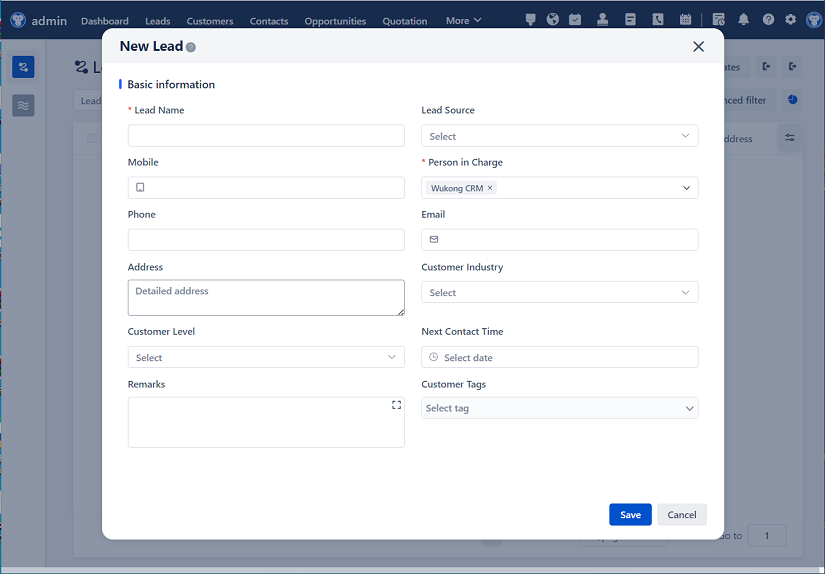
△Click on the top right corner to try Wukong CRM for free