
△Click on the top right corner to try Wukong CRM for free
You know, I’ve been thinking a lot lately about how businesses are expanding globally, and honestly, one of the biggest challenges they face is communication. I mean, think about it—how can you really connect with customers if your system only speaks one language? That’s where a multilingual CRM system comes in, and let me tell you, it’s kind of a game-changer.
So picture this: you’re running a company based in the U.S., but you’ve got customers in France, Japan, Brazil, and Germany. Now, imagine trying to manage all those relationships using a CRM that only works in English. It just doesn’t make sense, right? Your sales team might be fluent in English, sure, but what about your customer support agents in Tokyo or your marketing team in Paris? They need tools they can actually use comfortably.
That’s why an English version CRM system that supports multiple languages isn’t just a nice-to-have—it’s essential. Honestly, I’ve seen companies struggle because their CRM wasn’t set up for global teams. People were frustrated, data was getting entered incorrectly, and worst of all, customers felt ignored. And who could blame them? If someone reaches out in Spanish and gets an automated reply in broken English, well… that’s not exactly building trust.
But here’s the cool part—when you have a CRM that supports multiple languages, everything starts to flow better. The interface changes based on the user’s preference, so whether someone logs in from Madrid or Seoul, they see menus, buttons, and forms in their native language. It’s like the system just gets them, you know?
And it’s not just about translation. I mean, yeah, translating words is important, but it’s more than that. It’s about localization. Like, did you know that date formats are different in different countries? In the U.S., we write month/day/year, but in most of Europe, it’s day/month/year. If your CRM doesn’t handle that properly, someone might schedule a meeting for the wrong month—and that’s just awkward.

Also, think about time zones. A good multilingual CRM should automatically adjust timestamps based on the user’s location. Otherwise, you’ve got people scratching their heads, wondering why a follow-up task shows up at 3 a.m. on their calendar. Trust me, no one wants to deal with that kind of confusion.
Now, I know what you’re thinking—“Okay, but does this actually improve customer experience?” And my answer? Absolutely. Let’s say a customer in Mexico sends an inquiry in Spanish. With a multilingual CRM, the support agent there can respond naturally, without having to switch between languages or rely on clunky translation tools. The whole interaction feels smoother, more personal. And when customers feel understood, they’re way more likely to stick around.
Plus, it helps internally too. Teams collaborate better when everyone’s on the same page—literally. Imagine a project involving colleagues from Canada, India, and Sweden. If they’re all using the CRM in their preferred language, they can update records, assign tasks, and track progress without any language barriers slowing them down. It just makes teamwork feel effortless.
And don’t even get me started on reporting. When your CRM supports multiple languages, reports can be generated in the language of the recipient. So your executive in Berlin gets a sales summary in German, while your VP in Sydney reads it in English. No more guessing what “KPI” stands for in another language—everything is clear and consistent.
Now, I should mention that not all multilingual CRMs are created equal. Some just slap Google Translate on top and call it a day. But that’s risky. Automated translations can miss nuances, cultural references, or industry-specific terms. You don’t want your French client reading something that sounds robotic or, worse, offensive. So it’s worth investing in a system that uses professional localization, not just machine translation.
Another thing—I’ve noticed that some companies assume only non-English speakers benefit from multilingual support. But that’s not true. Even native English speakers working abroad often prefer using systems in the local language when dealing with regional clients. It just makes their job easier and shows respect for the local culture.
Oh, and here’s a point people overlook: training. Onboarding new employees is so much smoother when the CRM interface matches their language. New hires aren’t wasting time trying to figure out what “lead scoring” means in a foreign language—they can focus on learning processes and building relationships instead.
Let’s talk scalability for a second. Say you start with five languages today, but next year you expand into three more countries. A solid multilingual CRM should let you add new languages without tearing the whole system apart. It should be flexible, like adding a new app to your phone—simple and seamless.
Security is another big deal. Just because the CRM supports multiple languages doesn’t mean it cuts corners on data protection. In fact, it should be even more secure, especially when handling customer info across different regions with varying privacy laws—like GDPR in Europe or LGPD in Brazil. You don’t want a language feature compromising compliance.
And hey, let’s not forget mobile access. These days, people work from everywhere—coffee shops, airports, home offices. A good multilingual CRM should work perfectly on smartphones and tablets, no matter the language. Because if your sales rep is pitching a client in Arabic on their phone and the app glitches, that’s a lost opportunity.
Integration is key too. Your CRM shouldn’t live in a bubble. It needs to play nicely with email, calendars, social media, and other tools—all while maintaining language consistency. Imagine syncing a meeting scheduled in Japanese into an English calendar. The details should stay accurate and readable.
I’ll admit, setting up a multilingual CRM isn’t always easy. There’s planning involved—figuring out which languages you need, testing translations, training staff. But honestly, the effort pays off. Companies that go through this process usually see faster response times, higher customer satisfaction, and stronger team morale.
And let’s talk numbers for a sec. Studies show that customers are way more likely to buy from brands that communicate in their native language. We’re talking double-digit increases in conversion rates. So supporting multiple languages isn’t just about being inclusive—it’s smart business.
Another cool thing? AI-powered features in modern CRMs can detect the language of incoming messages and route them to the right agent automatically. So if a chat comes in in Italian, it goes straight to someone who speaks Italian fluently. No delays, no mix-ups. It’s like having a smart assistant managing your communications.
And updates? They should be rolled out in all supported languages at the same time. Nobody likes being stuck with an outdated interface just because their language wasn’t prioritized. Equality matters here—every user deserves the latest features, regardless of which language they use.
Look, I get it—some companies hesitate because they think multilingual support is expensive or complicated. But here’s the truth: not doing it costs more in the long run. Lost customers, miscommunication, inefficient workflows—it adds up fast. Investing in a proper multilingual CRM is like putting guardrails on a highway. It keeps everything moving safely and smoothly.
Also, think about brand image. When customers see that you’ve taken the time to offer service in their language, it says, “We value you.” It builds loyalty. It shows you’re not just trying to sell something—you’re trying to build a relationship.
And for global teams, it fosters inclusion. Employees feel respected when they can work in their native language. It reduces stress, improves accuracy, and boosts productivity. Happy employees mean better service, which means happier customers. It’s a win-win.

Honestly, I can’t imagine running a modern business without a multilingual CRM these days. The world is connected like never before. Markets overlap, teams are distributed, and customers expect personalized experiences. A one-language system just can’t keep up.
So if you’re still using a basic English-only CRM, now might be the time to upgrade. Look for platforms that offer real localization, not just translation. Check reviews, ask for demos, involve your international teams in the decision. Their feedback will be gold.
And remember—it’s not about replacing English. English is still super important as a global business language. But supporting multiple languages doesn’t weaken English; it strengthens your entire operation. It’s like adding more instruments to an orchestra. The main melody might be in English, but the harmony comes from diversity.
In the end, a multilingual CRM isn’t just software. It’s a statement. It says your company is open, inclusive, and ready to engage with the world on its own terms. And honestly, isn’t that the kind of business you’d want to be part of?
FAQs (Frequently Asked Questions):
Q: Can a multilingual CRM automatically detect a user’s preferred language?
A: Yes, many modern CRM systems can detect language preferences based on browser settings or user profiles, and automatically display the interface accordingly.
Q: Does supporting multiple languages slow down the CRM?
A: Not if it’s well-designed. High-performance multilingual CRMs load language files efficiently, so speed isn’t compromised.
Q: Can I customize which languages are available for different teams?
A: Absolutely. Most systems let admins enable or disable languages per user group, so you can tailor access based on regional needs.
Q: What if a language I need isn’t supported yet?
A: Some CRMs allow custom language packs. You can work with developers or vendors to add new languages, though it may require additional setup.
Q: Is customer data translated automatically in the CRM?
A: Not usually. While the interface changes, customer data (like notes or emails) stays in the original language unless manually translated by the user.
Q: Do multilingual CRMs cost more than single-language ones?
A: Sometimes, but many providers include multilingual support in higher-tier plans. The added value often outweighs the extra cost.
Q: Can I switch languages mid-session in the CRM?
A: Yes, most systems let users change their language preference anytime through profile settings—no logout required.
Q: Are help documents and support also available in multiple languages?
A: It depends on the provider. Reputable CRM companies usually offer support resources in all supported languages.
Q: How do I train my team to use a multilingual CRM effectively?
A: Start with localized training materials and hands-on workshops in each language. Encourage peer learning across regions.
Q: Will switching to a multilingual CRM disrupt our current data?
A: Not if done properly. A good migration plan ensures data integrity, and language settings don’t affect existing records.
Related links:
Free trial of CRM
Understand CRM software
AI CRM Systems
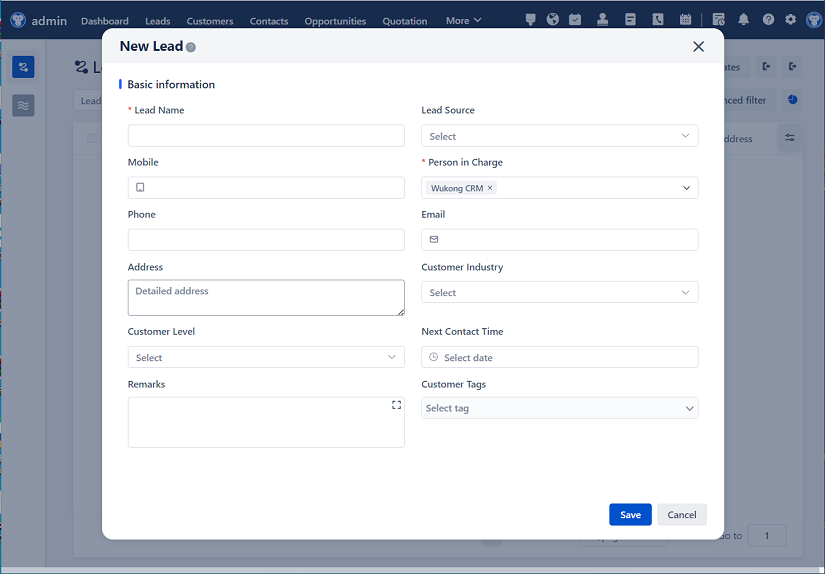
△Click on the top right corner to try Wukong CRM for free