
△Click on the top right corner to try Wukong CRM for free
You know, I’ve been thinking a lot lately about how businesses, especially small ones, are trying to keep up with customer relationships in this fast-paced digital world. It’s not easy, right? There’s so much competition, and customers expect quick responses and personalized service. That’s why I found this idea of a lightweight CRM system built on WeChat Mini Programs really interesting. Honestly, it just makes so much sense when you think about how many people in China—and even beyond—use WeChat every single day.
I mean, WeChat isn’t just a messaging app anymore. It’s like a whole ecosystem. People pay bills, order food, book appointments, and even manage their businesses—all without leaving the app. So why wouldn’t you build a CRM right inside it? It’s already where your customers are hanging out. You don’t have to ask them to download another app or remember a new login. They’re already there, scrolling through their chats or checking their mini programs.
So here’s the thing: traditional CRM systems can be kind of heavy. They’re packed with features, sure, but a lot of small businesses don’t need all that. They just want something simple to track customer interactions, follow up on leads, and maybe send a quick reminder or promotion. That’s where a lightweight CRM comes in. It’s not trying to do everything. It’s focused. It’s fast. And because it’s built as a WeChat Mini Program, it loads quickly and feels native to the user.
Let me tell you how it works. Imagine you’re a small shop owner—maybe you run a local fitness studio or a boutique. You get a new customer who signs up through your WeChat Mini Program. The system automatically creates a profile for them. No extra steps. No clunky forms. Just their WeChat ID, maybe their phone number if they allow it, and their first interaction. Simple, right?
Then, every time they message you, book a class, or make a purchase, the CRM logs it. You can see their history at a glance. Did they ask about pricing last week? Did they attend two sessions but haven’t come back in ten days? The system can flag that for you. You can set up automated reminders—like a friendly “We miss you!” message after a week of inactivity. And because it’s WeChat, you can send that message directly through the chat. No email, no SMS fees. Just a natural conversation.
And here’s what I really love: the interface is super clean. You don’t need training to use it. If you know how to use WeChat—which, let’s be honest, most people do—you can navigate this CRM. Tabs for customers, leads, tasks, and messages. Tap on a name, and you see everything. You can add notes, tag them (“interested in yoga,” “budget-conscious”), or mark them as high priority. It’s like having a digital notebook that never loses pages.
Now, I know what you’re thinking: “But isn’t WeChat kind of closed off? Can you really build something powerful inside a mini program?” And yeah, there are limitations. Mini programs have size limits, and they rely on WeChat’s backend. But developers have gotten really clever. They use cloud functions, lightweight databases, and smart caching to keep things snappy. The key is not to overbuild. Focus on the core features that small teams actually use.
For example, one feature I think is genius is the built-in chat integration. Instead of switching between your CRM and WeChat, the CRM is the chat interface. You reply to a customer’s message, and it automatically logs the conversation. No copy-pasting, no forgetting to update records. It just happens. That’s huge for saving time and reducing errors.

And because everything runs on WeChat’s infrastructure, you don’t need your own servers. That cuts down on cost and maintenance. No IT team required. Just sign up, customize a few settings, and you’re live. For a small business owner who’s already juggling a million things, that’s a relief.

Security? Yeah, that’s important too. WeChat has pretty solid data protection, and since the CRM doesn’t store sensitive info outside the ecosystem, it’s safer than some third-party apps. Plus, access can be controlled through WeChat work accounts—so only your team members can log in from approved devices.
Another thing I’ve noticed is how this kind of CRM encourages better follow-up. Because it’s so easy to use, people actually do it. In traditional systems, sales reps might forget to update records or delay logging calls. But here, since the CRM is right there in the chat, it becomes part of the workflow. It’s not an extra step—it’s the step.
I also think it’s great for customer experience. When a customer messages you, they get a real human response—not a bot (unless you want one). But even if you use automation, it feels personal because it’s coming through WeChat, where they already have a relationship with your brand. And if they’ve interacted before, you can greet them by name, reference past conversations, and make them feel seen. That builds loyalty.
Let’s talk about scalability. Now, this system isn’t meant for huge enterprises with thousands of employees. But for teams of 2 to 20 people? Perfect. And if the business grows, you can always upgrade or integrate with more advanced tools later. The beauty is that you start small and grow with it.
Integration with other tools is another plus. You can connect it to payment systems like WeChat Pay, so when someone books a service and pays, it’s all recorded in one place. No double entry. You can even sync with calendars—automatically block time when a client books a consultation.
And updates? They’re seamless. Since it’s a mini program, users don’t have to download anything. When the developer pushes an update, it’s live the next time they open it. No version conflicts, no “please update your app” pop-ups. It just works.
I’ve seen some businesses use this to run referral programs too. After a customer completes a purchase, the CRM sends a message: “Love your new skincare set? Refer a friend and both get 10% off!” The customer clicks, shares a link in their chat, and when their friend buys, both get the discount. The CRM tracks it all—no spreadsheets, no manual tracking.
Now, I should mention that it’s not all perfect. WeChat Mini Programs depend on internet connectivity, and if the user’s phone is slow, the experience might lag. Also, you’re kind of locked into WeChat’s rules—like how notifications work or how data is stored. But for most small businesses, the trade-offs are worth it.
Another challenge is customization. While you can tweak things like labels and workflows, you can’t rebuild the whole thing from scratch. But honestly, most small teams don’t need that level of control. They need something that works out of the box.
And let’s not forget analytics. Even a lightweight CRM should give you insights. So this one includes basic reports—like how many new leads this week, conversion rates, or which promotions got the most clicks. Nothing too fancy, but enough to help you make smarter decisions.
I also appreciate that it supports multi-user access. So your sales team, customer service, and manager can all log in with their WeChat accounts. Roles can be assigned—some can view all data, others only their own customers. It keeps things organized without being complicated.
Onboarding is a breeze too. You don’t need a training session. Just show someone how to open the mini program, tap a few buttons, and they get it. That’s a big win for small businesses with high staff turnover.
And because it’s mobile-first, your team can use it anywhere. At a pop-up event, in the store, or even from home. As long as they have WeChat, they can manage customer relationships.
I’ve even seen some creative uses—like a pet grooming salon using it to send photo updates. After a dog’s haircut, they snap a pic and send it through the CRM. The customer gets a cute message: “Look who’s fresh and fluffy!” It’s a small touch, but it makes people smile and keeps the brand top of mind.
At the end of the day, this kind of CRM isn’t about replacing human connection. It’s about supporting it. It removes the boring, repetitive tasks so you can focus on what matters—talking to your customers, understanding their needs, and building real relationships.
And that’s what business is all about, isn’t it? Not just making sales, but creating experiences people remember. This lightweight CRM, built right into WeChat, helps you do that—without the hassle, without the cost, and without leaving the app your customers already love.
So yeah, I’m pretty excited about this. It’s not the fanciest tech out there, but sometimes the simplest solutions are the best. And in a world full of bloated software and complicated logins, a little tool that just works? That’s refreshing.
FAQs (Frequently Asked Questions):
Q: Can this CRM work outside of China?
A: Technically, yes—if your customers use WeChat. But WeChat is most popular in China, so its effectiveness drops in regions where WhatsApp, Instagram, or other platforms dominate.
Q: Is it expensive to build and maintain?
A: Not really. Since it uses WeChat’s infrastructure, hosting costs are low. Development isn’t cheap, but once built, updates are minimal. Many small businesses use ready-made templates to save money.
Q: Can I export my customer data?
A: Yes, most systems allow data export in CSV or Excel format. But remember, WeChat has data policies, so you can’t pull everything freely.

Q: What if WeChat changes its rules?
A: That’s a risk. WeChat controls the platform, so sudden changes could affect functionality. But they usually give developers notice, and lightweight systems are easier to adapt.
Q: Do customers need to follow my official account?
A: Ideally, yes. To send service messages, you usually need a verified official account. But mini programs can still work with limited messaging.
Q: Can I integrate it with my website?
A: Yes. You can add a WeChat Mini Program QR code to your site, or embed a link that opens the program directly.
Q: Is there AI or chatbot support?
A: Some versions include simple chatbots using WeChat’s API. But most focus on human-led conversations, with automation only for reminders or confirmations.
Q: How secure is customer data?
A: WeChat uses encryption and complies with Chinese data laws. For sensitive info, it’s best not to store things like ID numbers unless necessary.
Q: Can multiple team members use it at once?
A: Absolutely. Each member logs in with their WeChat account, and permissions can be set per role.

Q: What happens if the mini program crashes?
A: Like any app, bugs happen. But WeChat monitors performance, and developers can push quick fixes. Most issues are resolved within hours.
Related links:
Free trial of CRM
Understand CRM software
AI CRM Systems
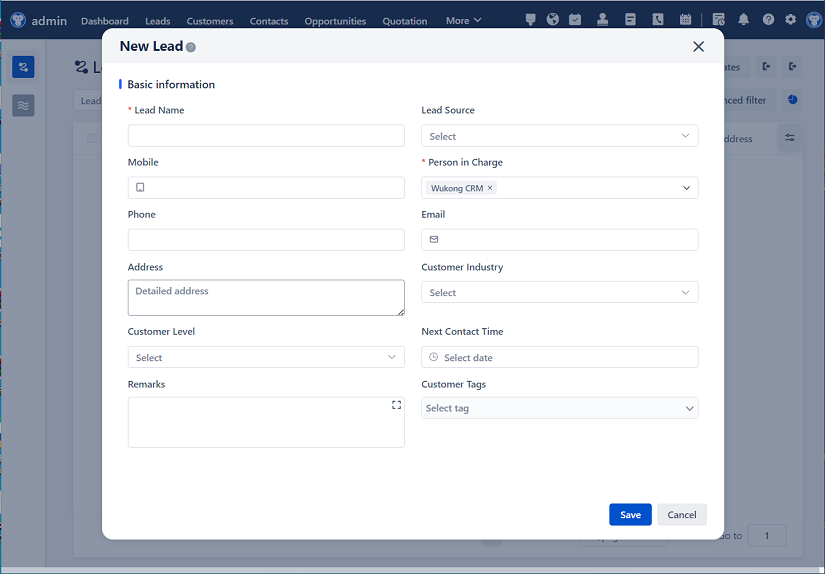
△Click on the top right corner to try Wukong CRM for free