
△Click on the top right corner to try Wukong CRM for free
So, let me tell you something — running a cross-border e-commerce business isn’t just about listing products and waiting for sales to roll in. I mean, sure, that might work for a little while, but if you're serious about growing, scaling, and actually keeping customers happy across different countries and cultures, you need more than just a Shopify store and some decent product photos.
Honestly, one of the biggest game-changers I’ve come across lately is using a CRM management system specifically designed for cross-border e-commerce. Now, I know what you’re thinking — “Wait, isn’t CRM just for big corporations with call centers and sales teams?” Well, not anymore. Not even close.
See, today’s CRM systems are way smarter, way more flexible, and honestly, they’re built for businesses like ours — the ones juggling multiple markets, languages, currencies, and customer expectations all at once. It’s kind of like having a personal assistant who speaks five languages, remembers every customer’s birthday, and somehow knows exactly when someone’s about to abandon their cart in Germany.
Let me break it down. When you sell internationally, your customers aren’t just random buyers — they’re people from different time zones, with different shopping habits, payment preferences, and even cultural nuances. For example, did you know that in Japan, customers really value polite, formal communication? Or that in Brazil, many people prefer paying in installments rather than upfront?
Without a solid CRM, you’re basically flying blind. You might send an email at 3 a.m. their time, use slang that doesn’t translate well, or miss out on follow-ups because you’re manually tracking everything in spreadsheets. And trust me, I’ve been there. I used to have a giant Excel file with tabs for each country, color-coded notes, and so many reminders it looked like a rainbow exploded. It was a mess.
But once I started using a proper CRM for my cross-border store, things changed dramatically. Suddenly, I could see every customer interaction in one place — whether it was an email, a chat message, a support ticket, or even social media comment. Everything got logged automatically. No more digging through old emails or trying to remember who said what.
And here’s the cool part: modern CRMs can segment customers based on location, purchase history, language, and behavior. So instead of sending the same generic promo to everyone, I could tailor messages. Like, when someone from France browsed winter coats but didn’t buy, my CRM would trigger a personalized email in French, maybe with free shipping during a cold snap. And guess what? Conversion rates went up.
Another thing I love is how these systems help with post-purchase engagement. Let’s be real — international shipping can be stressful. Packages get delayed, customs hold things up, and customers start getting anxious. But with a good CRM, I can set up automated updates. As soon as a tracking number is available, the system sends a message in the customer’s local language with clear info. If there’s a delay, it sends another message apologizing and offering a small discount on their next order. It sounds simple, but it builds trust like nothing else.

Oh, and customer service? Huge improvement. Before, we had team members answering tickets without knowing the full history. Someone might have emailed twice already, and the third person responding had no idea. Now, every conversation is linked to the customer profile. The agent sees everything — past orders, previous issues, even notes from other team members. It makes support faster, more personal, and way less frustrating for everyone.
I should also mention localization. A good CRM doesn’t just translate words — it adapts tone, timing, and content to fit the culture. For instance, in the Middle East, weekends start on Friday, so scheduling campaigns for “weekend deals” needs to shift. In Germany, people expect privacy and data transparency, so opt-in messaging has to be crystal clear. The CRM handles all that behind the scenes, so I don’t have to micromanage every market.
Integration is another big win. My CRM connects seamlessly with my e-commerce platform, email marketing tools, shipping carriers, and even accounting software. That means when a sale happens in Australia, the CRM logs it, triggers a thank-you email, updates inventory, and syncs the revenue data — all automatically. No double entry, no mistakes, no delays.
And let’s talk about analytics. This is where the CRM really shines. Instead of guessing what’s working, I can see actual data — which countries have the highest retention, which products are popular in Southeast Asia, which email subject lines get the most opens in Spain. I can even track customer lifetime value by region, which helps me decide where to focus my ad spend.
One feature I didn’t think I’d use but now can’t live without is predictive analytics. Some CRMs use AI to predict which customers are likely to churn or which ones are ready to make a repeat purchase. For example, if someone usually buys skincare every six weeks and it’s been eight, the system nudges me to send a reminder or a special offer. It’s like having a sixth sense for customer behavior.
Now, I know what you’re wondering — “Isn’t this expensive?” Honestly, not as much as you’d think. There are scalable options now, even for small and mid-sized businesses. Plus, when you factor in the time saved, fewer lost customers, and higher conversion rates, the ROI is pretty clear. I actually made back the cost within three months just by reducing support tickets and increasing repeat sales.
Security is another concern people bring up. Yeah, handling customer data across borders comes with risks, especially with GDPR and other privacy laws. But reputable CRM providers build compliance right into their systems. They encrypt data, allow regional data storage, and give you tools to manage consent and opt-outs properly. So you’re not left hanging legally.
Onboarding wasn’t as hard as I feared either. Most platforms have intuitive interfaces, video tutorials, and responsive support teams. We trained our staff in about a week, and now everyone uses it daily without complaints. Even our warehouse team checks the CRM to verify customer notes before shipping — like if someone requested a gift note or eco-friendly packaging.
One thing I’ve learned is that a CRM isn’t just a tool — it’s a mindset. It shifts your focus from transactional selling to relationship-building. Instead of seeing customers as one-time buyers, you start seeing them as long-term partners. And in cross-border e-commerce, where logistics and trust are major hurdles, that relationship is everything.
I’ll admit, I was skeptical at first. I thought, “Do I really need another software? Can’t I just keep doing what I’m doing?” But after a few months of using the CRM, I realized how much I was missing. Missed opportunities, inconsistent messaging, frustrated customers — all because I wasn’t organized.
Now, when I launch a new market — say, South Korea — I don’t start from scratch. I use insights from similar regions, pre-load translated templates, and set up automated workflows based on proven strategies. It cuts my setup time in half and gives me a better chance of success.
And here’s a pro tip: don’t just collect data — act on it. Your CRM will show you patterns, but you still need to make smart decisions. Maybe customers in Italy love bundle deals, or those in Canada respond better to video content. Use that info to tweak your approach.
Also, encourage your team to add notes. Real human insights matter. Like when a customer mentioned they switched brands because of poor packaging — that note helped us improve our unboxing experience globally.
At the end of the day, cross-border e-commerce is tough. There are so many moving parts — logistics, payments, regulations, returns, language barriers. But a CRM acts like the central nervous system of your operation. It keeps everything connected, informed, and aligned.

So if you’re still managing international customers with spreadsheets, random email threads, and memory alone — stop. Seriously. Give a dedicated CRM a try. Start with a free trial, test it with one market, and see the difference. I promise you won’t go back.
It’s not magic, but it feels like it sometimes. Because when your customer in Mexico gets a perfectly timed, personalized message in Spanish, right after browsing your site, and then becomes a loyal buyer — that’s not luck. That’s smart CRM use.
And honestly, in a world where attention spans are short and competition is global, being thoughtful, timely, and consistent is your best advantage. A CRM helps you deliver that — every single time.
FAQ (Frequently Asked Questions)
Q: What exactly does a CRM do for cross-border e-commerce?
A: It helps you manage customer relationships across different countries by organizing data, automating communication, personalizing experiences, and ensuring compliance — all in one place.
Q: Can a CRM handle multiple languages and currencies?
Yes, most modern CRMs support multi-language interfaces and can display prices in local currencies, making it easier to engage customers globally.
Q: Is it hard to set up a CRM for international sales?
Not really. Many platforms offer guided onboarding, templates for different regions, and integrations that make setup smooth, even for non-tech users.
Q: Will a CRM help reduce customer service workload?
Absolutely. With centralized customer histories and automated responses, your team spends less time searching and more time solving real issues.
Q: How does a CRM improve marketing for global audiences?
It lets you segment customers by region, behavior, or language, so you can send targeted, relevant campaigns instead of one-size-fits-all blasts.

Q: Are CRMs compliant with international data laws like GDPR?
Reputable CRM providers build in compliance features like data encryption, consent management, and regional data hosting to meet legal requirements.
Q: Can I integrate my existing e-commerce platform with a CRM?
Yes, most CRMs integrate easily with platforms like Shopify, WooCommerce, BigCommerce, and Magento.

Q: Do I need a big team to use a CRM effectively?
Nope. Even solopreneurs and small teams benefit from CRMs by saving time, reducing errors, and building stronger customer relationships.
Q: How soon can I see results after implementing a CRM?
Many users notice improvements in response times, customer satisfaction, and sales within the first few weeks.
Q: What’s the biggest mistake people make when using a CRM for global sales?
Ignoring localization — treating all markets the same instead of adapting tone, timing, and offers to fit cultural preferences.
Related links:
Free trial of CRM
Understand CRM software
AI CRM Systems
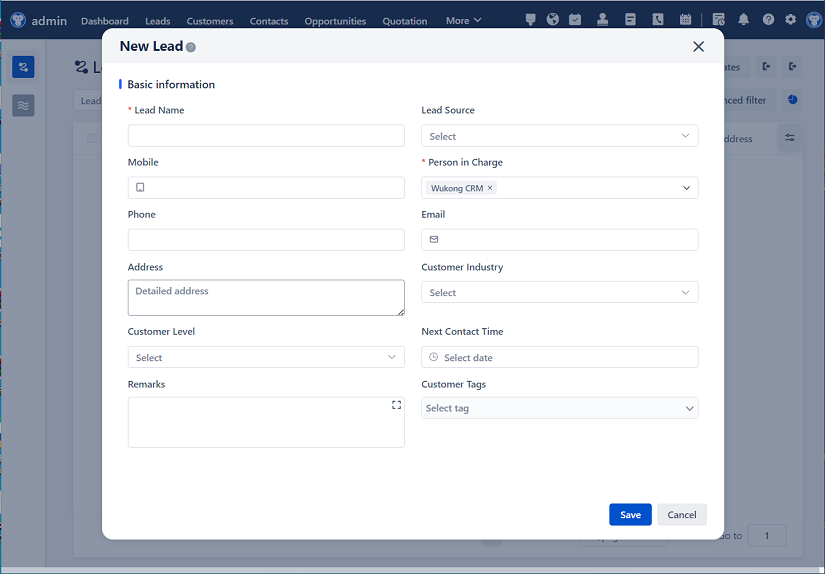
△Click on the top right corner to try Wukong CRM for free