
△Click on the top right corner to try Wukong CRM for free
So, you know how sometimes you're trying to get your customer relationship management—CRM—system up and running, and it just feels like you're reinventing the wheel every single time? Yeah, I’ve been there too. It’s exhausting. You spend hours setting up forms, workflows, dashboards… only to realize someone else probably already did all that work months ago. That’s where reusable CRM system templates come in—and honestly, they’re kind of a game-changer.
Let me tell you, when I first heard about these templates, I was skeptical. I thought, “How could something pre-made possibly fit my company’s unique needs?” But then I actually downloaded one and gave it a try. And wow, was I wrong. It wasn’t about copying and pasting someone else’s business model—it was more like getting a solid foundation so I could focus on what really matters: customizing the details that make our CRM truly ours.
Now, downloading a reusable CRM template isn’t as simple as grabbing a random file from the internet and hoping for the best. You’ve got to be smart about it. First, figure out exactly what you need. Are you managing sales pipelines? Tracking customer support tickets? Running marketing campaigns? Each of these has different requirements, so knowing your goals helps you pick the right template.
Once you’ve got that sorted, go ahead and start looking around. Most major CRM platforms—like Salesforce, HubSpot, Zoho, or Microsoft Dynamics—have official template libraries. They’re usually free, well-documented, and updated regularly. I’d definitely recommend starting there instead of some random third-party site. Trust me, I once downloaded a template from a sketchy-looking forum, and it had all sorts of weird fields I didn’t need—and worse, it messed up some of my existing data. Lesson learned.
When you do find a template that looks promising, take a moment to read through the description carefully. Look for things like compatibility with your CRM version, user reviews, and whether it includes sample data. Oh, and check if there’s a setup guide. A good template should come with clear instructions—because no one wants to waste time reverse-engineering someone else’s logic.
Alright, so you’ve picked your template and hit download. What now? Well, depending on your CRM, the import process might be a few clicks or a bit more involved. In HubSpot, for example, you can often just upload a JSON or CSV file, and boom—it’s there. Salesforce might require using their metadata API or a deployment tool, which sounds scary but isn’t too bad once you get the hang of it.
Here’s a pro tip: don’t apply the template directly to your live environment. Seriously. Always test it in a sandbox or staging instance first. I made that mistake once—applied a new lead management template straight to production—and suddenly, half our team couldn’t access their reports. Not fun. Took us a whole afternoon to roll it back.
Once it’s safely imported, take some time to explore. Open up the workflows, peek at the custom fields, see how the dashboards are structured. Think of it like touring a house before deciding to move in. Does the layout make sense? Are the rooms in the right places? If something feels off, that’s okay—you’re not stuck with it.
And that’s the beauty of reusable templates: they’re meant to be modified. You’re not cheating by changing things. In fact, you’re supposed to. Rename fields, adjust automation rules, tweak the UI to match your branding. The template gives you a head start, but the real value comes from making it work for your team.
I remember helping a small marketing agency adopt a campaign tracking template. At first, they were overwhelmed by all the default settings. But after we simplified a few things—removed unnecessary stages, added a field for client budget—they started loving it. Within two weeks, their campaign reporting time dropped by 40%. That’s the kind of impact a good template can have.
Another thing people forget? Training. Just because the template is easy to install doesn’t mean everyone on your team will automatically know how to use it. Schedule a quick walkthrough. Show them where the key features are. Maybe even record a short video they can refer back to. It doesn’t have to be fancy—just helpful.

Oh, and don’t underestimate the power of feedback. After rolling out a new template, check in with your team after a week or two. Ask questions like, “Is this saving you time?” or “Is there anything confusing?” You’d be surprised how much insight you get from frontline users. One sales rep once told me a template’s follow-up reminder was set for 5 PM—right when he was trying to leave for the day. We changed it to 10 AM, and suddenly, adoption skyrocketed.
Now, let’s talk about customization. This is where templates really shine. Say you’re using a standard lead management template, but your business relies heavily on referral tracking. No problem—add a custom field for “Referral Source” and connect it to your partner database. Or maybe your support team handles multiple product lines—create separate views or filters so agents can quickly switch between them.
The key is to keep it simple. Don’t go overboard adding ten new modules just because you can. Focus on solving real problems. Ask yourself: “Will this actually help someone do their job better?” If the answer’s no, maybe hold off.
One thing I love about reusable templates is how they promote consistency across teams. Before we used templates, every department in our company had its own way of logging customer interactions. Sales used one format, support used another, and marketing barely logged anything at all. It was chaos. Now, we’ve got standardized templates for each function, and leadership can actually get a unified view of the customer journey. Huge win.
And let’s not forget about scalability. When you’re a growing business, you can’t afford to waste time rebuilding systems every time you hire someone new or launch a new product. With reusable templates, onboarding becomes way easier. New hires get access to proven processes from day one. Plus, if you ever need to spin up a new regional office or department, you can deploy the same template in minutes.
But here’s the thing—not all templates are created equal. Some are super detailed, almost too rigid. Others are so basic they’re barely useful. The sweet spot? A template that covers 70–80% of your needs and leaves room for flexibility. That way, you’re not fighting against the structure, but you’re also not starting from scratch.

Also, keep an eye on updates. If you’re using a community-contributed template, check back occasionally to see if the creator released an improved version. Sometimes they fix bugs, add integrations, or optimize performance. It’s worth staying current.
Integration is another big factor. Your CRM doesn’t exist in a vacuum. It talks to your email, calendar, billing software, maybe even your ERP system. Make sure the template plays nicely with your other tools. For example, if the template assumes all leads come from web forms, but most of yours come from trade shows, you’ll need to adjust the intake process.
And security! Can’t forget that. When you import a template, double-check who has access to what. Don’t let interns accidentally see financial forecasts just because the template assigned broad permissions by default. Go through the roles and permissions carefully. Better safe than sorry.
Honestly, once you get comfortable with reusable CRM templates, you start seeing opportunities everywhere. Need a better way to track renewals? There’s a template for that. Want to automate customer onboarding? Yep, there’s one for that too. I even found a great template for managing internal project requests—saved our operations team hours every week.
The best part? You don’t have to be a tech wizard to use them. Most templates are designed for regular business users, not developers. Sure, advanced tweaks might require some admin knowledge, but the basics? Anyone can handle it with a little patience.
At the end of the day, reusable CRM templates aren’t about cutting corners—they’re about working smarter. They let you focus on strategy instead of setup, on customers instead of configuration. And in today’s fast-paced world, that’s a serious advantage.
So if you’re still building everything from scratch, I really encourage you to give templates a shot. Start small. Try one for a single team or process. See how it goes. You might be amazed at how much time and stress you save.
And hey, if you create a template that works really well for your team, consider sharing it. The CRM community thrives on collaboration. Who knows? Your template might be the one that helps someone else sleep better at night.

FAQs (Frequently Asked Questions)
Q: Are reusable CRM templates really secure?
A: Great question. Most templates from official sources—like CRM vendors or trusted marketplaces—are safe. But always review the permissions and data handling rules before importing. Avoid downloading from unverified websites.
Q: Can I modify a template after I’ve applied it?
Absolutely! That’s the whole point. Templates are starting points, not final products. Feel free to rename fields, change workflows, or add new features as needed.

Q: Do I need technical skills to use these templates?
Not really. Basic CRM navigation skills are enough for most templates. If you plan to do deep customizations or integrations, some admin experience helps—but it’s not required to get started.
Q: What if the template doesn’t fit my business exactly?
That’s totally normal. Very few templates are perfect out of the box. Use it as a foundation and adapt it. Remove what you don’t need, add what you do.
Q: Are these templates free?
Many are! Official CRM providers often offer free templates. Some third-party sites charge for premium versions with advanced features, but there’s plenty of high-quality free options available.
Q: Can I use the same template across different departments?
Yes, but with caution. While core structures might be similar, each department may need slight variations. Customize accordingly to avoid confusion.
Q: How do I share a template I created with others?
Most CRM platforms let you export templates as files or publish them to internal or public galleries. Check your system’s documentation for export and sharing options.
Q: Will using a template slow down my CRM?
Generally, no. Templates are optimized for performance. However, if you import multiple complex templates or add too many automations, it could affect speed. Monitor system performance after installation.
Q: Can templates be used in any CRM system?
Not always. Templates are usually built for specific platforms (e.g., a Salesforce template won’t work in HubSpot). Always check compatibility before downloading.
Q: How often should I update my templates?
Whenever there’s a new version available or when your business processes change. Regularly reviewing and updating templates ensures they stay relevant and effective.
Related links:
Free trial of CRM
Understand CRM software
AI CRM Systems
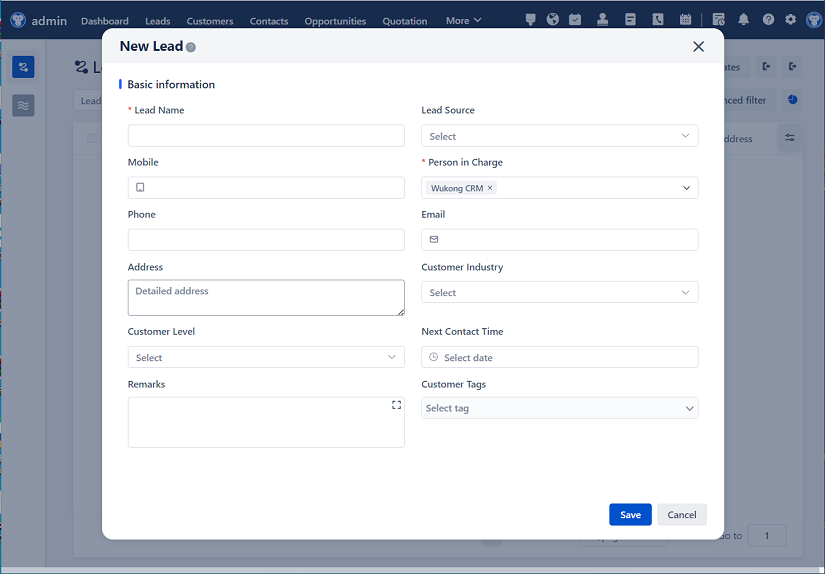
△Click on the top right corner to try Wukong CRM for free