
△Click on the top right corner to try Wukong CRM for free
So, let me tell you something — if you’ve ever tried to get your CRM system to play nicely with other tools in your company, you know it’s not always smooth sailing. I mean, sure, CRM systems are supposed to make life easier, right? They help you track customers, manage sales pipelines, and keep your team organized. But here’s the thing — when your CRM doesn’t talk well with your email platform, your marketing automation tool, or your customer support software, it kind of defeats the whole purpose.
I’ve been through this myself. A few years ago, my team rolled out a new CRM, super excited about all the features. We thought we were going to be this super-efficient, data-driven machine. But then we realized — oops — none of our other systems were syncing properly. Sales couldn’t see the latest marketing campaign data, support tickets weren’t updating in real time, and our reports were all over the place. It was frustrating, to say the least.
That’s when I started digging into what actually works when integrating a CRM with other systems. And let me tell you, there are some best practices that can save you a ton of headaches down the road.
First off, you’ve got to start with a clear goal. I know that sounds obvious, but so many companies jump into integration without really asking, “What are we trying to achieve?” Are you trying to improve customer service response times? Automate lead handoffs from marketing to sales? Get a unified view of the customer journey? Whatever it is, define it clearly. Because if you don’t know where you’re going, how will you know when you get there?
Once you’ve got your goals nailed down, the next step is to map out your data flow. Seriously, grab a whiteboard or a big piece of paper and sketch it out. Where does customer data come from? Is it from your website forms, your support desk, or maybe your e-commerce platform? Where does it need to go? Your CRM, your analytics tool, your billing system? Understanding this flow helps you figure out what needs to connect to what.
And speaking of connections, APIs are your best friend here. Most modern systems offer APIs — those are like little bridges that let software talk to each other. But not all APIs are created equal. Some are well-documented and easy to use; others are a total mess. So before you commit to an integration, check the API documentation. Ask questions like: Is it RESTful? Does it support webhooks for real-time updates? Is there a sandbox environment where you can test without breaking anything?
Now, here’s something people often overlook — data quality. I can’t stress this enough. If your CRM is getting garbage data from another system, it’s going to give you garbage insights. So make sure you clean up your data before it even enters the CRM. Set rules for formatting — like phone numbers, email addresses, or company names. And consider using middleware or an integration platform like Zapier, MuleSoft, or Workato to handle data transformation and validation.
Oh, and don’t forget about user permissions. Just because two systems are connected doesn’t mean everyone should have access to everything. You’ve got to think about security. Who in sales should see support tickets? Should marketing be able to edit customer account details? Set up role-based access controls so people only see what they need to do their jobs.

Another thing — test, test, and test again. I once saw a company go live with a CRM integration on a Friday afternoon. Big mistake. Over the weekend, thousands of duplicate contacts were created because of a sync loop. Chaos. So always run tests in a staging environment first. Simulate real-world scenarios. Check how the system handles errors. What happens if the API goes down? Does it retry? Does it log the failure so someone can fix it?
And while we’re on the topic of errors, monitoring is key. You can’t just set up an integration and walk away. Use monitoring tools to track performance — things like sync speed, error rates, and data consistency. Set up alerts so you know immediately if something breaks. Because trust me, when your sales team can’t see new leads for hours, they’re going to come knocking on your door.

Now, let’s talk about real-time vs. batch syncing. This is a common debate. Real-time sounds great — updates happen instantly, right? But it can be resource-heavy and sometimes unnecessary. For example, if your marketing team only needs daily reports, syncing every five minutes is overkill. On the other hand, if your support team needs to see the latest order status when a customer calls, real-time is a must. So think about your use case and choose wisely.
One thing I’ve learned the hard way — don’t try to do everything at once. Start small. Pick one or two critical integrations to focus on first. Maybe connect your CRM to your email platform so your team can track customer interactions. Once that’s stable, move on to the next one. It’s better to have a few solid integrations than a dozen broken ones.
And communication — oh man, don’t underestimate the power of good communication. Keep your teams in the loop. Let sales know when a new field will appear in the CRM. Train support staff on how the integration affects their workflow. If people don’t understand the changes, they’ll resist them or use the system incorrectly.
Also, involve your IT team early. I know some business units try to go rogue and set up integrations without IT approval. That might work for a simple Zapier flow, but for anything complex, you need IT’s buy-in. They’ll help with security, scalability, and troubleshooting. Plus, they might already have existing tools or policies you can leverage.
Another pro tip — document everything. I mean every step of the integration process. What systems are connected? What data fields are mapped? Who’s responsible for maintenance? If something breaks and the person who set it up is on vacation, someone else needs to be able to fix it. Good documentation saves time and reduces stress.
And don’t forget about scalability. Today, you might only have 10,000 customers, but what happens when you grow to 100,000? Will your integration handle the load? Will your API calls stay within rate limits? Plan for growth from the beginning.
Now, here’s a question people don’t ask often enough — what about the user experience? Just because data is syncing doesn’t mean it’s useful. Make sure the integrated data actually helps your team do their jobs better. For example, if a sales rep opens a customer record, they should see relevant info from support, marketing, and billing — all in one place. That’s the dream, right?
Customization is another factor. Most CRMs let you add custom fields or objects. Use them wisely. Don’t just dump every piece of data from other systems into your CRM. Only bring in what’s actionable. Too much clutter makes the system harder to use.

And let’s talk about change management. Even the best integration will fail if people don’t adopt it. So train your team. Show them how the integration makes their lives easier. Celebrate quick wins. Maybe share a story about how the new sync helped close a deal faster. Positive reinforcement goes a long way.
Finally, review and optimize regularly. Technology changes. Business needs evolve. What worked six months ago might not be the best solution today. Schedule quarterly reviews of your integrations. Look at usage data, gather feedback from users, and make improvements.
Look, integrating your CRM with other systems isn’t a one-and-done project. It’s ongoing. But if you follow these best practices — set clear goals, map your data flow, use reliable APIs, ensure data quality, test thoroughly, monitor performance, start small, communicate well, document everything, plan for scale, and focus on user experience — you’ll be in a much better position.
And hey, if you make a mistake? That’s okay. We all do. The important thing is to learn from it and keep improving.
FAQs (Frequently Asked Questions)
Q: Should I use pre-built connectors or build custom integrations?
A: It depends. Pre-built connectors are faster and easier to set up, especially for common systems like Gmail or Mailchimp. But if you have unique requirements or legacy systems, a custom integration might be necessary. Always weigh the time, cost, and maintenance involved.
Q: How do I handle data conflicts during integration?
A: Great question. Conflicts happen when the same data is updated in two systems at once. The best approach is to establish a “source of truth” — decide which system owns certain data. For example, your billing system might be the source for customer payment info, while your CRM owns contact details.
Q: Can I integrate my CRM with on-premise systems?
A: Yes, but it can be trickier. You might need middleware or a hybrid integration platform that can connect cloud and on-premise environments securely. Make sure your network and security policies allow for safe data transfer.
Q: What if my CRM doesn’t have a public API?
A: That’s tough, but not impossible. Some older systems offer file-based exports (like CSV) that you can import periodically. You could also look into third-party integration tools that use UI automation or screen scraping — though those are less reliable and harder to maintain.
Q: How often should data sync between systems?
A: Again, it depends on your needs. Real-time is ideal for customer-facing teams, but daily or hourly syncs might be enough for reporting or analytics. Just make sure the frequency supports your business processes without overloading your systems.
Q: Who should be responsible for CRM integrations?
A: Ideally, it’s a team effort. Business stakeholders define the needs, IT handles security and infrastructure, and data or integration specialists manage the technical setup. Having a dedicated integration owner helps ensure accountability.
Q: What are the most common integration pitfalls?
A: From what I’ve seen, the big ones are poor planning, ignoring data quality, skipping testing, and not involving end-users. Also, underestimating maintenance — integrations need ongoing care, just like any other system.
Related links:
Free trial of CRM
Understand CRM software
AI CRM Systems
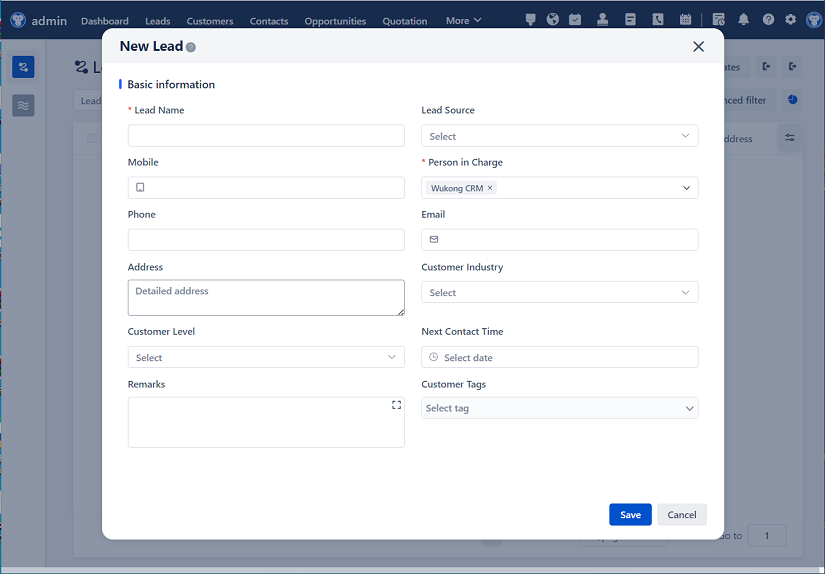
△Click on the top right corner to try Wukong CRM for free