
△Click on the top right corner to try Wukong CRM for free
So, let me tell you something — if you're thinking about implementing a CRM system, you're probably already aware that it's not just about picking a shiny new software and calling it a day. I mean, sure, that’s part of it, but honestly, the real challenge — and where most people get tripped up — is understanding the actual cost structure and how to budget for it properly. I’ve seen so many companies go into this excited, only to get blindsided by hidden fees or unexpected expenses down the road. So, let’s talk about this like two coworkers having coffee, because I want you to walk away with a clear picture of what you’re really signing up for.
First off, let’s get real — CRM systems aren’t one-size-fits-all, and neither are their costs. I know some vendors make it sound like it’s just a monthly subscription fee, but that’s only the tip of the iceberg. Like, seriously, that’s maybe 30% of the total cost. The rest? That’s where things get messy if you’re not careful.
Let’s start with licensing. Yeah, this is usually the first thing people think about. You go to a vendor’s website, see a price per user per month, and think, “Cool,
Then there’s the implementation cost. Now, this is where a lot of people get caught off guard. You’d think installing software would be straightforward, right? But with CRM systems, it’s way more involved. You’ve got data migration — pulling all your old customer info from spreadsheets, legacy systems, or even paper files — and getting it into the new system cleanly. That takes time, and time means money. If you’re moving thousands of records, you might need a consultant or a dedicated IT person to clean up duplicates, fix formatting issues, and map fields correctly. That could cost anywhere from a few thousand to tens of thousands, depending on complexity.

And don’t forget about customization. Most off-the-shelf CRMs aren’t perfect out of the box. Your sales team might want a specific workflow, your marketing team needs certain tracking fields, and your customer service team wants a unique dashboard. All of that requires tweaking — and that’s usually billed by the hour. I’ve seen companies spend more on customization than on the actual software in the first year. So, ask yourself: how much do you really need to change? Sometimes, adapting your process to fit the software is cheaper than the other way around.
Now, let’s talk about training. This is something people often underestimate. You can have the most powerful CRM in the world, but if your team doesn’t know how to use it, it’s basically a very expensive digital paperweight. So, you’ve got to budget for training sessions — and not just one. People forget things, new hires come in, and workflows evolve. You’ll probably need initial training, refresher courses, and maybe even ongoing support. Some vendors include basic training in their package, but advanced or role-specific training? That’s usually extra. And if you want someone on-site for a week to walk your team through everything, that’s going to cost more.
Integration is another big one. Your CRM doesn’t live in a vacuum. It needs to talk to your email, your calendar, your marketing automation tool, maybe your ERP or accounting software. Each integration takes time and technical know-how. Some CRMs have pre-built connectors, which are great — but even those might need configuration. Others require custom API work, which means hiring a developer. And if you’re using niche tools, you might not find a ready-made solution at all. So, factor in both time and money for making your CRM play nicely with the rest of your tech stack.
Oh, and ongoing support — don’t forget that. Even after everything’s up and running, stuff breaks. Users make mistakes, updates cause glitches, and sometimes you just need help figuring out a feature. Most vendors offer support packages, but the level of service varies. Basic email support might be included, but phone support, faster response times, or dedicated account managers? Those usually cost extra. And if you want 24/7 support, that’s going to bump up your monthly bill.
Then there’s the internal cost — the time your own team spends on this. Your sales manager might spend weeks setting up pipelines, your IT guy might be pulled off other projects, and your admin staff could be inputting data for days. That’s not a direct cash expense, but it’s still a real cost in terms of lost productivity. So, when you’re budgeting, try to estimate how many hours your team will invest and factor that in, even if it’s just mentally.
Now, let’s talk about timing. A lot of companies make the mistake of thinking they can implement a CRM in a few weeks. In reality, a proper rollout — especially for a mid-sized or larger company — can take three to six months. That means you’re paying subscription fees during that whole time, even before you’re fully using the system. So, your first-year cost isn’t just the monthly fee times 12 — it’s that, plus all the upfront implementation costs, spread over a longer timeline.
So, how do you budget for all this without going overboard? Here’s what I’d recommend: start by defining your goals. Why are you getting a CRM? Is it to improve sales tracking? Boost customer retention? Automate marketing? Knowing your “why” helps you prioritize features and avoid paying for things you don’t need.

Next, do a realistic headcount. How many users actually need access? Sometimes companies give licenses to everyone, but in reality, only half the team uses it regularly. Be honest — you can always add more users later. Start small, scale as needed.
Get detailed quotes. Don’t just look at the sticker price. Ask vendors to break down every cost: setup, training, customization, integration, support. And ask about annual price increases — some vendors raise rates every year, which can throw off your long-term budget.
Build a phased rollout plan. Instead of trying to do everything at once, start with core functionality. Get sales up and running first, then add marketing automation later. This spreads out costs and reduces risk. If something goes wrong, it’s not the whole system crashing.
Set aside a contingency fund — like 15–20% of your total budget. Things always come up. Maybe the data migration takes longer than expected, or you realize halfway through that you need an extra integration. Having a buffer keeps you from panicking when surprises happen.
And don’t forget about change management. People resist new systems, especially if they’re used to their old way of doing things. So, involve your team early, get their feedback, and make them part of the process. A CRM is only as good as the data in it, and that depends on people actually using it.
Finally, measure success. After six months, check in: is the CRM saving time? Are deals closing faster? Is customer satisfaction improving? If not, figure out why. Maybe you need more training, or maybe you chose the wrong tool. Being flexible and willing to adjust is key.
Look, I get it — budgeting for a CRM can feel overwhelming. But if you go in with your eyes open, plan carefully, and leave room for the unexpected, it can be one of the best investments your company ever makes. Just don’t treat it like a simple software purchase. Think of it as a transformation — one that takes time, effort, and yes, money. But when it’s done right, the payoff is huge.
FAQs (Frequently Asked Questions)
Q: How much does a typical CRM implementation cost for a small business?
A: For a small business with 10–20 users, you’re probably looking at
Q: Can I implement a CRM myself to save money?
A: Sure, if you’ve got the time and technical skills. But be honest — it’s easy to underestimate how much work it is. If you’re not careful, you could end up with messy data or a system that doesn’t meet your needs. Sometimes paying for help upfront saves money (and headaches) later.

Q: Are cloud-based CRMs cheaper than on-premise ones?
A: Usually, yes — especially upfront. Cloud CRMs have lower initial costs because you’re not buying servers or infrastructure. But over time, subscription fees can add up. On-premise systems have higher startup costs but may be cheaper in the long run if you already have the IT resources.
Q: What’s the most common budgeting mistake companies make with CRM?
A: Underestimating the total cost of ownership. They see the monthly user fee and forget about implementation, training, integrations, and internal time. Always budget for the full picture, not just the software.
Q: How long does it take to see ROI from a CRM?
A: It varies, but most companies start seeing measurable benefits within 6 to 12 months — things like faster sales cycles, better lead tracking, or improved customer service. But it depends on how well you use the system and how much your team adopts it.
Q: Should I choose a CRM based on price or features?
A: Neither — choose based on fit. The cheapest CRM might not support your workflows, and the most feature-rich one might be overkill. Focus on what your team actually needs, and pick a solution that balances functionality, usability, and cost.
Q: Can I switch CRMs later if the first one doesn’t work out?
A: Yes, but it’s not easy. Data migration, retraining, and disruption to workflows make switching costly and time-consuming. That’s why it’s worth spending extra time upfront to choose the right system.
Related links:
Free trial of CRM
Understand CRM software
AI CRM Systems
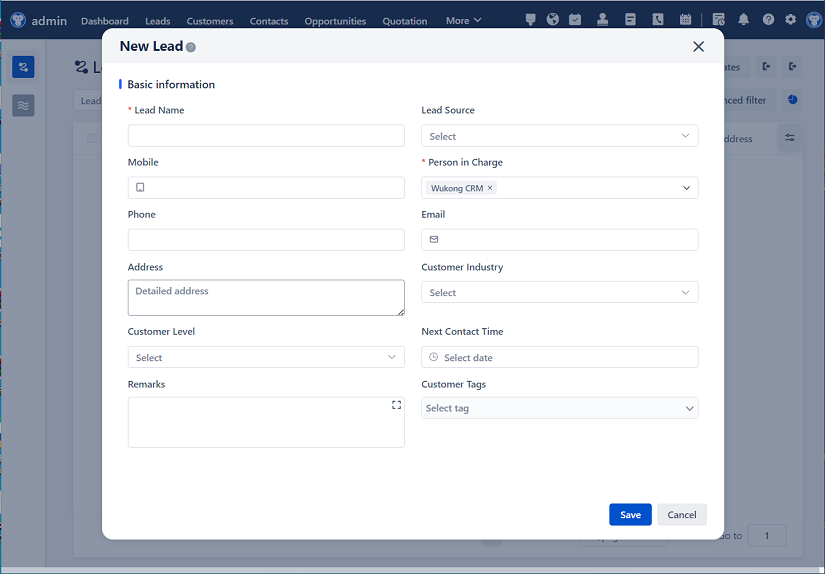
△Click on the top right corner to try Wukong CRM for free