
△Click on the top right corner to try Wukong CRM for free
So, you’re thinking about getting a CRM system for your business, huh? That’s actually a really smart move — I’ve seen so many companies completely turn things around once they started using one. But here’s the thing everyone asks me: “How much does a CRM system actually cost?” Honestly, that’s not a simple question to answer, because the price can vary a lot. Like, seriously — from basically free to thousands of dollars a month. It really depends on what you need and what kind of business you’re running.
Let me break it down for you. First off, most CRM systems today are cloud-based, which means you pay a monthly subscription per user. That’s the standard model now. So if you’ve got five people on your team who need access, you’ll be paying for five seats. Simple enough, right? But even within that model, prices can swing wildly.
For small businesses or startups, you’ve got some pretty affordable options. I’m talking about platforms like HubSpot CRM, Zoho CRM, or Freshsales. These guys usually have free versions — yes, free — that give you basic contact management, deal tracking, and email integration. That’s actually perfect if you’re just getting started and don’t want to spend a dime. But of course, there are limits. You won’t get advanced automation or deep reporting, but hey, it’s free, so you can’t complain too much.
Now, if you want more features, you’ll need to upgrade. And that’s where the pricing starts to climb. For example, HubSpot’s paid plans start around
But let’s say you’re not a tiny startup anymore. Maybe you’ve got 20, 50, or even 100 employees. Now we’re talking about mid-sized or enterprise-level businesses. At this point, you’re probably looking at more powerful CRMs like Salesforce, Microsoft Dynamics 365, or Pipedrive’s higher tiers. And guess what? The prices go up — fast.
Salesforce, for example, starts at around
Then there’s Microsoft Dynamics 365. Their CRM modules start around $65 per user per month, but again, you’ll likely need multiple modules and integrations, which adds up. Plus, implementation can be a headache without the right support. I’ve seen companies spend way more on consulting and setup than on the actual software.
Now, here’s something people often forget: the subscription cost is just the beginning. There are other expenses you need to think about. For example, implementation. If you’re moving from spreadsheets or an old system, you’ll probably need help setting everything up. Data migration, user training, custom workflows — all of that takes time and money. Some companies hire consultants, which can cost thousands, especially for larger deployments.
And don’t forget about integrations. Most CRMs need to connect with your email, calendar, marketing tools, maybe even your accounting software. Some integrations are built-in and free, but others require third-party tools like Zapier or custom API work. That’s another cost to consider.

Then there’s customization. If your sales process is unique, you might need to tweak the CRM to fit your workflow. Adding custom fields, automating specific tasks, building reports — all of that can require technical know-how. Some CRMs make this easy with drag-and-drop tools, but others need developers. And developers aren’t cheap.
Oh, and what about mobile access? Most CRMs have mobile apps these days, but sometimes advanced features are limited on mobile. If your team is always on the go, you’ll want to make sure the mobile experience is solid. That might influence which CRM you pick — and yes, that could affect cost if one platform charges extra for full mobile functionality.
Another thing: user adoption. I can’t tell you how many companies I’ve seen spend a ton on a CRM only for their team to ignore it. Why? Because it’s too complicated, or they weren’t trained properly. So you’ve got to factor in training costs — whether it’s internal time or hiring a trainer. And if you don’t get your team on board, that expensive CRM is just collecting digital dust.
Now, let’s talk about scalability. You might start with 10 users, but what if you grow to 100 in two years? Some CRMs offer volume discounts, but others don’t. And switching CRMs later is a nightmare — data migration, retraining, downtime. So it’s worth thinking long-term. Paying a bit more now for a system that can grow with you might save you headaches (and money) down the road.
Industry also plays a role. A real estate agency might need different features than a SaaS company or a nonprofit. Some CRMs are built for specific industries — like Salesforce Health Cloud or HubSpot for marketing-heavy businesses. These specialized versions often cost more, but they come with pre-built templates and workflows that save time.
And let’s not ignore support. Basic plans usually come with email support or a knowledge base. But if you want phone support, faster response times, or dedicated account managers, that usually costs extra. For mission-critical systems, that might be worth it. I mean, imagine your sales team can’t access the CRM during a big product launch — that’s bad news.
So, putting it all together, what’s the real cost in 2025? For a small business, you’re probably looking at
But here’s my advice: don’t just look at the sticker price. Think about the value. How much time will your team save? How many more deals could you close with better tracking? What’s the cost of losing a lead because it fell through the cracks? A good CRM can pay for itself in just a few months.
Also, take advantage of free trials. Almost every CRM offers a 14- to 30-day trial. Use that time to test it with your team. See how it feels, how easy it is to use, whether it fits your workflow. Don’t rush into a decision just because one looks flashy.
And don’t be afraid to negotiate. Especially if you’re signing a yearly contract or adding a lot of users, vendors might give you a discount. I’ve seen companies save 10–20% just by asking.

Finally, keep an eye on new trends in 2025. AI is becoming a bigger part of CRM — think predictive lead scoring, automated email suggestions, chatbots. These features are awesome, but they often come at a premium. So if you want AI-powered insights, be ready to pay more.

At the end of the day, the right CRM isn’t the cheapest one — it’s the one that helps your team sell more, serve customers better, and grow your business. So do your homework, talk to real users, test a few options, and pick the one that fits your needs — not just your budget.
FAQs (Frequently Asked Questions)
Q: Is there really a free CRM that’s actually good?
A: Yes! HubSpot CRM and Zoho CRM both have solid free versions. They’re great for small teams or solopreneurs who need basic contact and deal tracking. Just know you’ll hit limits if you scale.
Q: Can I switch CRMs later if I change my mind?
A: Technically, yes — but it’s a pain. Data migration, retraining, lost workflows. That’s why it’s better to pick one that can grow with you, even if it costs a bit more upfront.
Q: Why do CRM prices vary so much?
A: It depends on features, number of users, customization, support, and industry focus. A simple CRM for a small team won’t cost the same as a full enterprise system with AI and deep integrations.
Q: Do I have to pay annually, or can I go month-to-month?
A: Most vendors offer both. Monthly is more flexible, but annual plans usually come with a discount — often 10–20% off.
Q: What’s the most common hidden cost with CRMs?
A: Implementation and training. People forget how much time and money it takes to set up properly, migrate data, and get everyone using it.
Q: How many users do I need to start seeing ROI?
A: Even one user can see benefits — like better organization and follow-ups. But ROI really kicks in when your whole sales or customer service team is using it consistently.
Q: Are open-source CRMs cheaper?
A: The software might be free, but you’ll likely spend more on hosting, customization, and IT support. For most businesses, a hosted SaaS CRM is easier and more cost-effective.
Q: Should I choose a CRM based on price or features?
A: Neither — choose based on fit. The best CRM is the one your team will actually use and that aligns with your business goals. Price and features matter, but usability matters more.
Related links:
Free trial of CRM
Understand CRM software
AI CRM Systems
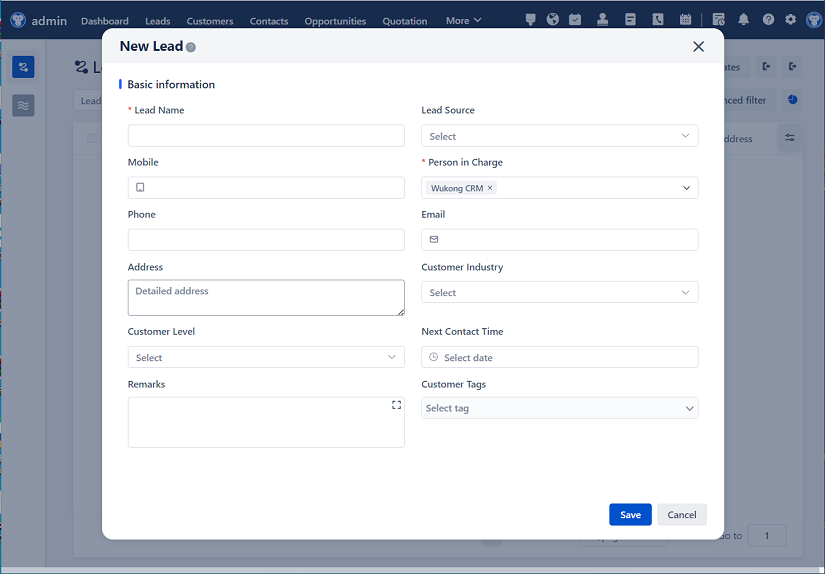
△Click on the top right corner to try Wukong CRM for free