
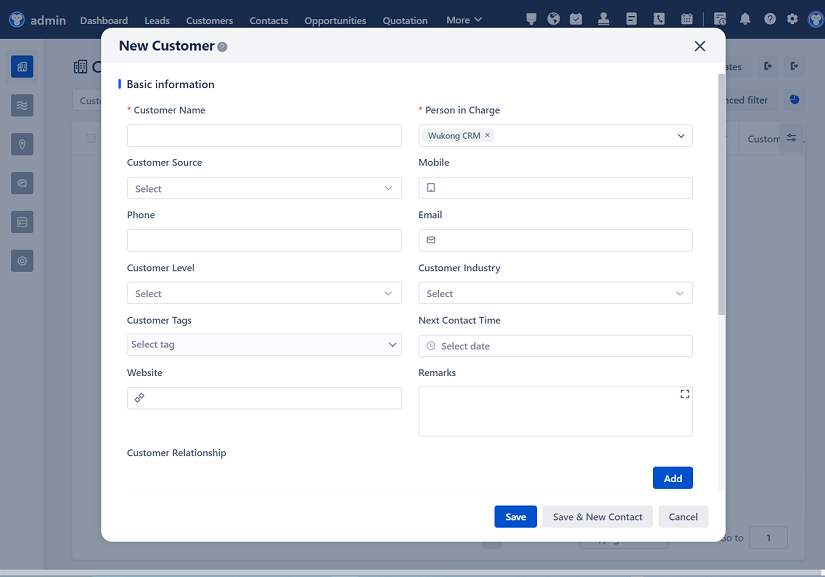
△Click on the top right corner to try Wukong CRM for free
Hey There, Let's Talk About CRM Data Import
Hey, how’s it going? I hope you’re doing well. Today, I want to chat with you about something that might sound a bit technical, but trust me, it’s super important for businesses of all sizes: CRM data import. Now, if you’re not familiar with what a CRM is, no worries! It stands for Customer Relationship Management, and it’s basically a tool that helps companies keep track of their interactions with customers, manage sales, and improve customer service. So, let’s dive in, shall I?
First things first, why would anyone need to import data into a CRM system? Well, imagine you’ve been using spreadsheets or some other method to keep track of your customers, and now you want to move all that information into a more organized and efficient system. That’s where data import comes in. It’s like moving all your stuff from a cluttered garage into a neat, organized storage unit.
Now, before we get too far, let’s talk about the types of data you might be importing. You could have customer names, contact details, purchase history, and even notes on past interactions. All of this information is gold when it comes to understanding your customers better and providing them with the best possible experience. So, it’s really important to make sure everything gets imported correctly.
Alright, so how do you actually go about importing this data? Well, most CRM systems offer a few different ways to do it. One common method is through a CSV (Comma-Separated Values) file. If you’ve ever worked with Excel, you know what I’m talking about. It’s just a simple text file where each piece of data is separated by a comma. Easy, right? Another way is through direct integration with other tools or platforms you might already be using, like email marketing software or e-commerce platforms. This can save you a ton of time and effort, especially if you have a lot of data to transfer.
But here’s the thing: data import isn’t always as straightforward as it sounds. Sometimes, you might run into issues like duplicate entries, missing fields, or even formatting problems. These can be a real headache, but don’t worry, there are ways to handle them. For example, many CRM systems have built-in tools to help you clean up your data before you import it. You can also use third-party tools or services to help with the process. The key is to take your time and make sure everything is as accurate as possible.
Speaking of accuracy, let’s talk about data validation. This is a crucial step in the import process. Basically, you want to make sure that the data you’re bringing into your CRM is correct and complete. Imagine if you had a customer’s phone number wrong or missed an important note about their preferences. That could lead to some pretty awkward situations, right? So, before you hit that import button, double-check everything. Most CRM systems will give you a preview of what the imported data will look like, so you can catch any errors before they become a problem.

Another thing to consider is the timing of your data import. If you’re migrating from an old system to a new one, you might want to do the import during off-peak hours to avoid disrupting your team’s workflow. For example, if you’re a retail business, you might want to do the import late at night or early in the morning when the store is closed. This way, everyone can start fresh with the new system without any hiccups.
Now, let’s talk about the benefits of a successful data import. First and foremost, having all your customer data in one place makes it much easier to manage. You can see at a glance who your customers are, what they’ve bought, and how they’ve interacted with your company. This can be a game-changer for your sales and marketing efforts. For example, you can use the data to create targeted campaigns, send personalized emails, and even predict future buying behavior. It’s like having a crystal ball, but for your business!
Another big benefit is improved customer service. When your support team has access to all the relevant information about a customer, they can provide a much more personalized and efficient service. No more asking the same questions over and over again or digging through multiple systems to find the right information. Everything is right there, ready to go. This can lead to happier customers and, ultimately, more repeat business.

Of course, there are some challenges to be aware of as well. One of the biggest is ensuring data security. When you’re moving sensitive information like customer contact details and purchase history, you need to make sure it’s protected. Most CRM systems have robust security features, but it’s still a good idea to follow best practices like using strong passwords, enabling two-factor authentication, and limiting access to only those who need it. Trust me, the last thing you want is a data breach on your hands.

Another challenge is keeping the data up-to-date. Once you’ve imported all that information, it’s not a set-it-and-forget-it kind of deal. You need to make sure that the data stays current and relevant. This means regularly updating it with new information, removing outdated or incorrect data, and making sure that everyone in your organization is following the same processes. It can be a bit of a chore, but it’s worth it in the long run.
So, what are some best practices for a smooth data import? First, plan ahead. Make sure you have a clear understanding of what data you need to import and how it should be formatted. Second, clean your data before you import it. This means removing duplicates, filling in missing fields, and making sure everything is consistent. Third, test, test, test. Before you do a full import, try a small batch to make sure everything is working as expected. And finally, communicate with your team. Let them know what’s happening, when it’s happening, and how it will affect them. This can help minimize disruptions and ensure a smoother transition.
Alright, I think that covers the basics of CRM data import. It’s a bit of a process, but the benefits are definitely worth it. Having all your customer data in one place, easily accessible, and up-to-date can make a huge difference in how you run your business. So, if you’re thinking about making the switch, go for it! Just remember to take your time, be thorough, and don’t hesitate to reach out for help if you need it.
Some Questions and Answers
Q: What is a CRM, and why is it important? A: A CRM, or Customer Relationship Management system, is a tool that helps businesses keep track of their interactions with customers, manage sales, and improve customer service. It’s important because it allows you to organize and analyze customer data, which can help you provide better service and make more informed decisions.

Q: What types of data can I import into a CRM? A: You can import a variety of data, including customer names, contact details, purchase history, and notes on past interactions. Essentially, any information that helps you understand and serve your customers better.

Q: How do I import data into a CRM? A: There are a few ways to do it. One common method is through a CSV file, which is a simple text file where each piece of data is separated by a comma. You can also use direct integrations with other tools or platforms you’re already using, like email marketing software or e-commerce platforms.

Q: What are some common issues I might face during data import? A: Some common issues include duplicate entries, missing fields, and formatting problems. To handle these, you can use built-in tools in your CRM or third-party services to clean up your data before importing. It’s also a good idea to double-check everything and use the preview feature to catch any errors.
Q: Why is data validation important during the import process? A: Data validation is crucial because it ensures that the data you’re bringing into your CRM is correct and complete. If you have inaccurate or incomplete data, it can lead to mistakes and poor customer experiences. Most CRM systems will give you a preview of the imported data, so you can catch and fix any errors before they become a problem.
Q: What are the benefits of a successful data import? A: The main benefits include having all your customer data in one place, which makes it easier to manage and analyze. This can improve your sales and marketing efforts, as well as your customer service. With all the relevant information at your fingertips, you can provide a more personalized and efficient service, leading to happier customers and more repeat business.
Q: What are some best practices for a smooth data import? A: First, plan ahead and make sure you know what data you need and how it should be formatted. Second, clean your data before importing it to remove duplicates and fill in missing fields. Third, test a small batch of data to make sure everything is working as expected. Finally, communicate with your team to let them know what’s happening and how it will affect them. This can help minimize disruptions and ensure a smoother transition.

I hope this helps, and if you have any more questions, feel free to ask!
Related links:
Free trial of CRM
Understand CRM system
AI CRM Systems
△Click on the top right corner to try Wukong CRM for free