
△Click on the top right corner to try Wukong CRM for free
Hey there, it's really interesting to dive into the size of the CRM (Customer Relationship Management) market in China. You know, as someone who’s been keeping an eye on this space, I can tell you that it's a pretty big deal. Let me break it down for you.
First off, you might be wondering, "Why is the CRM market in China so significant?" Well, it's all about the numbers, my friend. With over 1.4 billion people, China has one of the largest and most dynamic consumer markets in the world. And when you have that many potential customers, businesses need to get smart about how they manage their relationships. That's where CRM comes in.

Now, let's talk about the growth. Over the past few years, the CRM market in China has been expanding like crazy. It's not just because of the sheer number of people; it's also due to the rapid digital transformation happening across the country. More and more companies are realizing that to stay competitive, they need to leverage technology to better understand and serve their customers. And that's exactly what CRM systems do—they help businesses keep track of customer interactions, preferences, and feedback, all in one place.
But here's the thing: the Chinese market is unique. Unlike in the West, where CRM solutions have been around for a while, the concept is still relatively new in China. This means there's a lot of room for growth and innovation. Companies are constantly looking for ways to tailor their CRM strategies to fit the local market, which is why we're seeing a lot of exciting developments in this space.
One of the key drivers of this growth is the rise of e-commerce. You see, with platforms like Alibaba, JD.com, and Pinduoduo, online shopping has become a way of life for many Chinese consumers. And these e-commerce giants are using CRM to enhance the customer experience, from personalized recommendations to seamless after-sales support. It's not just the big players, though. Small and medium-sized enterprises (SMEs) are also jumping on the CRM bandwagon, recognizing that it's a powerful tool for building long-term relationships with their customers.

Another factor that's contributing to the growth of the CRM market in China is the increasing importance of data. In today's digital age, data is king, and businesses are hungry for insights that can help them make better decisions. CRM systems are great at collecting and analyzing data, which is why they're becoming indispensable for companies that want to stay ahead of the curve. Whether it's understanding customer behavior, predicting trends, or optimizing marketing campaigns, CRM is the go-to solution.

And let's not forget about the role of mobile technology. In China, almost everyone has a smartphone, and they use it for everything from shopping to banking to socializing. This has led to a surge in mobile CRM solutions, which allow businesses to engage with their customers on the go. It's all about being where your customers are, and in China, that means being on their phones.
So, what does the future look like for the CRM market in China? Well, if current trends are any indication, it's going to be huge. Analysts predict that the market will continue to grow at a steady pace, driven by factors like the increasing adoption of cloud-based solutions, the integration of AI and machine learning, and the ongoing digital transformation of businesses. Plus, with the government's push for digitalization and the growing emphasis on customer-centric business models, the demand for CRM is only going to increase.

But it's not all smooth sailing. There are challenges, too. For one, the market is highly competitive, with both domestic and international players vying for a piece of the pie. This means that companies need to be innovative and agile to stand out. Additionally, there are concerns around data privacy and security, which are becoming increasingly important as more and more sensitive information is stored in CRM systems. Businesses need to ensure that they're handling customer data responsibly and transparently, or they risk losing trust.

Another challenge is the need for customization. As I mentioned earlier, the Chinese market is unique, and what works in other parts of the world may not necessarily work here. Companies need to develop CRM solutions that are tailored to the specific needs and preferences of Chinese consumers. This requires a deep understanding of the local culture, language, and business practices, which can be a tall order for foreign companies.
Despite these challenges, the opportunities in the CRM market in China are immense. For businesses that are willing to invest in the right tools and strategies, the rewards can be substantial. By leveraging CRM, companies can build stronger, more meaningful relationships with their customers, leading to increased loyalty, higher sales, and, ultimately, greater success.
So, if you're thinking about entering the CRM market in China, or if you're already in it and looking to grow, there are a few things you should keep in mind. First, make sure you understand the local market. Do your research, talk to experts, and, if possible, partner with local companies that have a deep understanding of the Chinese business landscape. Second, focus on innovation. The market is evolving rapidly, and staying ahead of the curve is crucial. Finally, prioritize data security and privacy. In a world where data breaches are becoming more common, customers need to know that their information is safe with you.
In conclusion, the CRM market in China is a vibrant and rapidly growing space, full of opportunities and challenges. With the right approach, businesses can tap into this market and reap the benefits of improved customer relationships, enhanced data insights, and, ultimately, greater success. So, if you're ready to take the plunge, now is the time to do it. The future is bright, and the possibilities are endless.
Q&A:
-
What makes the CRM market in China so significant?

- The CRM market in China is significant because of the country's massive population and the rapid digital transformation. With over 1.4 billion people, there's a huge potential for businesses to connect with and serve customers, and CRM systems help them do that more effectively.
-
How has the rise of e-commerce impacted the CRM market in China?
- The rise of e-commerce has had a huge impact on the CRM market in China. Platforms like Alibaba, JD.com, and Pinduoduo are using CRM to enhance the customer experience, from personalized recommendations to seamless after-sales support. This has made CRM a must-have for businesses in the e-commerce space.
-
What are some of the key drivers of the CRM market growth in China?

- Some key drivers include the increasing importance of data, the rise of mobile technology, and the growing emphasis on customer-centric business models. Additionally, the government's push for digitalization and the adoption of cloud-based solutions are also driving the market forward.
-
What challenges does the CRM market in China face?
- The market faces several challenges, including high competition, concerns around data privacy and security, and the need for customization. Companies need to be innovative, handle customer data responsibly, and develop solutions that are tailored to the specific needs of Chinese consumers.
-
What advice would you give to businesses looking to enter the CRM market in China?
- If you're looking to enter the CRM market in China, make sure you understand the local market, focus on innovation, and prioritize data security and privacy. Partnering with local companies and staying ahead of the curve can also be very beneficial.
Related links:
Free trial of CRM
Understand CRM system
AI CRM Systems
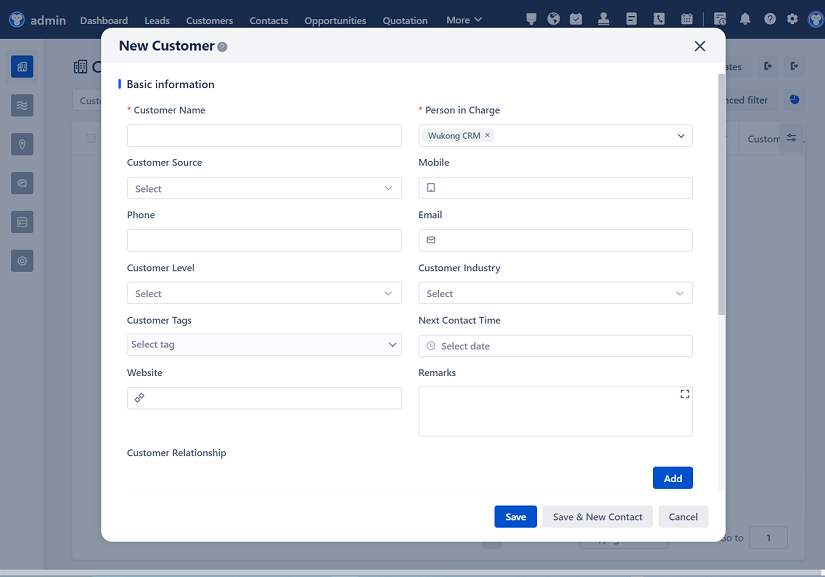
△Click on the top right corner to try Wukong CRM for free