
△Click on the top right corner to try Wukong CRM for free
Sure, let's dive into the world of CRM (Customer Relationship Management) systems and their database structures. I'll try to keep it as conversational as possible, just like we're having a chat over coffee.

Hey there! So, you’re curious about the database structure of CRM systems, huh? Well, you’ve come to the right place. Let’s break it down in a way that’s easy to understand, without all the technical jargon.
First things first, what is a CRM system? Think of it as a digital Rolodex on steroids. It’s a tool that helps businesses manage their interactions with customers and potential customers. But it’s not just about storing contact information; it’s about tracking every touchpoint, from emails and phone calls to sales and support tickets.

Now, let’s talk about the database. The database is the heart of any CRM system. It’s where all the data is stored, organized, and managed. Imagine a giant filing cabinet, but instead of paper, it’s filled with digital records. These records can be anything from customer names and addresses to purchase histories and support tickets.
So, what does this database look like? Well, it’s made up of tables, which are like spreadsheets. Each table has columns and rows, just like a spreadsheet. The columns represent different types of data, and the rows represent individual records. For example, you might have a table called "Customers" with columns for "Name," "Email," "Phone Number," and "Address."
But wait, there’s more! A CRM database isn’t just one big table. It’s actually a collection of related tables. This is where the magic happens. By linking these tables together, you can create a rich, interconnected web of data. For example, you might have a "Sales" table that links to the "Customers" table, so you can see all the sales associated with each customer.

Let’s take a closer look at some of the key tables you might find in a CRM database:
-
Customers Table: This is the main table where you store all the basic information about your customers. As I mentioned earlier, it includes fields like "Name," "Email," "Phone Number," and "Address." But it can also include other details like "Date of Birth," "Company Name," and "Job Title." This table is the foundation of your CRM system, and everything else builds on top of it.
-
Contacts Table: Sometimes, you need to track multiple contacts within a single company. That’s where the "Contacts" table comes in. It’s similar to the "Customers" table, but it’s designed to store information about individual people within a company. You might have fields like "First Name," "Last Name," "Email," "Phone Number," and "Title." And, of course, it’s linked back to the "Customers" table, so you can see which contacts belong to which companies.
-
Sales Table: This table is where you track all the sales transactions. It might include fields like "Order ID," "Customer ID," "Product ID," "Quantity," "Price," and "Date." The "Customer ID" field is a link back to the "Customers" table, so you can see which customer made the purchase. Similarly, the "Product ID" field links to a "Products" table, which we’ll talk about next.

-
Products Table: If you sell products, you’ll need a table to store all the product information. This might include fields like "Product ID," "Name," "Description," "Price," and "Category." The "Product ID" is used to link back to the "Sales" table, so you can see which products were sold in each transaction.

-
Support Tickets Table: Customer support is a big part of CRM, and this table is where you track all the support tickets. It might include fields like "Ticket ID," "Customer ID," "Subject," "Description," "Status," and "Date Created." The "Customer ID" field links back to the "Customers" table, so you can see which customer submitted the ticket.
-
Marketing Campaigns Table: If you run marketing campaigns, you’ll want to track them in your CRM. This table might include fields like "Campaign ID," "Name," "Start Date," "End Date," "Budget," and "Status." You might also have a "Campaigns_Contacts" table that links the "Campaigns" table to the "Contacts" table, so you can see which contacts were targeted in each campaign.
-
Interactions Table: This table is where you track all the interactions with your customers, whether it’s an email, a phone call, or a meeting. It might include fields like "Interaction ID," "Customer ID," "Type," "Date," "Time," and "Notes." The "Customer ID" field links back to the "Customers" table, so you can see which customer was involved in the interaction.
-
Opportunities Table: If you’re in sales, you know that not every lead turns into a sale. The "Opportunities" table is where you track potential sales. It might include fields like "Opportunity ID," "Customer ID," "Product ID," "Expected Close Date," "Probability," and "Value." The "Customer ID" and "Product ID" fields link back to the "Customers" and "Products" tables, respectively.

-
Tasks Table: Finally, you might have a "Tasks" table to track all the tasks related to your customers. This might include fields like "Task ID," "Customer ID," "Description," "Due Date," "Assigned To," and "Status." The "Customer ID" field links back to the "Customers" table, so you can see which customer the task is related to.

Okay, so now you have a bunch of tables, and they’re all linked together. But how do you make sure the data stays organized and consistent? That’s where relationships come in. In a database, relationships are the rules that define how the tables are connected. There are three main types of relationships: one-to-one, one-to-many, and many-to-many.
-
One-to-One Relationship: This is when one record in one table is linked to exactly one record in another table. For example, you might have a "Users" table and a "Profiles" table, where each user has exactly one profile.

-
One-to-Many Relationship: This is the most common type of relationship. It’s when one record in one table is linked to many records in another table. For example, one customer in the "Customers" table can have many sales in the "Sales" table.

-
Many-to-Many Relationship: This is when many records in one table are linked to many records in another table. For example, a "Campaigns_Contacts" table might link many campaigns to many contacts. To handle this, you typically use a junction table, which is a table that sits between the two tables and contains foreign keys from both.
Alright, so we’ve talked about the tables and the relationships. But how do you actually design a CRM database? Well, it starts with understanding your business needs. What kind of data do you need to track? Who will be using the CRM, and what do they need to do with the data? Once you have a clear idea of your requirements, you can start sketching out the tables and the relationships.
One of the most important things to consider is normalization. Normalization is the process of organizing the data in a way that reduces redundancy and dependency. There are several levels of normalization, but the most common ones are First Normal Form (1NF), Second Normal Form (2NF), and Third Normal Form (3NF).
-
First Normal Form (1NF): This means that each column in a table contains only atomic (indivisible) values. For example, you wouldn’t have a column called "Full Name" that contains both the first name and last name. Instead, you’d have separate columns for "First Name" and "Last Name."

-
Second Normal Form (2NF): This means that the table is in 1NF and all non-key columns are fully dependent on the primary key. For example, if you have a "Orders" table with a primary key of "Order ID," then all the other columns (like "Customer ID," "Product ID," and "Quantity") should depend on the "Order ID."
-
Third Normal Form (3NF): This means that the table is in 2NF and all non-key columns are independent of each other. For example, if you have a "Customers" table with a primary key of "Customer ID," then you wouldn’t have a column for "City" and "State" in the same table. Instead, you’d have a separate "Addresses" table with a primary key of "Address ID," and you’d link it back to the "Customers" table.
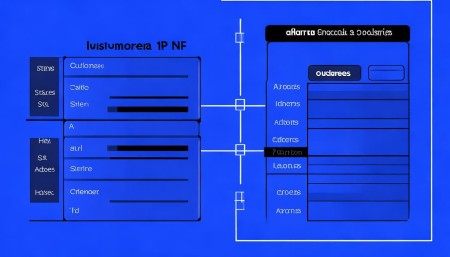
Normalization is important because it helps ensure that your data is clean, consistent, and efficient. But it’s also a bit of a balancing act. Over-normalizing can make your database more complex and harder to query, so you need to find the right balance for your specific needs.
Once you’ve designed your database, you need to choose a database management system (DBMS) to implement it. There are lots of options out there, from open-source solutions like MySQL and PostgreSQL to commercial solutions like Oracle and Microsoft SQL Server. The choice depends on your specific requirements, budget, and existing infrastructure.
Finally, let’s talk about some best practices for maintaining your CRM database. First and foremost, make sure you have a good backup strategy. Data loss can be catastrophic, so you need to have regular backups and a plan for restoring the data if something goes wrong.
Next, keep your data clean and up-to-date. This means regularly removing duplicates, correcting errors, and updating outdated information. You might also want to set up some automated processes to help with this, like data validation rules and scheduled cleanup scripts.
Security is also a big deal. Make sure you have strong access controls, so only authorized users can view and modify the data. You might also want to encrypt sensitive data, both in transit and at rest, to protect it from unauthorized access.
Lastly, don’t forget about performance. As your database grows, it can become slower and less responsive. To keep it running smoothly, you might need to optimize your queries, add indexes, and even scale up your hardware. Regularly monitoring and tuning your database can help you stay ahead of performance issues.
Well, that’s a lot to digest, but I hope it gives you a good overview of the database structure of CRM systems. It’s a complex topic, but once you get the hang of it, it can be incredibly powerful. If you have any questions, feel free to ask!
Q: Why is normalization important in a CRM database? A: Normalization is important because it helps reduce redundancy and ensures that the data is consistent and efficient. By organizing the data in a structured way, you can avoid issues like duplicate data, inconsistent updates, and wasted storage space. It also makes it easier to maintain and query the database, which is crucial for a CRM system that needs to handle a lot of data.
Q: How do I choose the right DBMS for my CRM system? A: Choosing the right DBMS depends on your specific needs, budget, and existing infrastructure. Consider factors like scalability, performance, security, and ease of use. Open-source solutions like MySQL and PostgreSQL are great for smaller projects or those on a tight budget, while commercial solutions like Oracle and Microsoft SQL Server offer more advanced features and support. It’s also a good idea to look at the community and resources available for each DBMS, as this can make a big difference in the long run.
Q: What are some common challenges in maintaining a CRM database? A: Some common challenges include keeping the data clean and up-to-date, ensuring data security, and maintaining good performance as the database grows. Duplicates, errors, and outdated information can quickly become a problem, so you need to have a good data management strategy. Security is also a big concern, especially with sensitive customer data. And as the database gets larger, performance can suffer, so you need to regularly monitor and optimize the system.
Q: Can I customize the database structure of a CRM system? A: Yes, you can often customize the database structure of a CRM system, depending on the platform you’re using. Many CRM systems allow you to add custom fields, create new tables, and define your own relationships. However, it’s important to be careful with customization, as it can make the system more complex and harder to maintain. Always test your changes thoroughly and document them well, so you can revert if needed.
Q: How do I ensure data consistency across multiple tables in a CRM database? A: Ensuring data consistency across multiple tables involves using proper relationships and constraints. For example, you can use foreign keys to link related tables, and you can use unique and check constraints to enforce data integrity. Regularly validating and cleaning the data is also important. You might also want to use triggers or stored procedures to automatically update related data when changes are made. Finally, having a good data governance policy and training your users on best practices can go a long way in maintaining data consistency.

Related links:
Free trial of CRM
Understand CRM system
AI CRM Systems
△Click on the top right corner to try Wukong CRM for free