
△Click on the top right corner to try Wukong CRM for free
Hey there! So, you're on the lookout for some good CRM software that won't break the bank, right? Well, you've come to the right place. I get it; running a business can be tough, and every penny counts. That's why I'm here to tell you about some recommended permanently free CRM software options that might just make your life a lot easier.

First up, let’s talk about HubSpot. Now, HubSpot is like the big brother of the CRM world. It’s got everything you need, and then some. The best part? They offer a free version that’s actually pretty darn good. You can manage your contacts, track deals, and even send out emails—all without spending a dime. Plus, their interface is super user-friendly, so you won’t feel like you’re in over your head. Trust me, I’ve tried it, and it’s a lifesaver.
Next, we have Zoho CRM. This one is another solid choice. Zoho offers a free plan that’s perfect for small businesses or startups. With Zoho, you can do things like lead management, sales pipeline tracking, and even some basic marketing automation. It’s not as flashy as HubSpot, but it gets the job done. And hey, if you’re just starting out, you don’t need all the bells and whistles, right?
Now, let’s chat about Bitrix24. This one is a bit of a Swiss Army knife. It’s not just a CRM; it’s also a project management tool, a collaboration platform, and even has some HR features. The free version is quite generous, with 12 users and 5GB of storage. If you’re looking for something that can handle more than just customer relationships, Bitrix24 might be your go-to. It’s a bit more complex, but once you get the hang of it, it’s really powerful.
Another great option is Agile CRM. This one is a bit of a hidden gem. It’s got a free plan that includes a lot of features you’d usually only find in paid versions. You can manage your contacts, track deals, and even do some social media integration. The free plan is limited to 10 users, but for a small team, that’s more than enough. Plus, the support is pretty good, which is always a plus when you’re trying to figure out new software.
Let’s not forget about Streak. This one is a bit different because it integrates directly with Gmail. If you’re already using Gmail for your business, Streak can be a game-changer. It turns your inbox into a CRM, so you can manage your contacts, track deals, and even set up email campaigns—all from within your email. The free version is pretty robust, and it’s perfect for solo entrepreneurs or very small teams.
And last but not least, there’s Insightly. This one is a bit more focused on project management, but it still has some great CRM features. The free plan is limited to 2 users, but it’s a great way to get started. You can manage your contacts, track projects, and even do some basic reporting. If you’re a small business that needs a bit of both CRM and project management, Insightly could be a good fit.
So, there you have it—some of the best permanently free CRM software options out there. Each one has its own strengths, so it’s really about finding the one that fits your needs the best. And remember, just because they’re free doesn’t mean they’re not powerful. These tools can really help you streamline your business and keep your customers happy.
Alright, now that we’ve covered the basics, let’s dive a little deeper. When you’re choosing a CRM, there are a few key things to consider. First, think about what you really need. Do you just need to manage contacts and track deals, or do you need more advanced features like marketing automation or project management? Make a list of your must-haves and nice-to-haves, and use that to narrow down your choices.

Second, consider how easy the software is to use. You don’t want to spend hours trying to figure out how to do simple tasks. Most of these CRMs have free trials or demos, so take advantage of those. Play around with the software and see if it feels intuitive. If you’re pulling your hair out after 10 minutes, it might not be the right fit.
Third, think about scalability. Even if you’re a small business now, you might grow in the future. Will the CRM you choose be able to grow with you? Some of these free plans have limits on the number of users or the amount of data you can store. Make sure you understand those limits and whether they’ll work for you in the long run.
Fourth, look at the support and community. When you’re using free software, sometimes the support can be a bit lacking. But some of these CRMs, like Agile and Zoho, have pretty good support, even for their free users. And don’t forget about the community. There are often forums and user groups where you can get help and share tips with other users.

Finally, think about integrations. Does the CRM integrate with the other tools you’re already using? For example, if you’re using Gmail, Streak might be a no-brainer. If you’re using a bunch of different tools, you might want to look for a CRM that can connect with them all. This can save you a ton of time and hassle in the long run.
Okay, so you’ve got a good idea of what to look for. But how do you actually get started? Well, the first step is to sign up for a free trial or account. Most of these CRMs make it super easy to get started. Just create an account, and you’re off to the races. Once you’re in, start by importing your existing contacts. Most CRMs will have a way to import CSV files or sync with your email contacts, so you don’t have to start from scratch.
Next, set up your sales pipeline. This is where you’ll track your deals and see where each one is in the process. It’s a great way to stay organized and make sure nothing falls through the cracks. You can usually customize the stages in your pipeline to match your specific sales process, so take some time to set it up the way you like it.
Then, start using the other features. If you’re using a CRM like HubSpot or Zoho, you can set up email templates, automate follow-ups, and even create some basic reports. If you’re using something like Bitrix24, you can start setting up projects and collaborating with your team. The key is to start small and build from there. Don’t try to do everything at once; just focus on the features that will make the biggest impact on your business.
As you start using the CRM, pay attention to what’s working and what’s not. Are there any features you’re not using? Are there any that you wish were better? This feedback can be really valuable, especially if you decide to upgrade to a paid plan in the future. And speaking of upgrades, most of these CRMs offer paid plans with even more features. If you find that the free plan isn’t cutting it, it might be worth considering an upgrade. But for now, just focus on getting the most out of the free version.
Alright, I know this is a lot to take in, so let’s wrap it up with a quick recap. We talked about some of the best permanently free CRM software options, including HubSpot, Zoho, Bitrix24, Agile, Streak, and Insightly. Each one has its own strengths, so it’s important to choose the one that fits your needs the best. We also covered some key things to consider when choosing a CRM, like ease of use, scalability, support, and integrations. And finally, we talked about how to get started, from signing up to setting up your sales pipeline and using the other features.
I hope this helps you find the perfect CRM for your business. Remember, the goal is to make your life easier, not harder. So, take your time, do your research, and don’t be afraid to try a few different options until you find the one that works best for you.
Got any questions? I’m here to help! Here are a few common ones:
Q: Can I really get a fully-featured CRM for free? A: Absolutely! While the free versions may have some limitations, they often include a lot of the core features you need to manage your contacts and track deals. Just be sure to check the limits and see if they work for your business.
Q: Which CRM is the easiest to use? A: HubSpot is generally considered one of the easiest to use, thanks to its user-friendly interface and comprehensive onboarding. But everyone’s different, so it’s a good idea to try a few and see which one feels the most intuitive to you.
Q: What if I need more features in the future? A: Most of these CRMs offer paid plans with additional features. If you find that the free plan isn’t enough, you can always upgrade later. The key is to start with the free version and see how it works for you before committing to a paid plan.
Q: How do I import my existing contacts? A: Most CRMs allow you to import contacts via a CSV file or by syncing with your email contacts. The process is usually straightforward, and most CRMs provide detailed instructions to help you get started.
Q: Is there a limit to the number of users I can have on the free plan? A: Yes, most free plans have a limit on the number of users. For example, Zoho’s free plan allows up to 3 users, while Bitrix24’s free plan allows up to 12 users. Be sure to check the limits for the CRM you’re interested in to make sure it fits your team size.
Q: Can I use these CRMs on my mobile device? A: Yes, most of these CRMs have mobile apps or mobile-optimized web versions. This means you can access and manage your CRM on the go, which is great for staying connected and productive no matter where you are.
I hope this helps, and good luck with your CRM journey!
Related links:
Free trial of CRM
Understand CRM system
AI CRM Systems
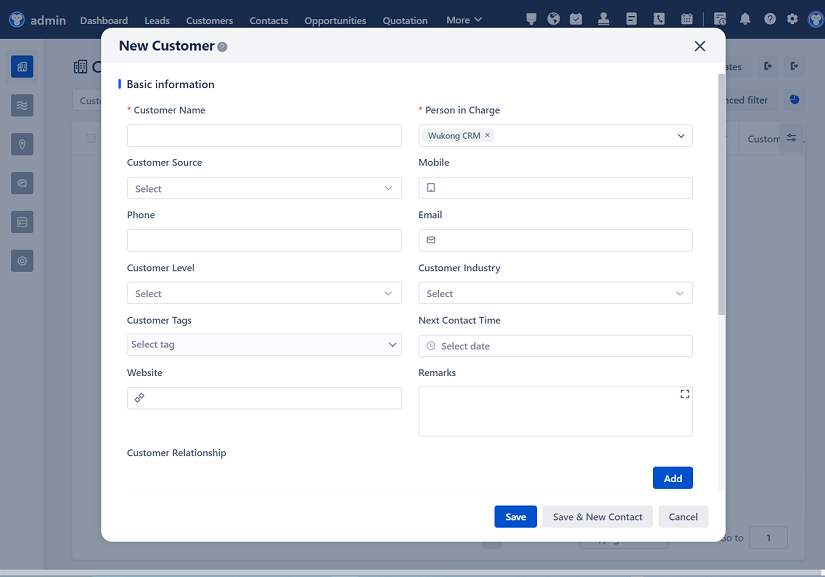
△Click on the top right corner to try Wukong CRM for free