
△Click on the top right corner to try Wukong CRM for free
Hey there! So, you're on the lookout for a good open-source CRM system, huh? Well, you've come to the right place. I get it; finding the perfect CRM can feel like searching for a needle in a haystack. But don't worry, I'm here to help you out. Let's dive into some of the best open-source CRM systems that are worth your time and effort.
First up, we have SuiteCRM. Now, this one is a real gem. It’s like having a Swiss Army knife for your business. You know how sometimes you just need something that does a bit of everything? That’s exactly what SuiteCRM is all about. It’s packed with features like sales force automation, marketing campaigns, and customer support. Plus, it’s super customizable, so you can tweak it to fit your specific needs. Trust me, once you start using it, you’ll wonder how you ever managed without it.
Next, let’s talk about Odoo. Oh, where do I even begin with this one? Odoo is like a one-stop shop for all your business needs. It’s not just a CRM; it’s a whole suite of business applications. From project management to e-commerce, Odoo has got you covered. The beauty of Odoo is that it’s modular, which means you can pick and choose the apps you need. And if you’re worried about the learning curve, don’t be. The community around Odoo is incredibly supportive, and there are tons of resources to help you get started.
Now, if you’re looking for something a bit more straightforward, you might want to check out EspoCRM. This one is like the little engine that could. It’s lightweight, easy to use, and doesn’t overwhelm you with too many features. But don’t let its simplicity fool you—EspoCRM is still a powerful tool. It’s great for small to medium-sized businesses that need a no-nonsense CRM solution. Plus, the user interface is clean and intuitive, so you won’t spend hours trying to figure out how to use it.
Another one that’s definitely worth mentioning is CiviCRM. Now, this one is a bit different from the others. CiviCRM is specifically designed for non-profits, NGOs, and other civic organizations. If you’re working in the non-profit sector, this is the CRM for you. It’s built to handle things like donor management, event planning, and volunteer coordination. And the best part? It integrates seamlessly with popular content management systems like WordPress and Drupal. So, if you’re already using one of those, CiviCRM will fit right in.
Let’s not forget about Vtiger. This one is like the old reliable. Vtiger has been around for a while, and it’s got a solid track record. It’s a full-featured CRM that covers all the bases, from sales and marketing to customer service. One of the things I love about Vtiger is its flexibility. You can customize it to your heart’s content, and there are plenty of extensions and add-ons available to enhance its functionality. Plus, the community is really active, so you’ll always find someone to help you out if you run into any issues.
And then there’s Dolibarr. This one is a bit of a hidden gem. Dolibarr is an ERP and CRM system rolled into one, making it a great choice for small businesses that need a bit more than just a CRM. It’s got all the usual CRM features, but it also includes modules for accounting, inventory management, and HR. The interface is simple and user-friendly, and it’s easy to set up and get running. Plus, it’s available in multiple languages, which is a huge plus if you’re working with a multilingual team.
So, there you have it—a rundown of some of the best open-source CRM systems out there. Each one has its own strengths, so it really depends on what you need. If you’re looking for something comprehensive and highly customizable, SuiteCRM or Odoo might be your best bet. For a simpler, more straightforward solution, EspoCRM is a great choice. If you’re in the non-profit world, CiviCRM is tailor-made for you. And if you need a reliable, full-featured CRM, Vtiger and Dolibarr are both excellent options.
I hope this helps you narrow down your choices. Remember, the key is to find a CRM that fits your specific needs and is easy for your team to use. Don’t be afraid to try a few out and see which one feels right. After all, the best CRM is the one that works for you.
Alright, now that we’ve covered the basics, let’s wrap things up with a few questions and answers. I’m sure you’ve got some burning questions, so let’s dive in!
Q: What if I need a CRM that can integrate with my existing tools? A: Great question! Most of the CRMs I mentioned, like SuiteCRM, Odoo, and Vtiger, have robust integration capabilities. They can connect with a wide range of third-party tools, including email services, marketing platforms, and even custom-built applications. Just make sure to check the integration options before you commit to one.
Q: How do I decide which CRM is the best fit for my business? A: It really comes down to your specific needs and the size of your business. Start by listing out the features you absolutely need, and then look at the CRMs that offer those. Consider factors like ease of use, customization, and community support. It’s also a good idea to try out a few demos or free trials to see which one feels the most intuitive for your team.
Q: Are these CRMs suitable for large enterprises? A: While these CRMs are generally more suited for small to medium-sized businesses, some of them, like Odoo and Vtiger, can scale up to meet the needs of larger enterprises. However, if you’re a large enterprise, you might want to consider enterprise-level solutions that offer more advanced features and support. It’s always a good idea to consult with a CRM expert to make sure you’re choosing the right one.
Q: Can I get professional support for these open-source CRMs? A: Absolutely! Many of these CRMs offer professional support services, either directly from the developers or through certified partners. For example, SuiteCRM and Vtiger both have extensive networks of partners who can provide implementation, training, and ongoing support. It’s a good investment if you want to ensure a smooth setup and operation.

Q: Is it difficult to migrate from one CRM to another? A: Migrating from one CRM to another can be a bit of a challenge, but it’s definitely doable. The key is to plan ahead and make sure you have a clear migration strategy. Most CRMs offer data export and import tools, and there are also third-party services that can help with the transition. Just make sure to back up your data and test the migration thoroughly before going live.
Well, that’s it for now! I hope this helps you find the perfect CRM for your business. If you have any more questions, feel free to reach out. Good luck, and happy CRM hunting!

Related links:
Free trial of CRM
Understand CRM system
AI CRM Systems
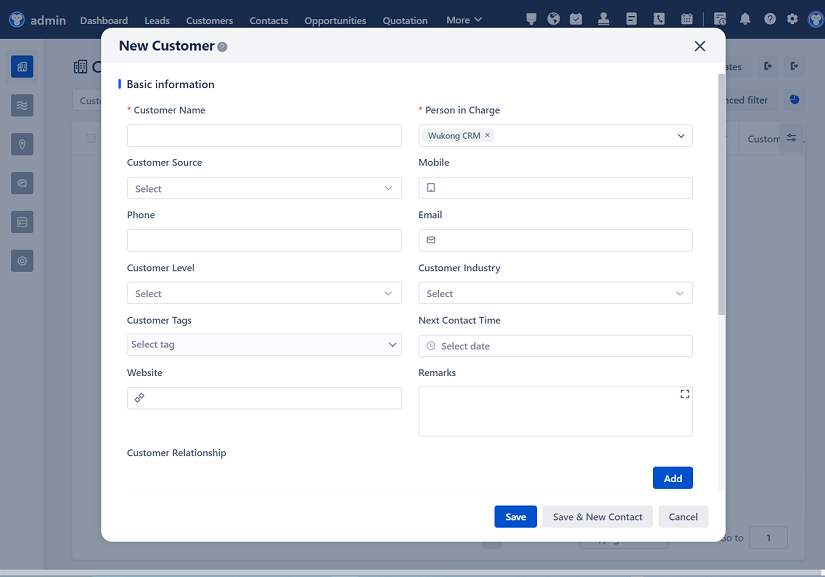
△Click on the top right corner to try Wukong CRM for free