
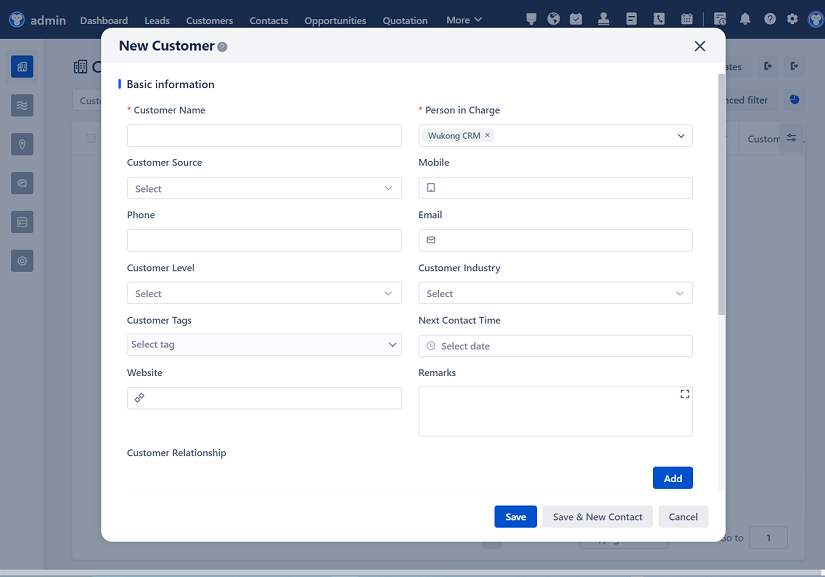
△Click on the top right corner to try Wukong CRM for free
Hey there! So, you're wondering if sales management systems and CRM (Customer Relationship Management) systems are the same thing, right? Well, let me tell you, it's a common question, and I get it. They sound pretty similar, don't they? But, to be honest, while they do share some similarities, they’re not exactly the same. Let’s dive into this a bit more, shall we?
First off, let’s talk about what a sales management system is. Think of it as your go-to tool for managing all the nitty-gritty details of your sales process. It helps you keep track of leads, manage your pipeline, and make sure your sales team is on top of their game. You know, things like forecasting, tracking performance, and making sure everyone is hitting their targets. It’s like having a personal assistant for your sales team, but in software form.
Now, let’s switch gears and talk about CRM systems. A CRM system is a bit more comprehensive. It’s not just about sales; it’s about the entire customer journey. From the moment a potential customer first hears about your company, all the way through to when they become a loyal, repeat customer. CRMs help you manage and analyze interactions with customers, streamline processes, and improve relationships. It’s like having a big, digital Rolodex that keeps track of everything from emails and calls to social media interactions and even customer feedback.
So, you might be thinking, "Okay, but how are they different?" Great question! The main difference is in their focus. A sales management system is laser-focused on the sales process. It’s all about closing deals, managing leads, and making sure your sales team is performing at its best. On the other hand, a CRM system is more about the overall customer experience. It’s not just about making the sale; it’s about building long-term relationships and keeping customers happy.
Let me give you an example. Imagine you run a small business selling handmade jewelry. With a sales management system, you’d be able to see which pieces are selling the most, who your top salespeople are, and how close you are to hitting your monthly targets. It’s all about the numbers and the process. But with a CRM system, you’d also be able to see which customers have been coming back for years, which ones haven’t made a purchase in a while, and maybe even send them a personalized email or offer to bring them back. It’s about nurturing those relationships and making sure your customers feel valued.
Another key difference is the scope of features. Sales management systems typically include tools for lead management, opportunity tracking, and sales forecasting. They might also have some basic reporting and analytics, but the focus is really on the sales cycle. CRMs, on the other hand, often come with a much broader set of features. You might find tools for marketing automation, customer service, and even project management. It’s like a Swiss Army knife for your business, with a little bit of everything.
But here’s the thing: sometimes, the lines between these two can get a bit blurry. Some CRM systems now include robust sales management features, and some sales management systems are starting to incorporate more CRM-like functionalities. It’s kind of like how smartphones started out as just phones, but now they do everything from taking photos to playing music to even controlling your smart home. So, it’s not always a clear-cut distinction.
Now, you might be asking, "Which one should I use?" Well, it really depends on what your business needs. If you’re primarily focused on improving your sales process and want a tool that’s going to help you close more deals, a sales management system might be the way to go. But if you’re looking for something that can help you manage the entire customer lifecycle, from first contact to long-term loyalty, a CRM system would probably be a better fit.

And, of course, there’s always the option to use both. Some businesses find that having a dedicated sales management system for their sales team, and a separate CRM for their customer service and marketing teams, works best. It’s all about finding the right balance and making sure you have the tools you need to succeed.
One more thing to consider is the size and complexity of your business. For a small business, a simple CRM system with built-in sales management features might be enough. But for a larger, more complex organization, you might need a more specialized solution. It’s like choosing between a compact car and an SUV. Both will get you where you need to go, but one might be better suited for your specific needs.

Alright, so we’ve talked about what these systems are, how they differ, and how to choose the right one. But let’s take a step back and think about why this is important. In today’s competitive business landscape, having the right tools can make all the difference. Whether you’re trying to close more deals, build stronger customer relationships, or just stay organized, the right system can help you do it more efficiently and effectively.
And, let’s be real, no one wants to spend hours manually tracking leads or sifting through spreadsheets. These systems are designed to make your life easier, so you can focus on what really matters—growing your business and serving your customers.
So, to wrap things up, while sales management systems and CRM systems do have some overlap, they serve different purposes. Sales management systems are all about the sales process, while CRM systems are about the entire customer journey. The right choice for you will depend on your specific needs and goals. And, hey, if you’re still not sure, it might be worth talking to a consultant or doing a bit more research. After all, the right tool can be a game-changer for your business.
I hope this helped clear things up a bit. If you have any more questions, feel free to ask. I’m here to help!
Q&A:
-
Q: Can a CRM system replace a sales management system?
- A: In many cases, yes! Modern CRM systems often include robust sales management features, so you might not need a separate sales management system. But it depends on your specific needs and the complexity of your sales process.
-
Q: What if my business is small? Do I need both a CRM and a sales management system?
- A: For a small business, a single, integrated CRM system with built-in sales management features might be enough. It can help you manage both sales and customer relationships without the need for multiple tools.
-
Q: How do I know if I need a more specialized sales management system?
- A: If your sales process is complex, and you need advanced features like detailed sales forecasting, pipeline management, and in-depth analytics, a specialized sales management system might be a good fit. Evaluate your current pain points and see if a more specialized tool can address them.
-
Q: Are there any downsides to using both a CRM and a sales management system?
- A: The main downside is the potential for data silos and integration issues. If the two systems don’t communicate well, you might end up with duplicate data or incomplete information. Make sure to choose systems that integrate seamlessly or consider a unified solution.
-
Q: How can I ensure that my team adopts and uses the new system effectively?
- A: Training and support are key. Provide thorough training sessions, create user guides, and offer ongoing support. Also, involve your team in the selection process to ensure the system meets their needs and is user-friendly.
-
Q: What are some popular CRM and sales management systems on the market?
- A: Some popular CRM systems include Salesforce, HubSpot, and Zoho CRM. For sales management, you might look at Pipedrive, Close, and Freshsales. Each has its own strengths, so it’s a good idea to try a few out and see which one fits your business best.
-
Q: How do I measure the success of implementing a new system?

- A: Set clear goals and KPIs before implementation. Track metrics like sales growth, customer retention rates, and team productivity. Regularly review these metrics to see if the system is helping you achieve your goals and make adjustments as needed.
-
Q: Is it possible to customize these systems to fit my specific business needs?
- A: Absolutely! Most modern CRM and sales management systems offer a high degree of customization. You can tailor fields, workflows, and reports to match your business processes. Some systems even allow for custom development if you have very specific requirements.
-
Q: What if I already have a lot of customer data in spreadsheets? Can I import it into a new system?
- A: Yes, most CRM and sales management systems have data import capabilities. You can usually import data from spreadsheets, CSV files, and other formats. Just make sure to clean and format your data properly before importing to avoid errors.
-
Q: How long does it typically take to implement a new CRM or sales management system?
- A: The implementation time can vary widely depending on the complexity of your business and the system you choose. Simple implementations might take a few weeks, while more complex ones could take several months. Plan for a realistic timeline and factor in time for training and testing.
I hope these answers help! If you have more questions, feel free to reach out. Good luck with your business!

Related links:
Free trial of CRM
Understand CRM system
AI CRM Systems
△Click on the top right corner to try Wukong CRM for free