
△Click on the top right corner to try Wukong CRM for free
Hey there! So, you're curious about what makes up a CRM system, huh? Well, let's dive right in and break it down. Imagine a CRM (Customer Relationship Management) system as this super cool tool that helps businesses keep track of all their customer interactions, from the first time someone visits their website to when they make a purchase and even beyond. It’s like having a personal assistant for your business, but one that never forgets anything and is always on top of things.
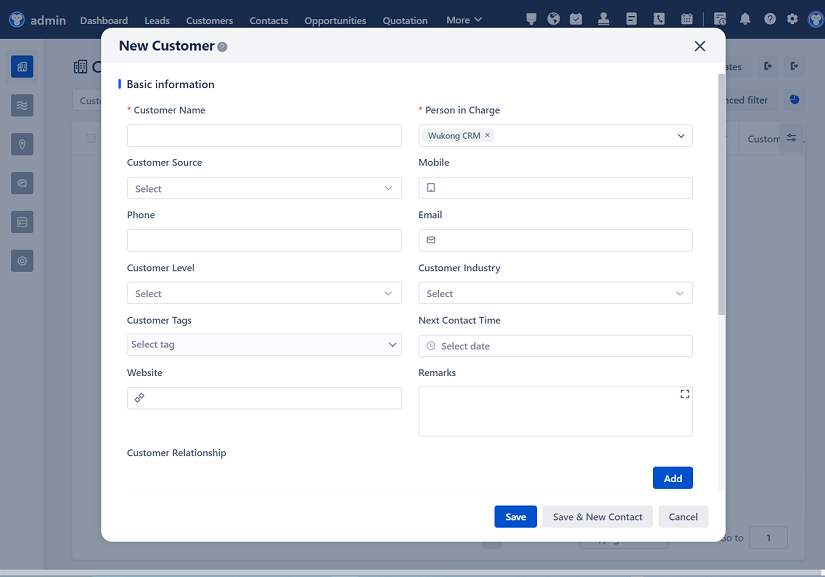
First off, let’s talk about the contact management part. This is where all the information about your customers lives. Think of it as a giant digital Rolodex, but way more advanced. You can store everything from names and email addresses to social media profiles and even notes about past conversations. It’s like having a little black book, but instead of just phone numbers, you’ve got a whole bunch of useful details at your fingertips.

Now, moving on to sales force automation. This is where the magic happens, especially if you’re in sales. It’s like having a personal coach who reminds you to follow up with leads, schedules meetings, and even suggests the best times to reach out to potential clients. It takes care of all the nitty-gritty stuff so you can focus on closing deals and building relationships. It’s a bit like having a personal assistant who knows exactly what you need before you even ask.
Next up, we’ve got marketing automation. This is where you can set up campaigns, send out emails, and track how well your marketing efforts are doing. It’s like having a marketing guru in your pocket. You can create personalized messages, schedule them to go out at the perfect time, and then see how many people opened your emails or clicked on your links. It’s a great way to stay connected with your customers and keep them engaged without spending hours on manual tasks.
Then there’s the analytics and reporting part. This is where you get to see all the data and insights about your customers and your business. It’s like having a crystal ball that shows you what’s working and what’s not. You can see which products are selling the most, which marketing campaigns are bringing in the most leads, and even predict future trends. It’s a powerful tool for making informed decisions and staying ahead of the game.
And let’s not forget about customer service and support. This is where you can manage all the interactions with your customers, whether it’s through email, chat, or phone. It’s like having a help desk that’s always open and ready to assist. You can track customer issues, assign them to the right team members, and make sure everyone gets the help they need. It’s a great way to build trust and loyalty with your customers by showing them that you care and are always there to help.

Finally, there’s the integration and customization part. This is where you can connect your CRM with other tools and systems you use, like your accounting software or your e-commerce platform. It’s like having a Swiss Army knife for your business. You can tailor the CRM to fit your specific needs, add custom fields, and even create your own workflows. It’s a flexible and powerful way to make sure your CRM works exactly the way you want it to.
So, there you have it! The basic components of a CRM system. It’s a lot, I know, but think of it as a toolkit that helps you manage and grow your business. Whether you’re a small startup or a big corporation, a CRM can be a game-changer. It helps you stay organized, build better relationships with your customers, and ultimately, drive more sales and growth.
Alright, now that we’ve covered the basics, let me throw in a few questions to help you think about how a CRM could work for you:

-
How can a CRM system help me better understand my customers?
- A CRM system can help you gather and analyze data about your customers, such as their preferences, buying habits, and interaction history. This allows you to tailor your marketing and sales efforts to meet their specific needs and build stronger, more personalized relationships.
-
What are some key features I should look for in a CRM system?
- Some key features to look for include contact management, sales force automation, marketing automation, analytics and reporting, customer service and support, and integration capabilities. These features will help you streamline your operations and improve your overall customer experience.
-
Can a CRM system really help me save time and increase productivity?
- Absolutely! A CRM system automates many of the repetitive and time-consuming tasks, such as data entry, follow-up reminders, and report generation. This frees up your time to focus on more strategic activities, like building relationships and closing deals.
-
Is a CRM system only for large businesses, or can small businesses benefit too?
- CRM systems are incredibly versatile and can benefit businesses of all sizes. In fact, small businesses often find CRMs particularly valuable because they help them stay organized, manage their customer relationships more effectively, and scale their operations as they grow.
-
How do I choose the right CRM system for my business?
- When choosing a CRM system, consider your specific business needs, budget, and the features that are most important to you. It’s also a good idea to read reviews, try out free trials, and maybe even consult with a CRM expert to ensure you make the best choice for your business.
I hope this helps! If you have any more questions, feel free to ask. Happy CRM-ing! 😊
Related links:
Free trial of CRM
Understand CRM system
AI CRM Systems
△Click on the top right corner to try Wukong CRM for free